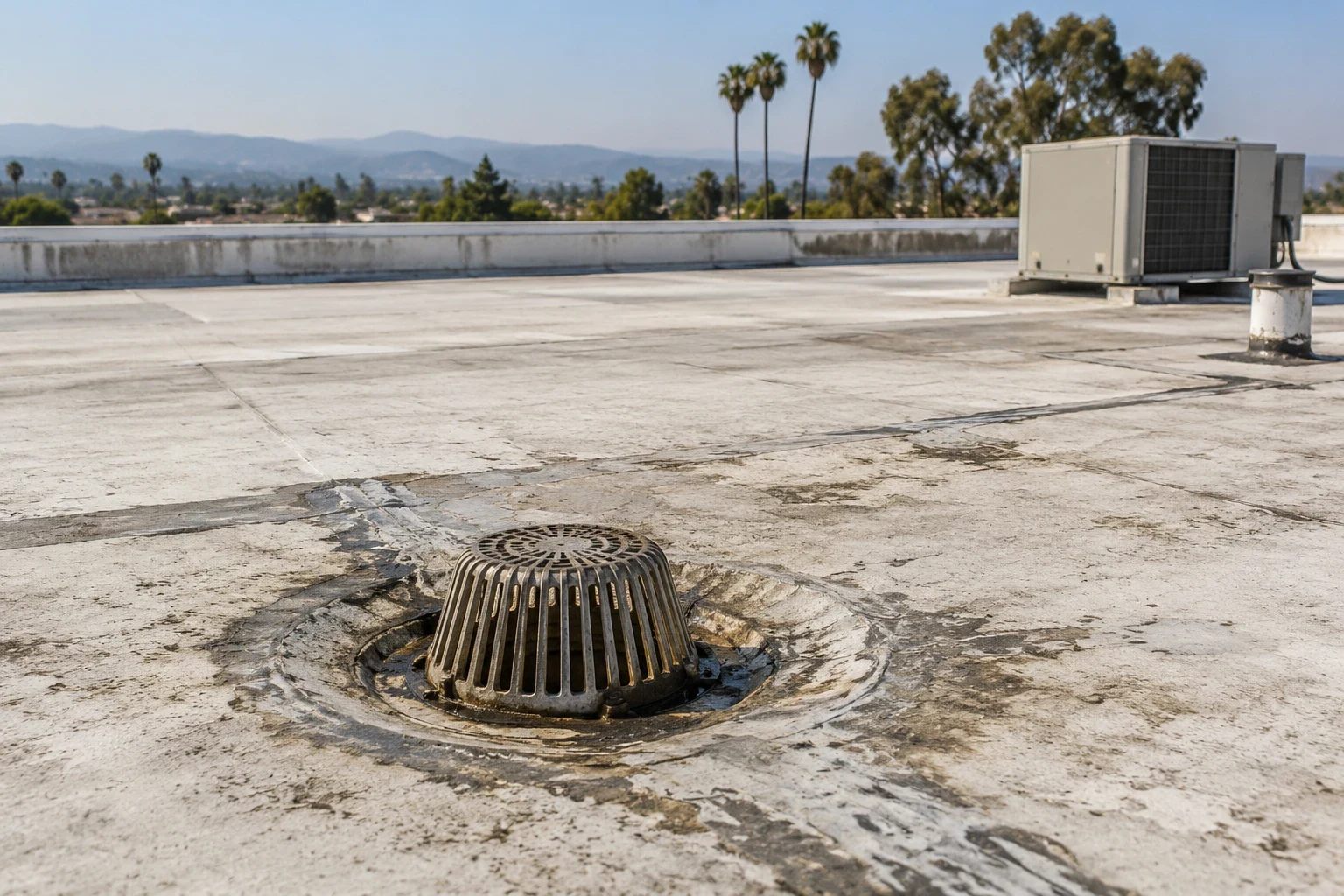
Commercial Roof Recover in Tracy, CA
Commercial Roofing Services
Evaluate a commercial roof recover in Tracy, CA by mapping existing layers, testing attachment and moisture limits, and documenting the assembly that remains.

Evaluate a commercial roof recover in Tracy, CA by mapping existing layers, testing attachment and moisture limits, and documenting the assembly that remains.
A recover should be priced only after the existing layers and attachment are mapped. The visible membrane does not show how many roofs are below it, whether insulation is wet, or what condition the deck will present at an edge. In Tracy, our inspection records the roof zones, drains, penetrations, perimeter details, and known repair areas before comparing a new layer with removal. The owner receives a list of confirmed conditions and the tests still needed to set the recover boundary.
For Tracy projects, 2025 building criteria assign Climate Zone 12 and specify a 101.2°F high for the two-percent dry-bulb condition. That figure informs design review, but the installed system still has to match the observed substrate, wind attachment, and material instructions. A roof inspection can document the visible assembly; an authorized test opening can confirm concealed layers.
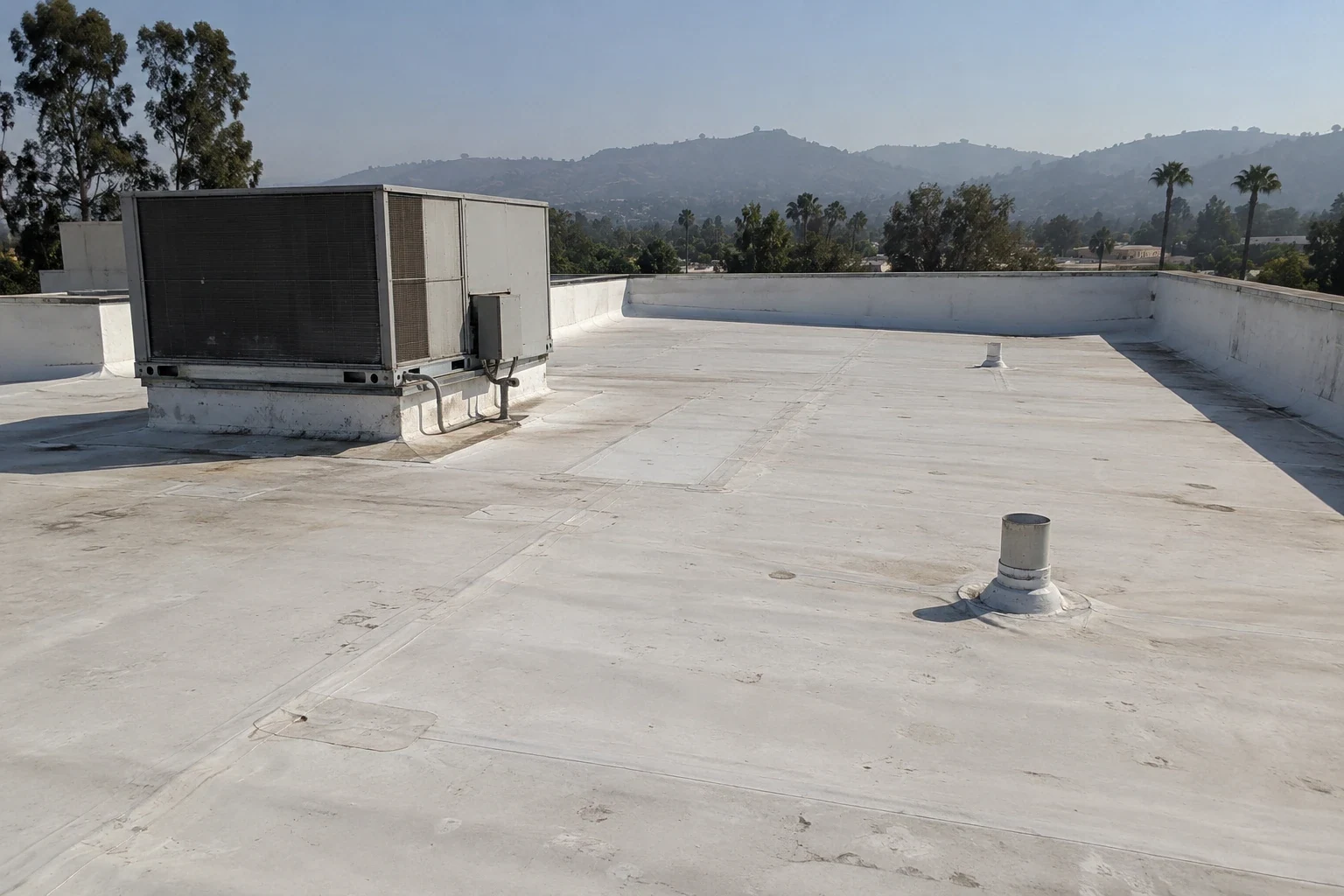
Start with records, roof edges, abandoned penetrations, and earlier repairs. Note membrane type where identifiable, cover board, insulation, vapor control, and any older surfacing that remains. An exposed edge may show a local build-up without representing another section, so label each observation by roof zone. If a cut is authorized, photograph every layer before closing the opening with a detail that suits the existing system.
The Industrial Areas Specific Plan covers a multi-property geography with general-industry, light-industry, office, and flex-tech designations. Those uses can help frame access questions for a recover project, but they do not identify the layers on one building. A flex-industrial roof assessment should keep the building record specific: room or process below, equipment above, and any operational window that limits testing.
A recover transfers its performance to the retained assembly. Check the existing attachment, substrate stability, uplift requirements, edge conditions, and the proposed fastener or bonding method. Loose or saturated layers cannot become a reliable base because a new membrane covers them. When records or exposed details leave attachment uncertain, list the field check needed and wait on final assembly selection until that evidence is available.
Review transitions at walls, curbs, drains, and expansion joints as separate details. Existing metal may need adjustment when the added thickness changes termination height or water flow. The selected TPO assembly or another system must use compatible components and follow current technical instructions. A recover scope should state what remains, what is removed, and who approves a change after the first test area is opened.
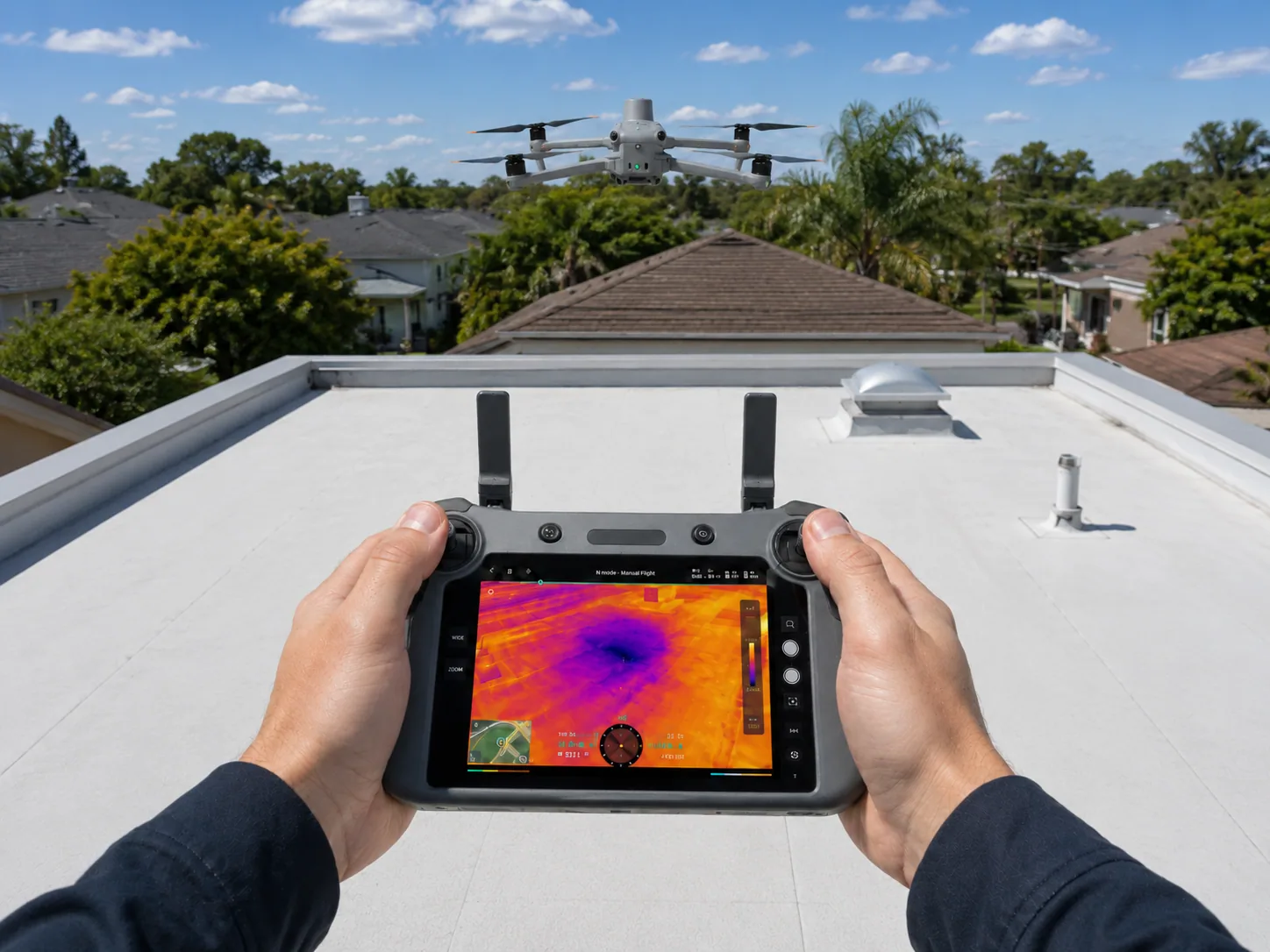
Look for prior leak paths, trapped water, soft spots, displaced surfacing, and drain areas that remain wet after surrounding sections dry. An infrared or capacitance survey can help prioritize test locations when roof construction and conditions make the method suitable, but its readings need confirmation. Mark the survey grid, note conditions that affect interpretation, and compare results with authorized openings before deciding which insulation can stay.
Tracy's heat design criterion is relevant to system selection, not a substitute for a moisture investigation. A moisture survey can narrow where to test, while a cover-board and insulation scope should identify the replacement depth at confirmed wet areas. If water tracks toward a drain or scupper, map the outlet and membrane tie-in before the new layer is considered complete.
Adding a roof layer can change how a drain bowl, scupper, door threshold, or edge termination meets the finished surface. Measure the relationship before selecting a cover board and membrane. Mark low areas, existing sumps, debris points, and any water that crosses the planned recover boundary. If the deck or insulation has settled, surface treatment alone will not correct the underlying plane.
Tracy's I-205 Corridor Specific Plan covers land adjacent to the freeway and locates commercial uses near Grant Line Road and I-205. The broad commercial geography helps orient a service plan; drainage design still comes from the individual roof. A drain and scupper review can set the flashing and outlet work, and a ponding-water evaluation can help distinguish blocked flow from a slope or deck issue.
Set the options beside the same zone map and test results. A recover may retain sound layers and reduce removal, while full tear-off exposes the deck for broader repair and resets the assembly. Compare added dead load, attachment, wet insulation limits, edge transitions, drainage, future access, and the disposal work each scope includes. If a code or project requirement changes what can remain, identify that review before the bid is approved.
Do not compare a complete removal price with a recover allowance that leaves the substrate undefined. Ask each scope to identify the assumed condition and the decision point for concealed damage. The replacement option should state the removal depth and deck work; a capital plan can place roof zones into a sequence that matches owner approvals and building operations.
Cost and duration can shift with the number of existing layers, the area of wet insulation, deck repairs, debris handling, crane access, and the amount of temporary dry-in needed between phases. Record each assumption beside the affected zone instead of folding it into a general contingency. If two scopes use different testing or disposal assumptions, price those decisions separately before selecting a system.
At closeout, record the accepted test locations, retained assembly, prepared surface, added insulation or cover board, attachment, and finished details at edges and penetrations. Label photographs by roof zone and tie each approved field change to the person who directed it. Include any area excluded from testing or repair so the next inspection does not treat it as confirmed sound.
Give the facilities lead the final assembly description, system information supplied with the work, maintenance limits, and the baseline photographs. Later repairs should refer to the retained layers and not assume the recover is a single membrane over a uniform substrate. A condition report can keep those details with the roof plan. For a building in or near the I-205 Corridor, the same record helps distinguish broad service geography from the conditions at the property itself.
Keep any existing warranty documents beside the approved recover details and note which party must review a proposed change. Document routine access limits, drain checks, and the areas excluded from testing so maintenance staff know what the new surface can reveal and what remains below it. This record helps the next repair scope begin with the retained assembly instead of an assumption.
The answer depends on the assembly, governing requirements, attachment, moisture, and deck evidence. We identify known layers and test uncertain areas before setting the scope for retained material.
Widespread wet insulation, unstable attachment, deck damage, incompatible surfaces, or unresolved drainage can undermine the new layer. The inspection should show which condition is confirmed and what opening or review would resolve the rest.
It can help select test locations when the method fits the roof. Confirm readings with authorized openings and record the grid, conditions, and any limits before marking insulation for retention or removal.
A new build-up changes the relationship between the membrane, drain bowl, scupper, and edge metal. Measure those interfaces so the recover scope includes the flashing and outlet work needed at the finished elevation.
List the assumed assembly, test locations, included removal, and the approval step if an opening reveals wet material or damaged deck. That keeps the priced recover boundary tied to evidence the owner can review.