Commercial Roof Drain and Scupper Service in Tracy, CA
Commercial Roofing Services
Trace Tracy roof drainage from inlet to discharge, document blockages and ponding, and separate approved cleaning from slope or detail repairs.

Trace Tracy roof drainage from inlet to discharge, document blockages and ponding, and separate approved cleaning from slope or detail repairs.
Drainage work starts with the outlet and ends at the discharge path. A clear roof inlet does not prove that the leader, scupper, or downstream route is open, while a water mark does not identify the cause by itself. For a commercial roof in Tracy, document each drain or scupper by zone, note the observed water path, and compare it with the roof plan. Then record whether the approved task is debris removal, a closer inspection, or a repair proposal. Keeping those decisions separate helps the owner avoid treating a maintenance visit as a slope correction or membrane replacement.
The City's 2024 land-use inventory identifies 1,110.7 acres of commercial use and 3,436.9 acres of industrial use in Tracy. Property layouts vary across that broad stock. A consistent inspection map should identify the actual building and outlet locations before work is assigned.
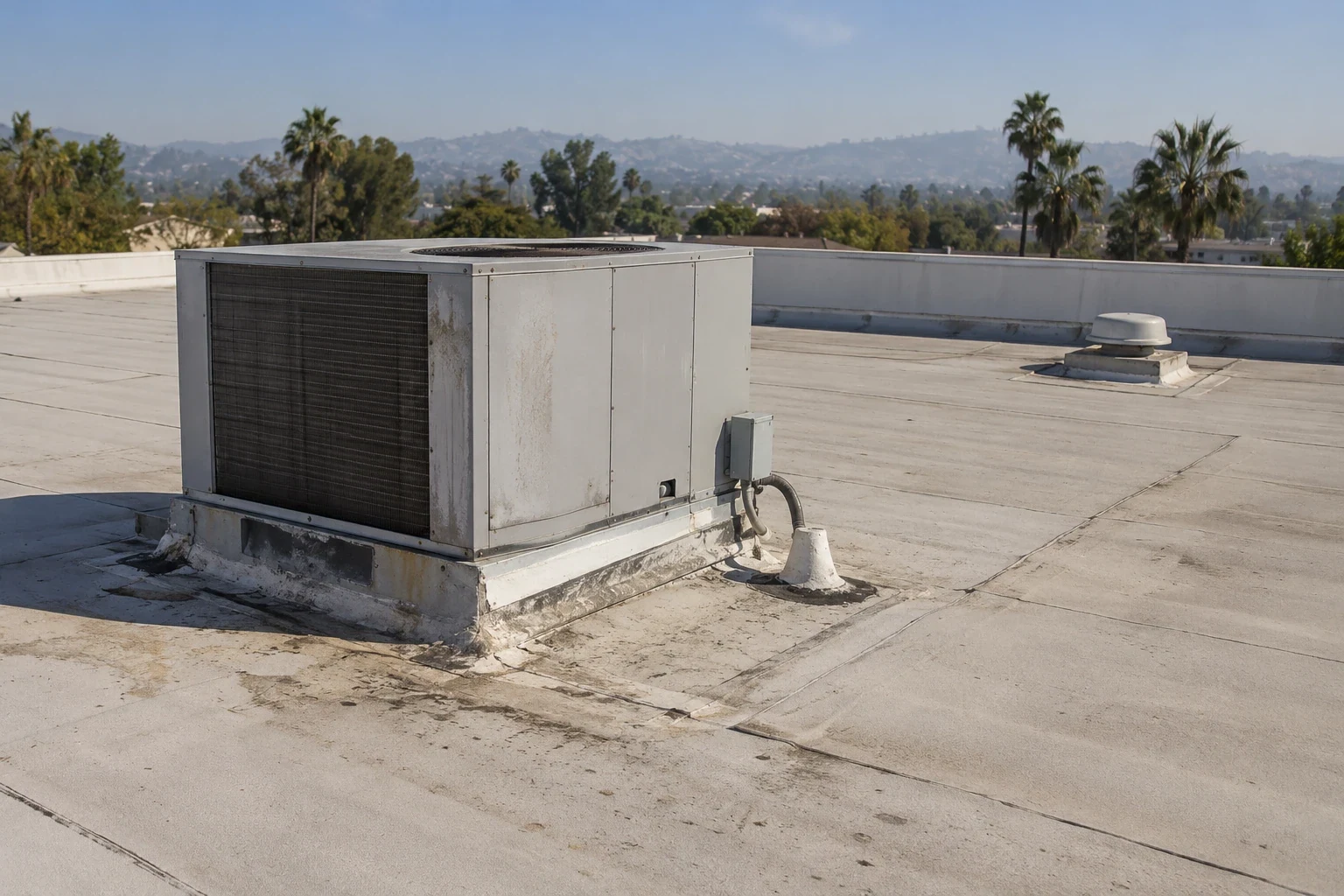
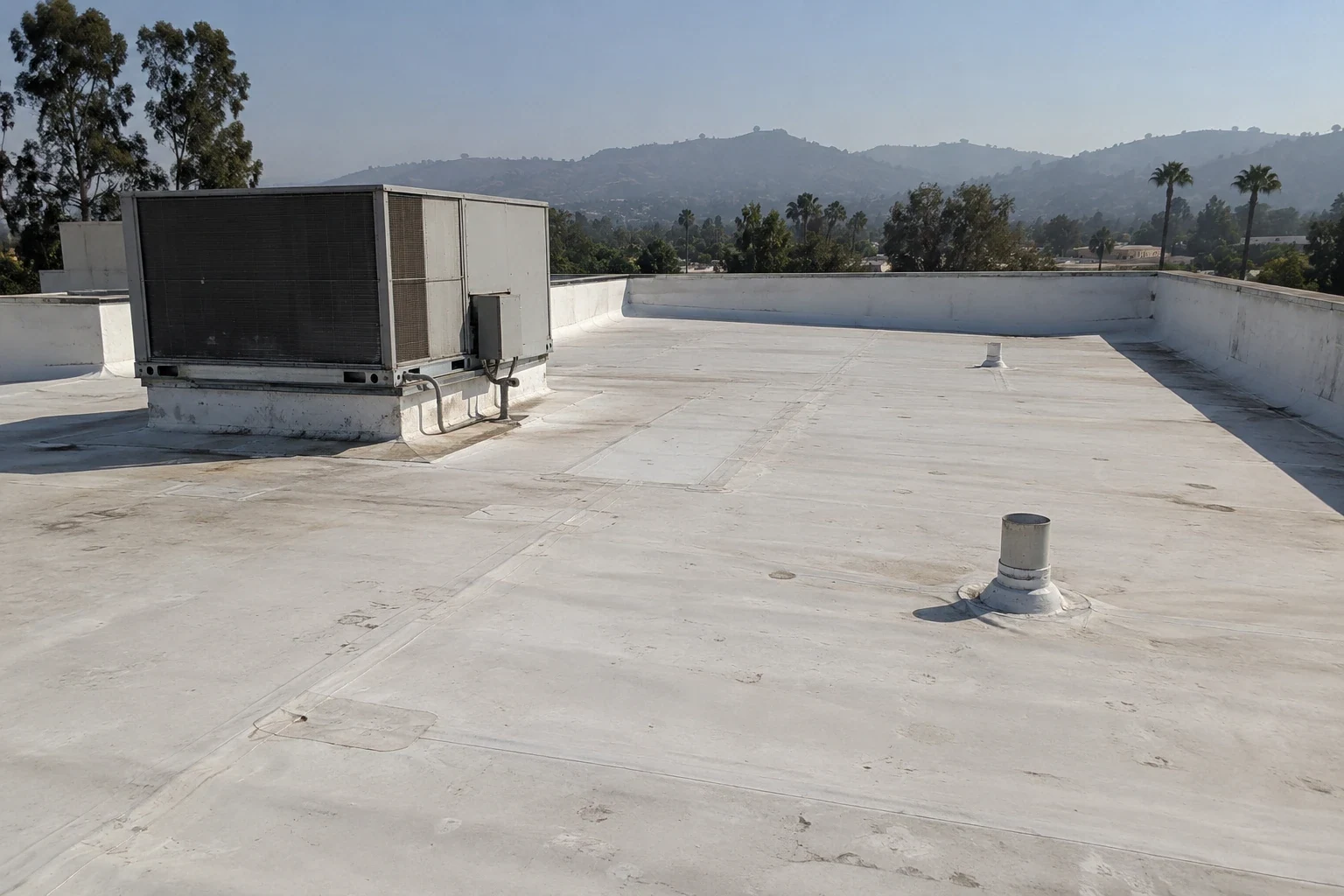
Mark every inlet, scupper, overflow, gutter, and visible outlet on a current roof plan. Follow the route only as far as site access permits, and note where the downspout or leader disappears from view. Photograph debris, standing water, staining, loose strainers, or visible displacement from a repeatable position. A wide frame locates the feature; a close frame records its condition. Do not infer a blocked pipe from rooftop ponding without checking the downstream path.
For each observation, record recent rainfall if known, approximate duration of standing water, roof slope or crickets shown on documents, and any changed equipment or walkway. This context helps a later reviewer distinguish a maintenance finding from a geometry question. If a tenant reports water inside, include the room and time in the service record, but keep the reported ceiling location separate from the outlet you are investigating.
Before cleaning, confirm what the owner authorized, whether the material can be handled safely, and where removed debris will go. Keep tools compatible with the roof surface and avoid cutting, scraping, or dislodging components. Protect strainers and membrane details while clearing leaves, packaging, sediment, or other loose material. Do not push debris into a leader or use a high-pressure method unless the assembly instructions and approved work plan allow it.
Record the inlet before and after the task, the quantity or type of debris when meaningful, and whether water moved through the observed path. If the outlet remains slow or inaccessible, mark it unresolved. A maintenance log can set the next check based on the actual condition. Where the concern follows active water entry, a separate leak-path assessment should identify the source before patching is proposed.
Standing water should be documented by location, depth estimate where practical, boundary, and time after precipitation. Compare the result with prior photographs and roof drawings, not only with a general rule of thumb. A deformed deck, blocked outlet, settled insulation, or changed detail may require different investigation. Do not add fill, cut an outlet, alter slope, or change a scupper without the owner's design and repair review.
The I-205 Corridor Specific Plan covers an area near Grant Line Road and I-205 with a mix of planned commercial and light-industrial uses. That broad planning context does not determine the drainage design of a particular building. At an actual property in the I-205 Corridor, compare observed water with the roof plan and approved outlet details. Refer uncertain slope or structural questions to the responsible design professional.
Look for corrosion, separation, loose flashing, open seams, crushed or damaged strainers, sealant gaps, and movement at the drain bowl or scupper transition. Record what is visible and avoid removing a cover or component unless the scope permits it. Check whether a nearby curb, walkway, conduit, or repair patch redirects flow. For scuppers, note the opening and visible edge condition; for drains, document the bowl and membrane interface. A detail issue may need a repair even if debris is also present.
When a condition appears connected to a membrane transition, identify the roof system before selecting materials. A repair review can establish the authorized boundary, while a compatible TPO system detail or EPDM detail needs the correct preparation and components. Keep product selection out of a generic drain-cleaning ticket.
Roof access, fall protection, hatch use, ladder setup, and work around skylights or rooftop equipment must follow the property's safety procedure and applicable requirements. Confirm who may authorize entry and whether an escort or shutdown is needed. Do not step into standing water where depth, cover, electrical exposure, or substrate condition is uncertain. Keep tools and removed material from blocking egress or another drain. If access conditions change, stop the task and document the reason.
For a large industrial roof with separate tenants or production zones, list the contact who approved each area and the time window. A work order should identify the outlet, requested task, exclusions, and proof expected at closeout. These controls matter on sites with multiple buildings, but the plan should always refer to a real property and owner rather than presume a single operating pattern across Tracy's industrial areas.
Summarize which inlets were checked, what was removed, what flow was observed, and what remained inaccessible. Attach the labeled photographs and mark each item complete, monitor, or investigate. If a drain still holds water or the scupper detail appears open, name the follow-up owner and request the needed approval. Do not mark an unresolved path as clear simply because the inlet surface looks clean.
If standing water recurs, compare future observations under similar conditions and decide whether a design or assembly review is warranted. A condition report can track the evidence and approved next step. If multiple outlets serve a warehouse roof, retain a separate location and service record for each. The closeout should state what the visit established and what still needs a qualified inspection, test, or design decision.
For repeat service, note whether the outlet served the same roof zone and whether the debris pattern returned. A recurring obstruction may point to upstream housekeeping, nearby construction, a damaged strainer, or a downstream restriction. Those are possibilities to test, not conclusions to place in the record without evidence. The owner can then decide whether to adjust routine cleaning, authorize a plumbing check, or request an assembly review. If no flow test was performed, say so plainly and leave the result open for follow-up.
No. It is an observation to map and investigate. Check the inlet, visible outlet, downstream path, roof geometry, and timing after rain before assigning a cause.
Yes, when the owner authorized that task and access and handling are safe. Record what was removed, the before-and-after condition, and whether flow was observed.
Do not alter an opening without an approved design and repair review. Document its condition and refer capacity or slope questions to the responsible professional.
Use a roof plan location, inlet or scupper type, condition, photos, work authorized, flow observation, limits, and next action. Keep unresolved outlets separate from completed cleaning.
No. A clear strainer addresses only one visible part of drainage. A leak assessment must trace the reported entry path and examine relevant membrane and flashing details.