Warehouse Roofing and Repair in Tracy, CA
Property Types We Roof
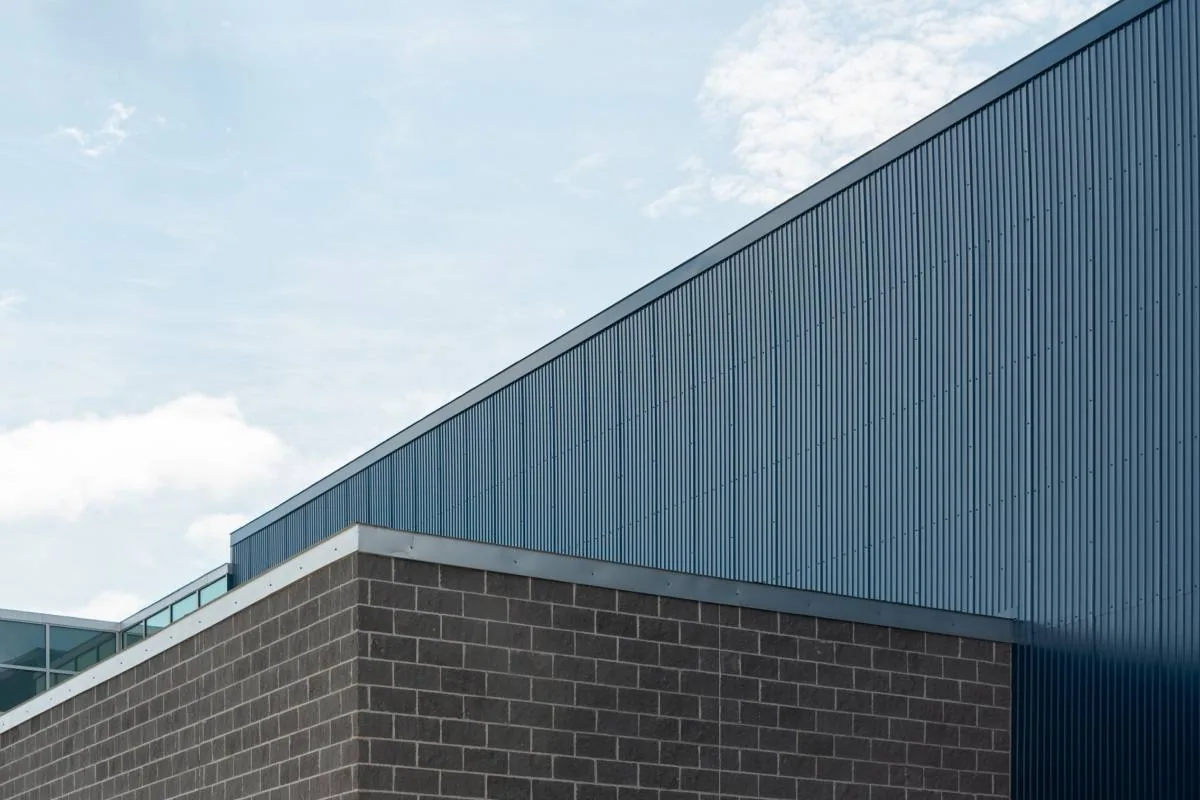
Plan warehouse roof repairs in Tracy with marked roof zones, drain checks, access limits, and a clear repair boundary for active receiving operations.

Plan warehouse roof repairs in Tracy with marked roof zones, drain checks, access limits, and a clear repair boundary for active receiving operations.
A dock queue can change before the roof crew reaches the hatch. For a warehouse in Tracy, CA, we confirm the receiving schedule, roof access, and affected zone before choosing an inspection route. We mark seams, drains, curbs, and edge metal on the plan, then connect each observation to a photograph and next action. That record lets a facilities lead separate a clearable drain from a wet assembly or a repair that needs an opening.
In Tracy's northeastern employment geography, planning accommodates rail-dependent industry, flex-tech operations, production, warehousing, and freight distribution. That mix gives a broad picture of local employment geography, not a description of any one building. At the property, we check the actual roof plan and operating calendar. A group with distribution properties or manufacturing buildings still needs an individual route plan and access release for each roof. A commercial roof inspection can lay out the walk route and record what could not be reached safely. That map also guides the next access release and protects the loading schedule.
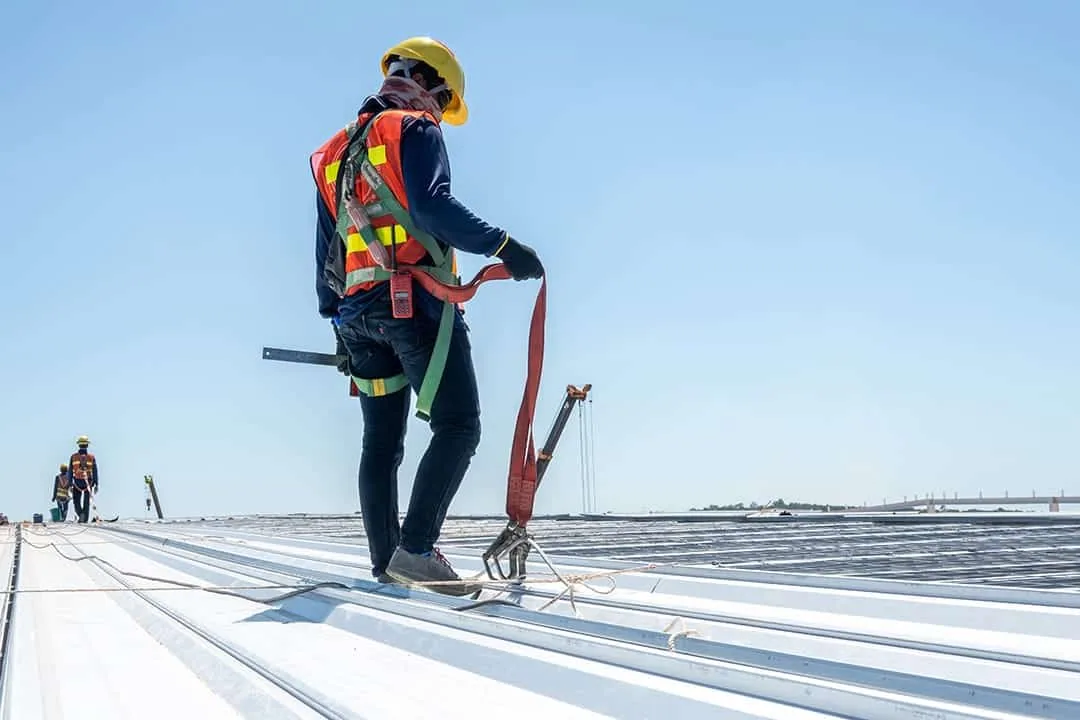
Start with the roof section above receiving, then mark the travel path from hatch to drain and perimeter. Note skylights, exhausts, rooftop units, conveyor supports, and any walk pads that shape the route. If the roof plan uses old section names, reconcile them with fixed features before photographs are labeled. A clear location lets the shift supervisor connect an interior report with the correct roof area without sending a second crew to identify it.
Warehouse schedules can leave one elevation busy while another is available. We record which dock or yard activity limits access and whether a lift, escort, or shutdown is needed. A phased work plan should state where materials can be staged, which doors stay open, and how the crew will protect the receiving floor. We do not label an inaccessible bay as inspected; it remains an access limit until the property contact releases it.
Frequent equipment movement calls for a roof route that stays separate from loading activity. We identify whether racks, conveyors, or overhead systems restrict the hatch-to-work path, then mark the approved route. When a property has several buildings, document each roof's access limits and operating schedule separately. That gives the owner a usable inspection window and ties the repair boundary to the facility actually reviewed.
Warehouse roofs may contain several generations of membrane, cover board, insulation, and patch material. Read exposed edges and the assembly record where available. Mark any mismatch between the document and what appears at a drain, curb, or perimeter termination. A blister, wrinkle, or dark patch can have more than one explanation, so we describe what is visible and name the test needed before expanding the work boundary.
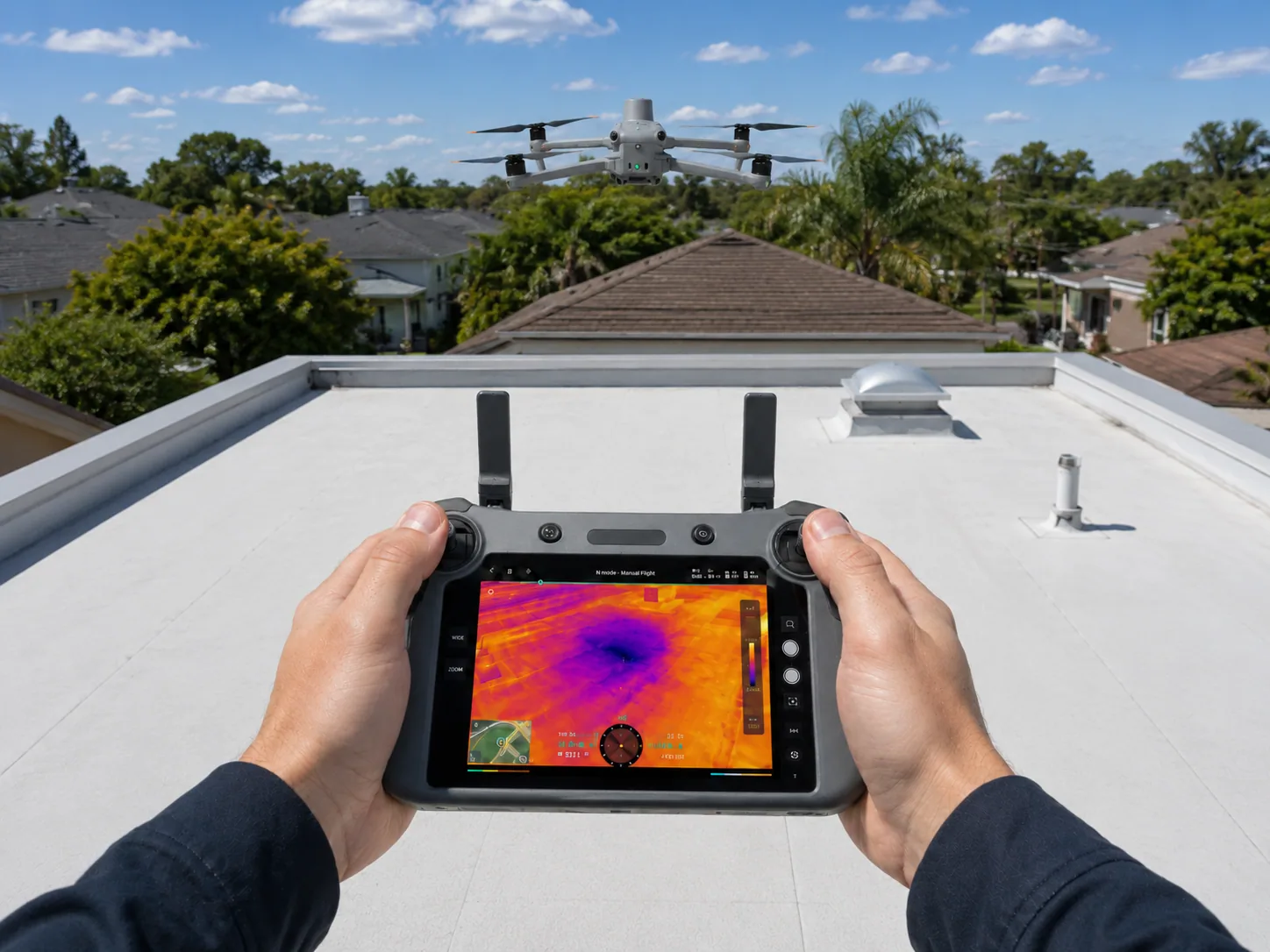
The city's design table assigns Tracy to Climate Zone 12 and gives 101.2°F as the two-percent dry-bulb high. Use that criterion in design review, not as a roof reading or a forecast for the crew's shift. We inspect surface wear, seam condition, and substrate evidence directly, then compare the observed assembly with product requirements. If water may be concealed, an infrared moisture survey can help select areas for confirmation rather than treating an image as proof of wet insulation.
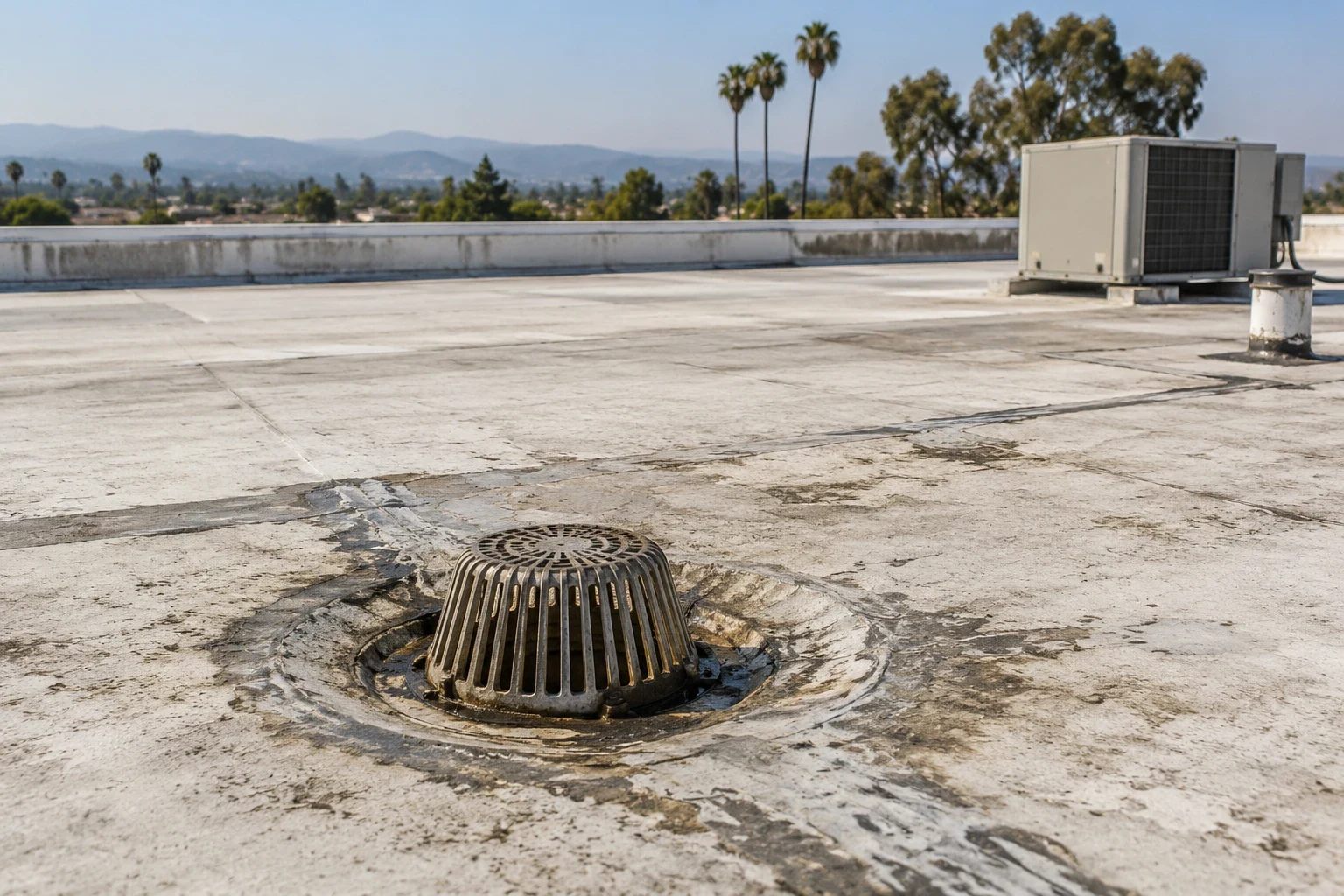
Walk each roof plane toward its outlets. Record debris, ponding, a damaged strainer, detached flashing, or a low spot as separate findings. A clear drain bowl does not establish that water can reach the drain, and a dry interior does not show that insulation below a suspect seam is sound. Mark the observation time and tie each photograph to a roof zone, especially when the owner needs to compare conditions after maintenance or rain.
Tracy's transportation triangle joins I-205, I-580, and I-5. The I-205 Corridor plan also locates commercial uses near Grant Line Road; these references orient dispatch, while the site plan identifies the roof and loading route. For roof work, the receiving contact controls the allowed vehicle route and staging point. For a visit in the Northeast Industrial PUD, confirm the property's gate, roof route, and approved schedule with the facility contact. A drain and scupper assessment can examine outlet ties, while a flashing repair review can define a stable perimeter repair boundary.
A localized repair can make sense when the failure is isolated and the surrounding membrane, insulation, and attachment are sound. A recover requires separate checks of moisture, layer compatibility, drain height, curbs, and perimeter transitions. If the deck moves or concealed insulation is wet, covering the surface can carry the defect into the next layer. We identify what is confirmed, what remains concealed, and which opening or owner approval would settle the next decision.
Tracy's industrial areas include warehouse and distribution uses, but a city land-use designation does not tell us whether a particular roof can accept another assembly. Any assembly comparison must match the existing construction, observed layer condition, and project documents. If a larger scope is under consideration, a recover study can compare retained layers with removal, including drainage changes, flashing work, material handling, and the temporary dry-in sequence.
At closeout, mark the repaired zone, material, preparation, tie-in length, and any nearby detail checked while the crew had access. Photograph the completed work with enough surrounding roof to locate it later. List deferred items and areas that were not opened or reached. A roof condition report can keep those findings beside earlier repair tickets so a later reviewer sees what changed, what stayed open, and what evidence supports another repair.
Share the roof plan, leak tickets, prior repair photographs, assembly records, and receiving rules when requesting a visit. Tell us which decision needs support: immediate containment, a defined patch, a recover comparison, or a broader replacement review. We will return a marked roof-zone record with access limits and the next test or approval identified. On return, use the same zone labels but record new observations separately; an unreached bay should not inherit a prior inspection result. Keep equipment, drain, and repair observations under the same zone labels for the next maintenance cycle.
We coordinate the walk window and route with the facility contact, then mark each section reached. If loading or equipment blocks access, the report names that limit and the approval or alternate time needed to continue.
A phased sequence may keep unaffected areas operating, provided each section has a safe access route, protected tie-in, and clear interior boundary. We map the sequence against loading, staging, and weather exposure before setting the work plan.
The affected area, membrane type, wet insulation, deck condition, edge details, drain work, material handling, and access limits can change the scope. We separate confirmed quantities from concealed conditions that need authorization.
No. Surface color does not confirm moisture below the membrane. We map the area, review any instrument reading, and identify a test opening or other confirmation step before assigning removal quantities.
Send the roof plan, the receiving schedule, recent leak locations, prior repair records, and access rules. Identify the decision the report must support and the person authorized to approve testing or added work.