Infrared Commercial Roof Moisture Survey in Tracy, CA
Commercial Roofing Services
Plan an infrared roof moisture survey in Tracy with suitable conditions, a documented scan path, confirmed anomalies, and clear limits for each finding.

Plan an infrared roof moisture survey in Tracy with suitable conditions, a documented scan path, confirmed anomalies, and clear limits for each finding.
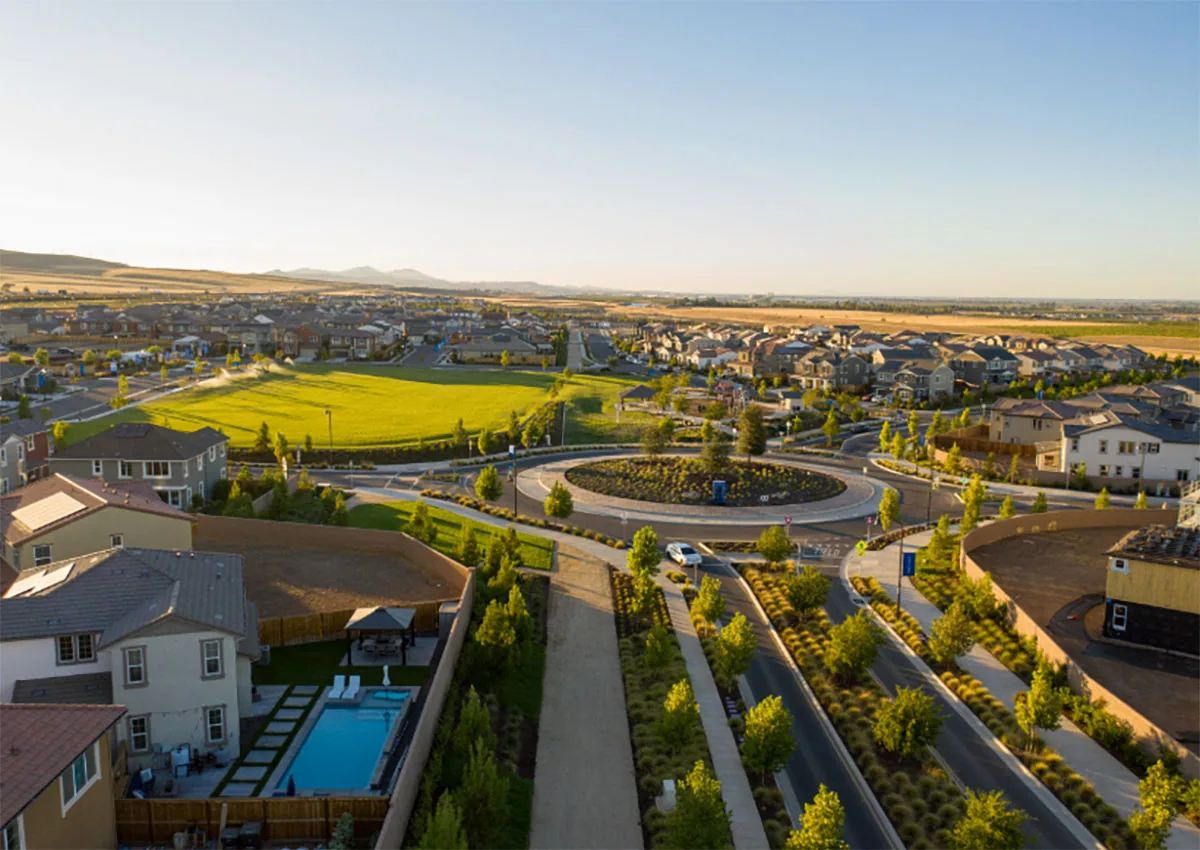
An infrared image is a screening clue, not proof of wet insulation. A roof surface can retain heat differently for reasons unrelated to wet insulation, and a cool or warm pattern needs confirmation before it changes a repair or replacement scope. In Tracy, the survey plan should identify the assembly, the question under review, recent weather and roof use, and the areas the operator can safely scan. We set a field-check method for each anomaly, then separate confirmed areas from questions that remain open.
Tracy's published criteria list a 101.2°F two-percent average dry-bulb high and Climate Zone 12. That is useful climate context, but it does not ensure a survey date will produce a usable thermal contrast. The method and conditions must be judged for the actual roof. A broader roof inspection can connect scan findings with visible details and prior water reports.
Start with the decision the owner needs to make. A moisture survey may help prioritize suspected areas for targeted field checks, compare reported leak zones, or inform a repair-versus-replacement study. It should not be ordered as a substitute for assembly records or because an image alone appears conclusive. Gather roof plans, membrane and insulation data, repair logs, leak tickets, and any prior test results. Mark suspected zones before scanning so the team can compare the imagery against evidence rather than search for patterns after the fact.
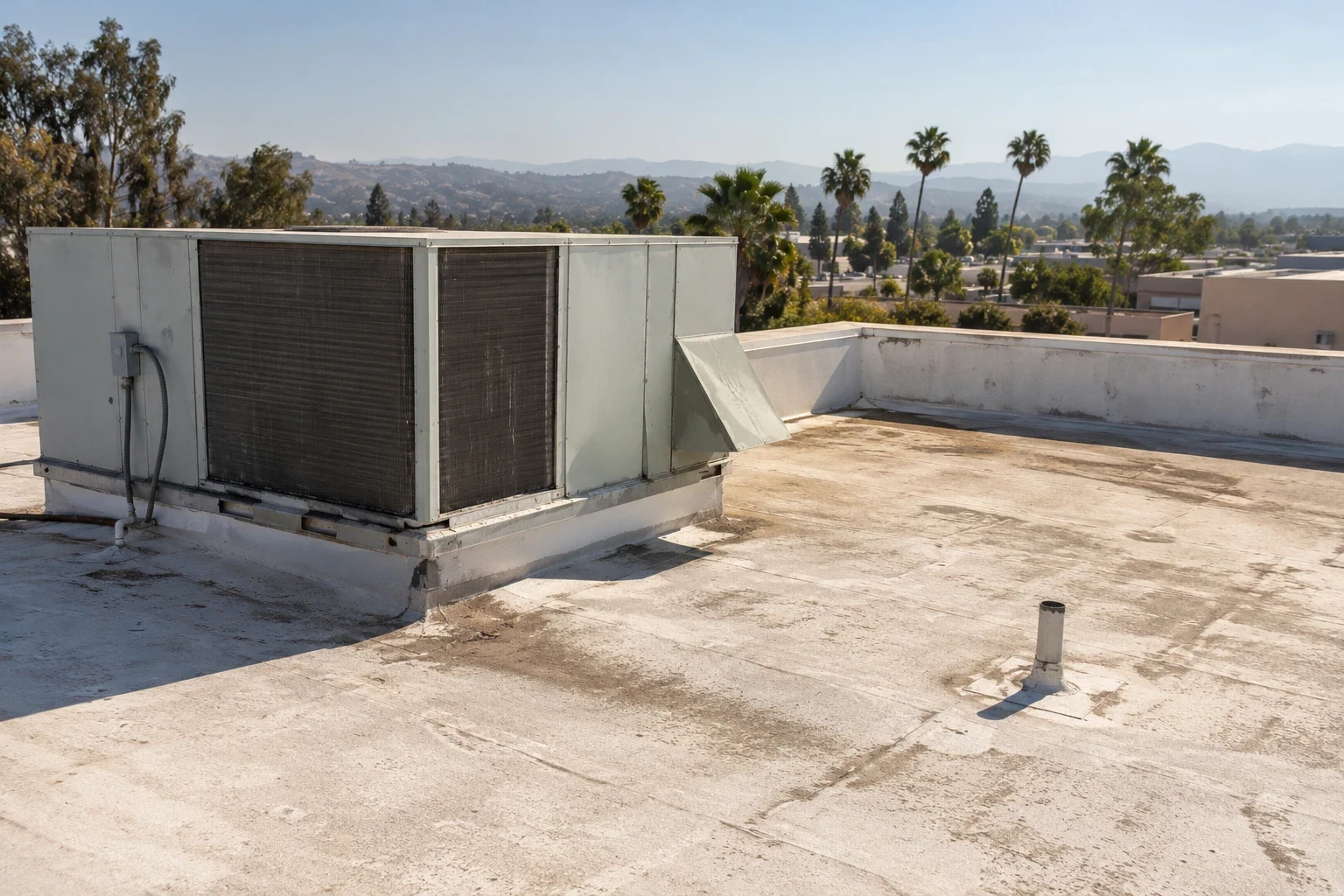
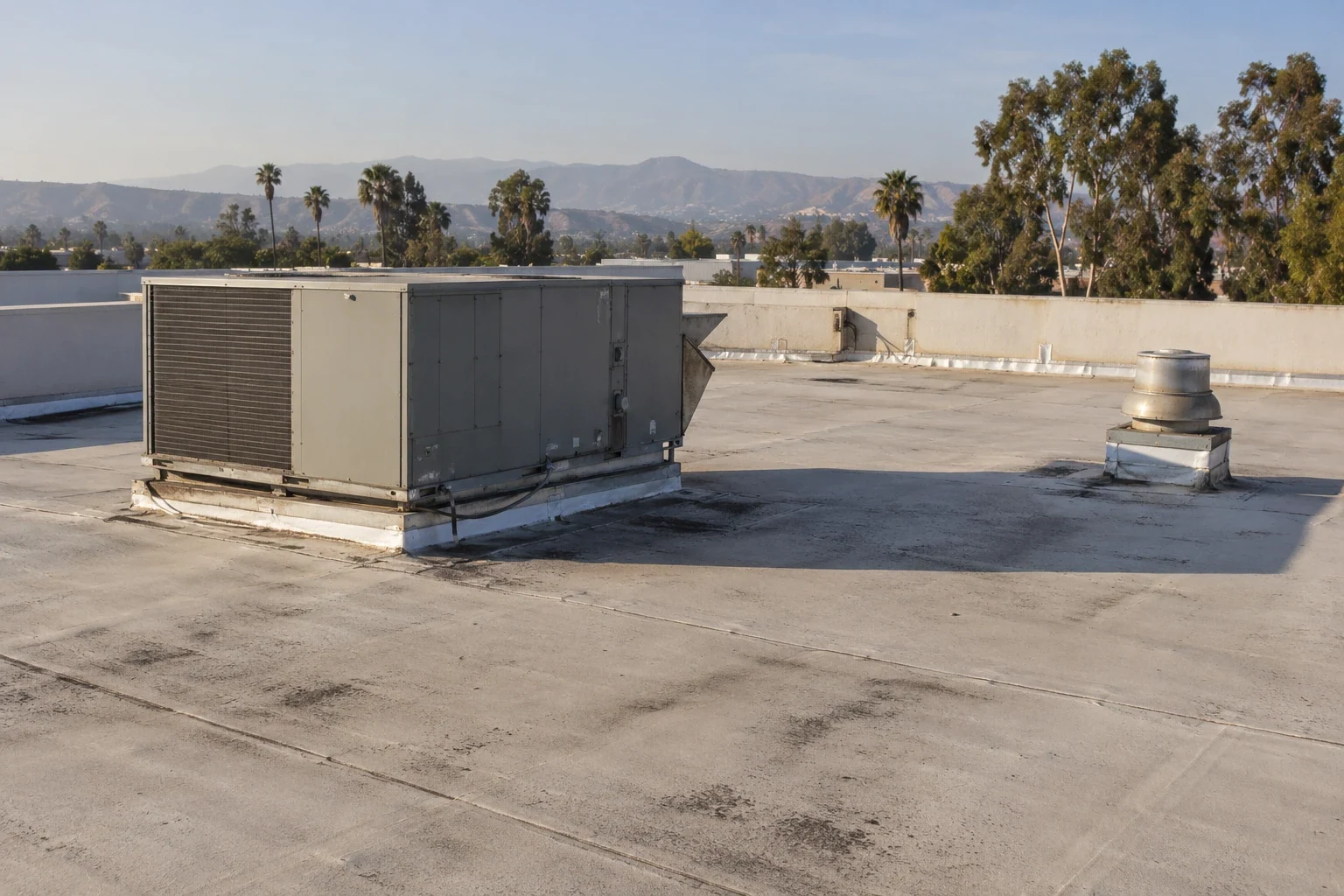
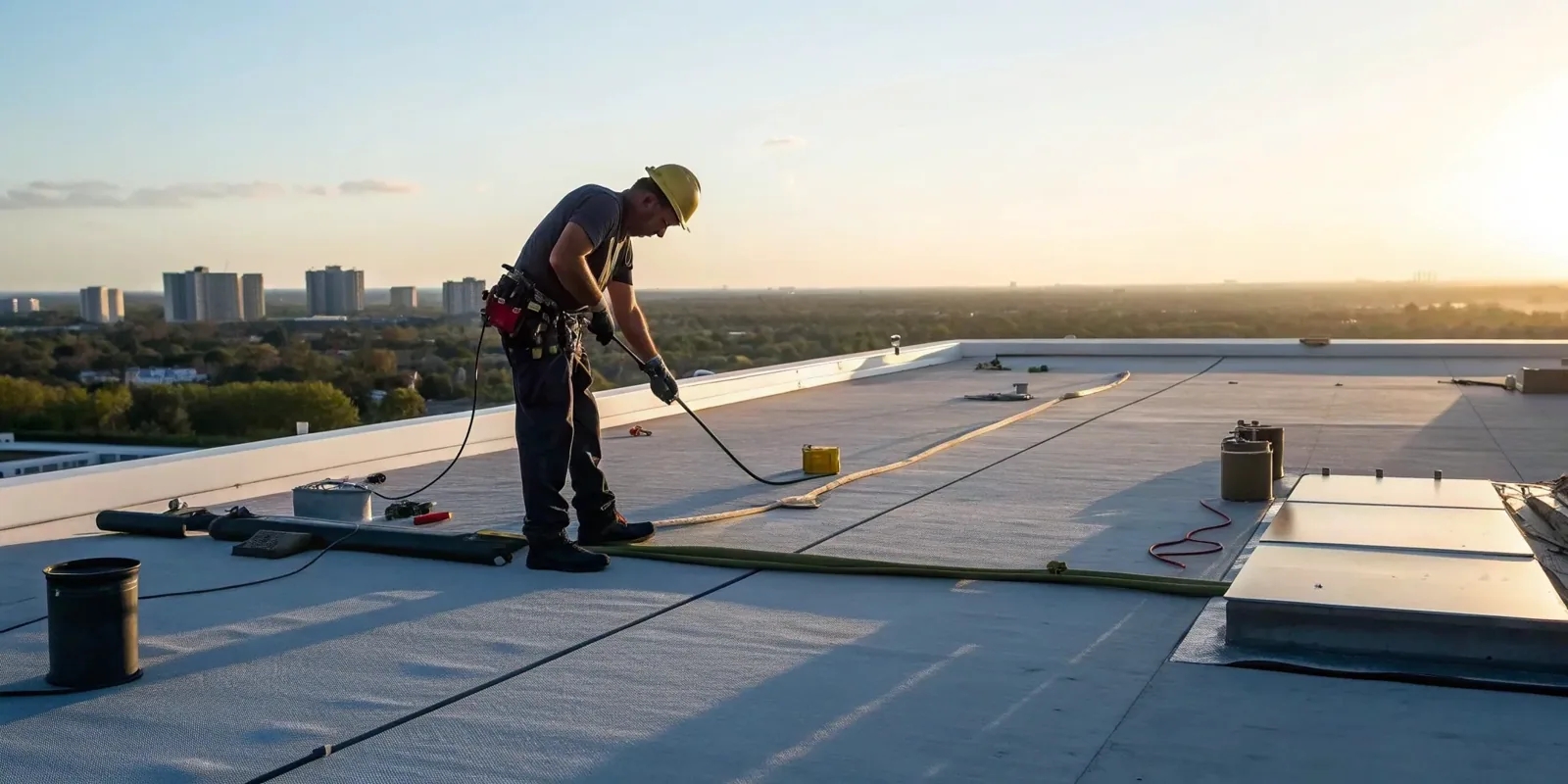
Set the authorized access method, the property areas included, and the field check that will compare scan results with roof conditions. The survey may use an aerial or roof-level method depending on conditions, roof layout, site restrictions, and operator qualifications. Identify equipment congestion, shading, ballast, coatings, and surface changes that could affect interpretation. The resulting report should name its method and state what evidence it does not provide.
Thermal patterns depend on more than roof moisture. Solar exposure, cloud cover, wind, ambient temperature, surface color, insulation depth, membrane type, interior heat loads, and recent precipitation can all affect the contrast. Record the conditions and timing that the method requires. A survey scheduled without that information may produce images that are difficult to compare or that call for a return visit.
Tracy's design criteria also list wind exposure C and direct designers to applicable wind maps and risk category. That detail concerns design inputs; it does not validate a thermal result or indicate how a roof is attached. Keep the climate and design facts separate from survey interpretation. If conditions do not support useful contrast, stop or reschedule rather than label every variation a wet area.
Before the visit, record recent roof work, temporary covers, drainage changes, equipment shutdowns, and whether the interior process was running during the survey window. Those details can explain a contrast that might otherwise be attributed to moisture. Note the time between a rainfall event and capture, and avoid comparing images gathered under substantially different conditions as if they were a controlled trend. If the operator identifies a condition that could invalidate the scan, document it and narrow the report rather than force a conclusion.
Mark field-check locations before mobilization where possible. A roof plan with numbered zones lets the owner approve a limited field check and reserve access near sensitive equipment. The test location should sit inside the suspected boundary, with a nearby comparison point when the assembly and access permit. Record the sampling rationale, consent, and result. If a test cannot be performed, preserve the anomaly as unresolved and explain what approval or access would be required. This keeps the final recommendation proportional to the evidence.
Use a roof plan with stable zone names and trace the scan path. Each suspected anomaly should have a location, image identifier, boundary, confidence level, and an explanation of nearby influences that could mimic a moisture pattern. Preserve original images and record how they were processed. Do not smooth away uncertain edges or draw a repair boundary where the evidence is diffuse. Mark areas hidden by equipment, parapets, roof geometry, or access limits.
The Northeast Industrial PUD covers roughly 870 acres in Tracy's northeast planning area. This broad geography includes industrial use, but the acreage is not a roof inventory. At a large facility, label the actual structure, tenant zone, and roof section so a scan result cannot migrate between adjacent buildings. If a property near the I-205 Corridor includes multiple structures, track each one with its own plan reference and survey authorization.
Before a suspected area enters a scope, compare it with visible conditions, the leak location, and construction records. The owner and qualified roof professional should choose a field check suited to the assembly, which may include a targeted opening or another authorized test. Record the test location, findings, and any limitation. If no opening or test was approved, label the result an unresolved anomaly and leave it out of confirmed wet-area totals.
When field evidence confirms a condition, draw a repair or replacement boundary from the findings, not from a broad thermal color. An condition report can distinguish scan observations, field confirmation, and recommended action. For a suspected leak, use a leak-path assessment to connect interior symptoms with roof details. If a warehouse roof has extensive equipment, note shadowed and inaccessible sections separately.
Give the owner a concise report with the roof plan, zone map, scan date, conditions, method, imagery, anomaly boundaries, field-check locations and areas not inspected. State whether each item is confirmed, suspected, or unresolved. Include the qualifications and scope of the person interpreting the images, and separate observations from recommendations. The reader should be able to trace every proposed action to a location and supporting evidence.
Do not present a moisture survey as a prediction of future leakage, a warranty determination, or a complete roof condition assessment. Use confirmed findings to inform an authorized repair scope, a recover feasibility review, or a broader capital decision. Where a coating is being considered, pair the moisture record with a separate system compatibility review. The recommendation should explain what remains unknown and which next action would resolve it.
Include a table matching each image number with its zone label, field-check result, and responsible reviewer.
No. A thermal anomaly is an indication for review. Weather, surface conditions, insulation, equipment, and other factors can create similar patterns. Check a suspected area with an appropriate authorized field method before changing scope.
The method needs conditions that create interpretable contrast, and those vary with assembly, surface, timing, and weather. The operator should confirm requirements for the specific roof and document conditions rather than assume a calendar date is suitable.
No. Tracy's design-temperature criteria do not establish survey conditions. Timing, recent weather, wind, roof construction, and operating loads still affect whether the scan can be interpreted.
Map it, compare it with roof records and reported leaks, then select an owner-approved field-check method. Keep untested anomalies separate from confirmed findings in the written report.
It can help prioritize investigation, but a boundary should reflect confirmed conditions, assembly records, and owner decisions. State the evidence and limits behind each proposed area.