Commercial Roof Leak Repair in Tracy, CA
Commercial Roofing Services
Trace a commercial roof leak in Tracy, CA from the interior report to roof-zone evidence, then define a repair limit and follow-up record.

Trace a commercial roof leak in Tracy, CA from the interior report to roof-zone evidence, then define a repair limit and follow-up record.
A leak file should connect the ceiling report to a roof-zone mark before anyone selects a patch. Water can move along a deck flute, insulation joint, or prior repair before it appears indoors, so the visible stain is one observation in a larger path. In Tracy, we compare the reported time and location with roof seams, curbs, drains, penetrations, and the slope above the affected room. The record separates a likely entry point from the areas that still need access or an authorized test opening.
The city lists a 101.2°F two-percent design dry-bulb high in its 2025 building criteria. That is a design reference, not a measurement on the day of a leak visit. Heat can affect safe access and product instructions; the inspection log should also note current conditions and any limit that changes what the crew can test. A broader roof inspection can preserve the condition record before repair work begins.
Ask when the first mark appeared, whether it followed rain or equipment work, and what changed after the first cleanup. Record which rooms or production areas were affected, whether the water stopped, and whether a ceiling tile or finish was moved. A recurrence after a prior patch may point to a nearby detail or a missed drainage condition, but the date alone does not identify the entry point. Keep the original report with each new observation so later visits can compare like conditions.
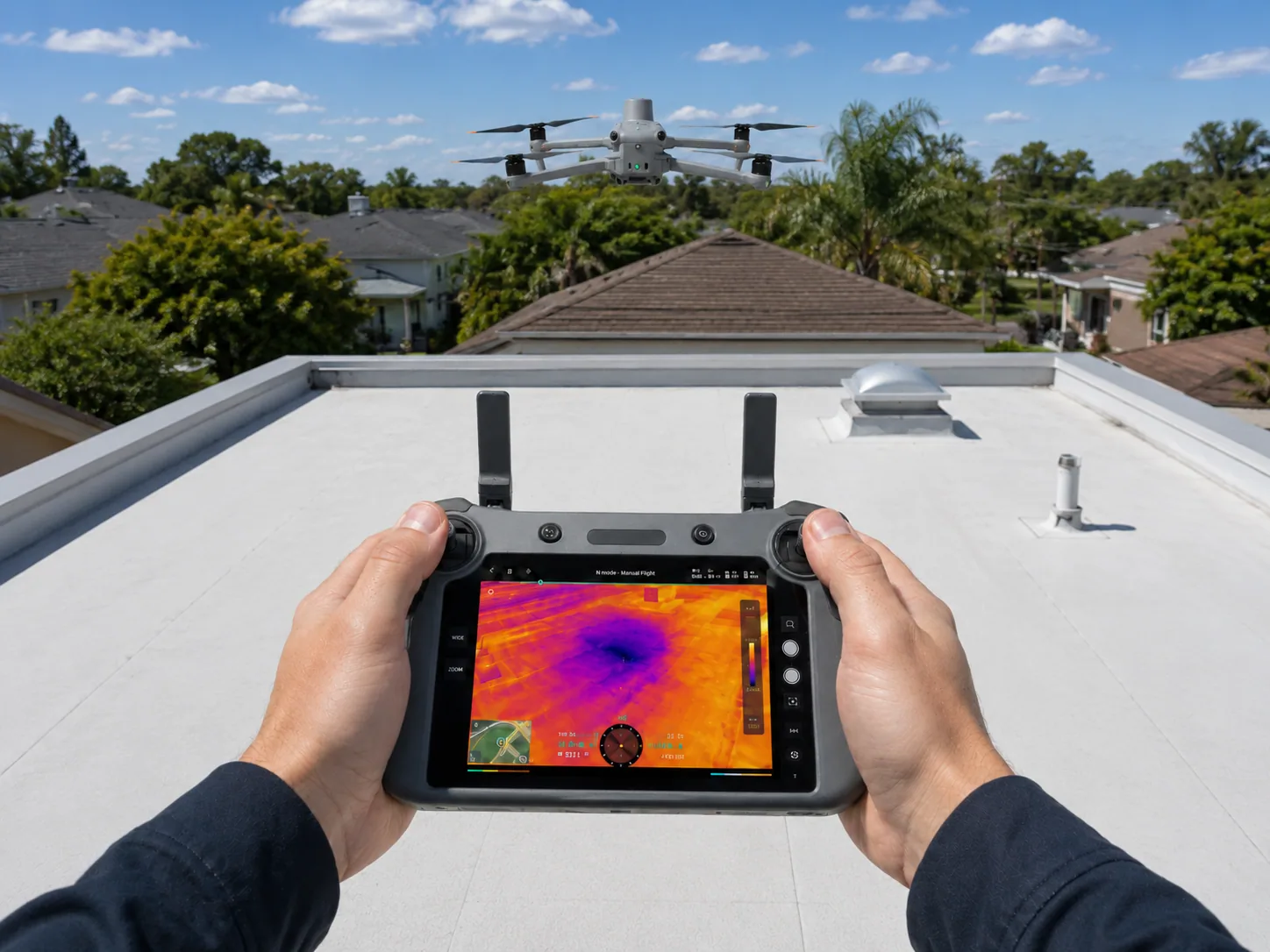
On the roof plan, project each reported area upward and mark a practical search zone. Check transitions, penetrations, curbs, seams, and earlier repair edges in that zone, then extend the inspection along plausible travel paths. A moisture survey may help map differences across an assembly when conditions and surface type permit. Record what the instrument can show and what would require an opening to confirm.
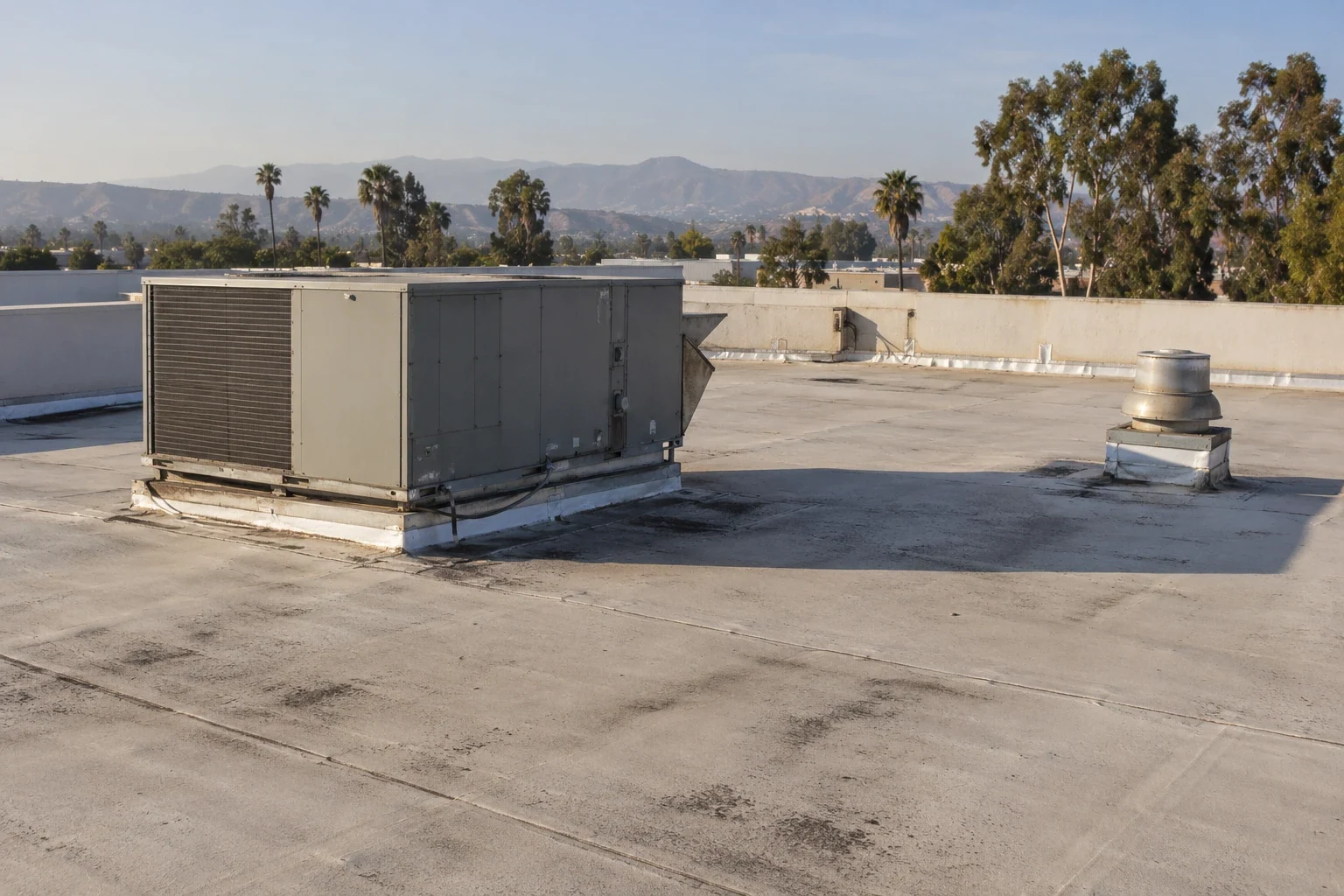
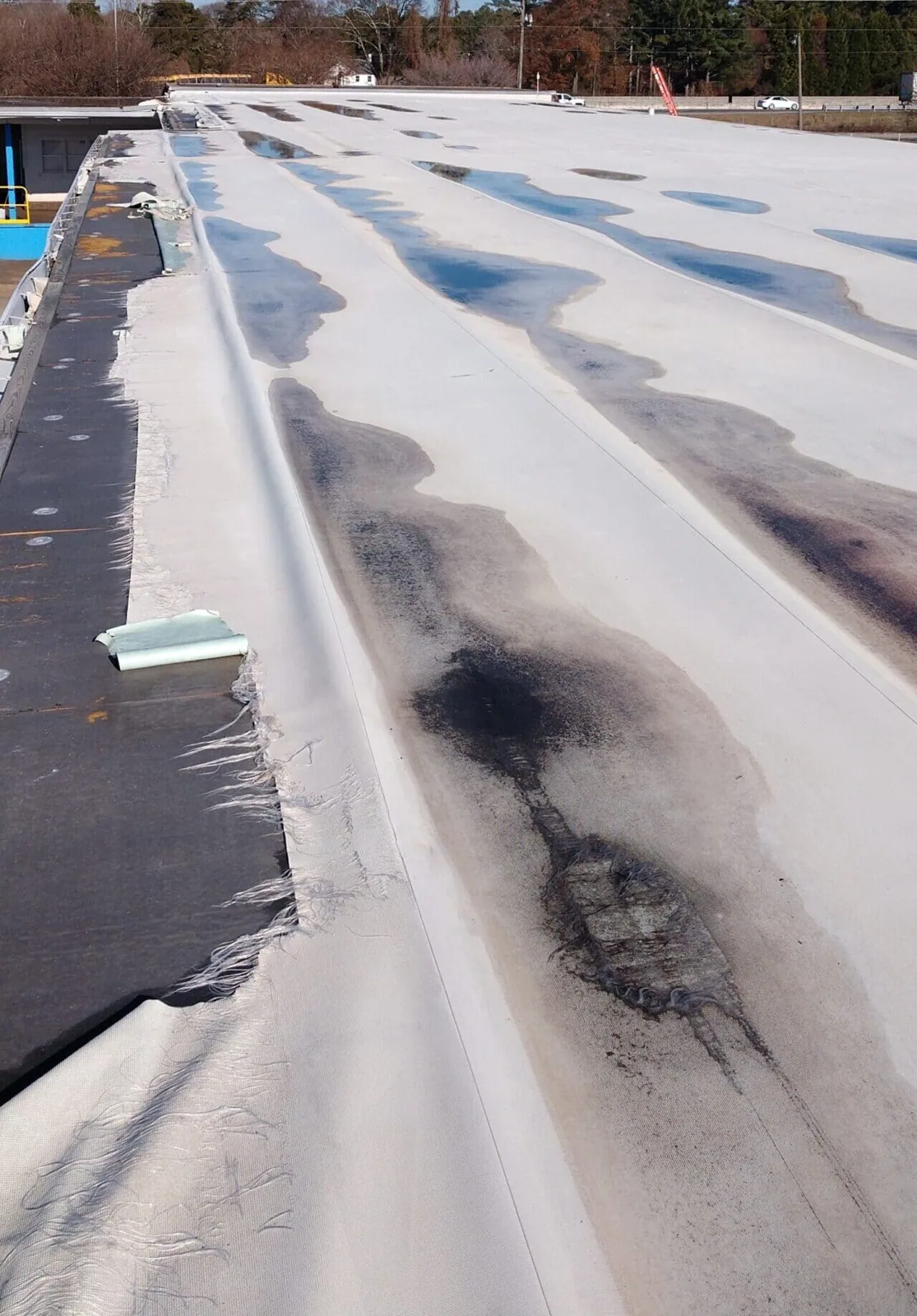
Begin with visible checks that do not disturb the roof: seam condition, flashing height, debris at drains, damaged counterflashing, punctures, and water marks on walls or curbs. Note each finding against a fixed roof feature and photograph it from a repeatable position. If water is active, protect the interior and keep people away from affected electrical or ceiling areas under the property safety plan. A temporary measure belongs in the log with its location and the inspection it still needs.
Do not treat a dry surface between storms as proof that the path is closed. Water may remain in insulation or take a longer route to the room below. Where the initial walk cannot distinguish a seam from a penetration or a drain detail, state the next observation that would narrow the cause. A scoped flashing review is useful when the water path intersects a curb, wall, or penetration, while seam repair needs a confirmed membrane and compatible preparation.
A test cut can reveal the membrane, adhesive or fasteners, insulation, and deck, but it also creates a condition that must be closed before the crew leaves. Mark the proposed location, dimensions, restoration detail, and person authorized to approve it. Photograph each layer as it is exposed and label the sample by roof zone. If the material differs from records or moisture extends past the opening, pause and show the owner what changed before expanding the investigation.
The Northeast Industrial PUD accommodates manufacturing, warehouse and distribution uses, including rail-dependent and flex-tech work. On a property with active deliveries or equipment moves, the opening location and access route should be agreed with operations before materials are staged. This land-use context does not describe any one roof. Keep the work area controlled and schedule the test to match the building's access rules. The warehouse roof review can help organize equipment and loading questions for that type of property.
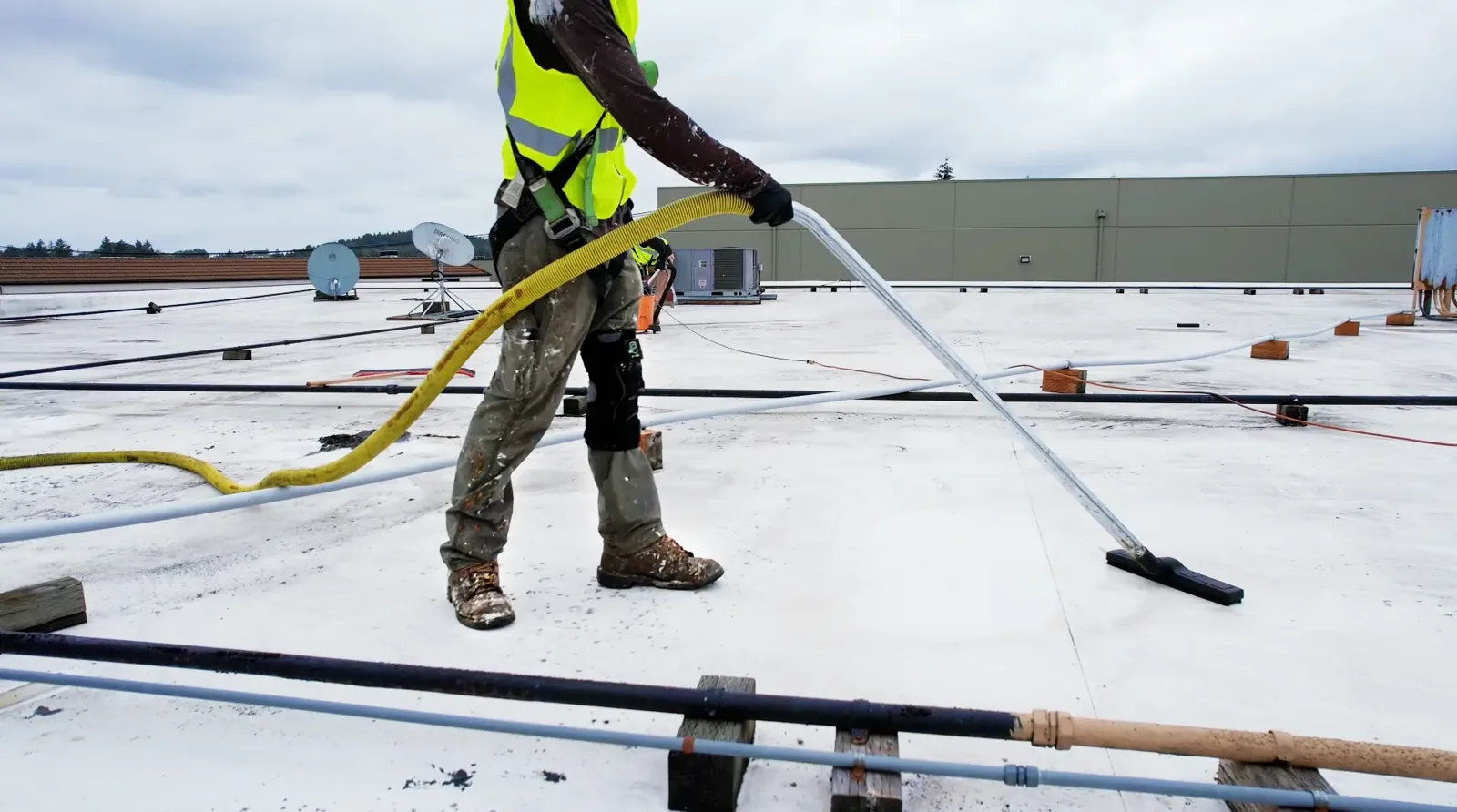
Once the entry path is supported by evidence, write the repair boundary around the actual defect. Specify surface preparation, material compatibility, substrate treatment, reinforcement if needed, and the finished tie-in. Identify whether wet insulation or deck work is included or held for owner approval. A patch that bridges over loose material or ends on a contaminated surface may not resolve the defect; the scope should state what must be removed and what condition is acceptable before the new layer goes.
When the membrane remains unidentified, do not price a product-specific detail as settled. Check project records, exposed edges, and manufacturer instructions where the product can be established. If the leak recurs across several roof zones, compare the repair history with a drainage review or broader assembly work before repeating the same local patch. A time-sensitive roof response can address active entry while leaving a clear record of follow-up work.
Separate the authorized repair from likely additions before the crew opens the roof. The work order should identify the mapped zone, the visible defect, access limits, approved materials, closeout photos, and the person who can direct added work. If the test reveals corroded deck, wet insulation, or a different assembly, record the exposure and ask for written direction before covering it. That step keeps the final bill connected to a decision the owner actually made.
Tracy's I-205 Corridor plan places commercial uses near Grant Line Road and I-205, a useful marker for dispatch planning. On the I-205 Corridor, the property team still sets receiving, staging, and roof-entry rules. For repeat leaks or a multi-zone scope, use a condition report to keep photographs, test locations, and approvals in one record.
Closeout photographs should show the prepared surface, repair layers, edges, and finished tie-in. Add the roof-zone label, material information when known, work date, access limits, and any test that remains outstanding. If the repair included a drain, curb, or wall transition, frame the image so the connection to the surrounding roof is clear. Record deviations from the authorized scope rather than burying them in a general completion note.
Give the facilities lead the original leak report, the mapped path, the repair boundary, and the next review item. If water returns, revisit the same references and compare the new report with the earlier photos before widening the area. A repeatable log helps distinguish a failed repair from a second entry point. Keep the roof plan current when equipment changes or later work creates another penetration, then attach the new detail to the existing assembly record.
Water can travel through a deck or insulation interface before reaching the room. We map the report to the roof above and follow likely seams, penetrations, drains, and prior patches before setting a repair limit.
Use one when visible checks and available records cannot identify the assembly or moisture boundary. Mark the location, closure detail, and approver first, then stop if exposed conditions extend beyond that limit.
It can when the owner approves the removal and replacement scope. The work order should state how the wet area is identified, what substrate condition is acceptable, and how the new layers tie back to the existing roof.
Roof access, loading windows, equipment routes, and material staging affect where and when a test can occur. The Northeast Industrial PUD accommodates warehouse and distribution uses, so confirm those limits with the property team before mobilizing.
Keep zone-labeled photos, the confirmed path, materials used, the finished boundary, approvals, and unresolved testing together. Include the original leak report so a later visit can compare conditions accurately.