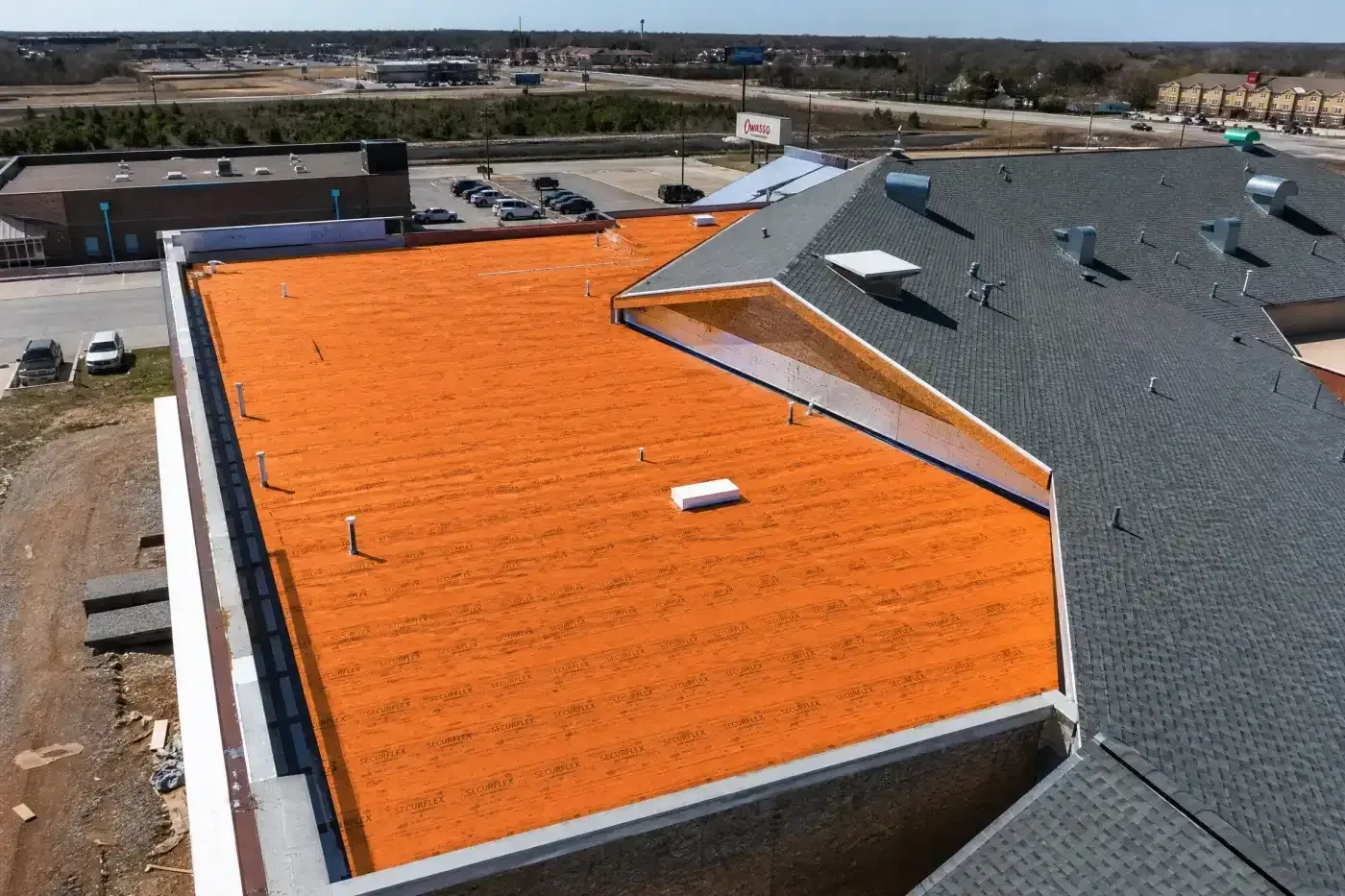
Ponding Water Roof Repair in Tracy, CA
Roof Damage Repair
Trace ponding on commercial roofs in Tracy to drains, slope changes, and membrane details, then document whether correction or follow-up testing is needed.

Trace ponding on commercial roofs in Tracy to drains, slope changes, and membrane details, then document whether correction or follow-up testing is needed.
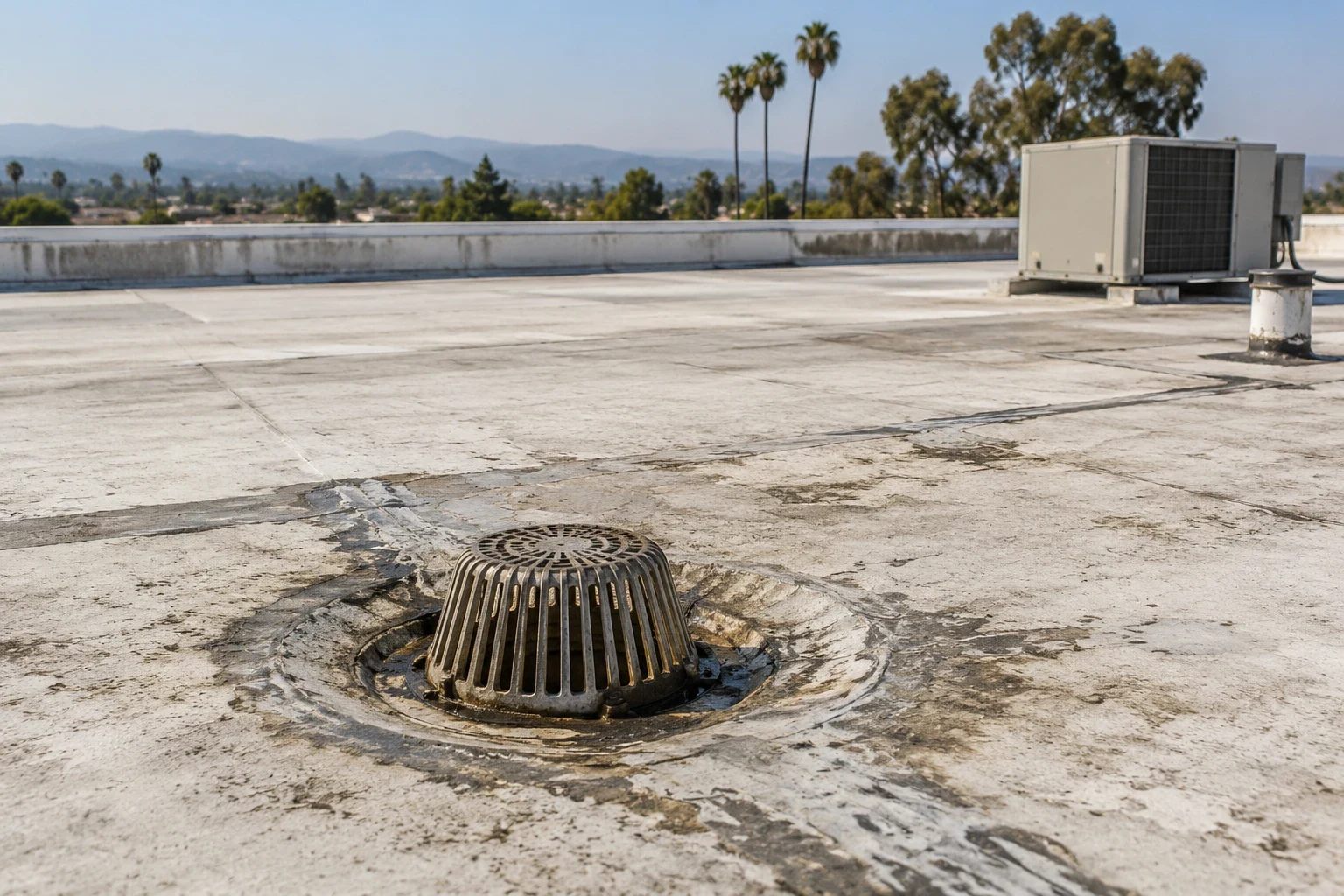
A shallow pool remaining after nearby roof areas dry calls for a measured outline, not a coating or patch selected from a distant view. We mark the low area, check the depth where practical, and trace the slope toward primary and overflow outlets. Downtown Tracy has a distinct land-use designation in the city's General Plan, while commercial uses near Grant Line Road and I-205 sit within the separate corridor plan. Those broad areas include different commercial settings; neither fact diagnoses drainage at one building. The roof survey has to show the actual water path, membrane, and outlet condition.
Ponding can relate to a blocked drain, a depressed deck, settlement, a raised repair, an undersized overflow path, or a membrane detail that holds water at a seam. Each condition changes the work. A drain and scupper inspection can map outlets and overflow points; the I-205 Corridor is useful geographic context for commercial service, not a reason to assume a specific roof has a low area.
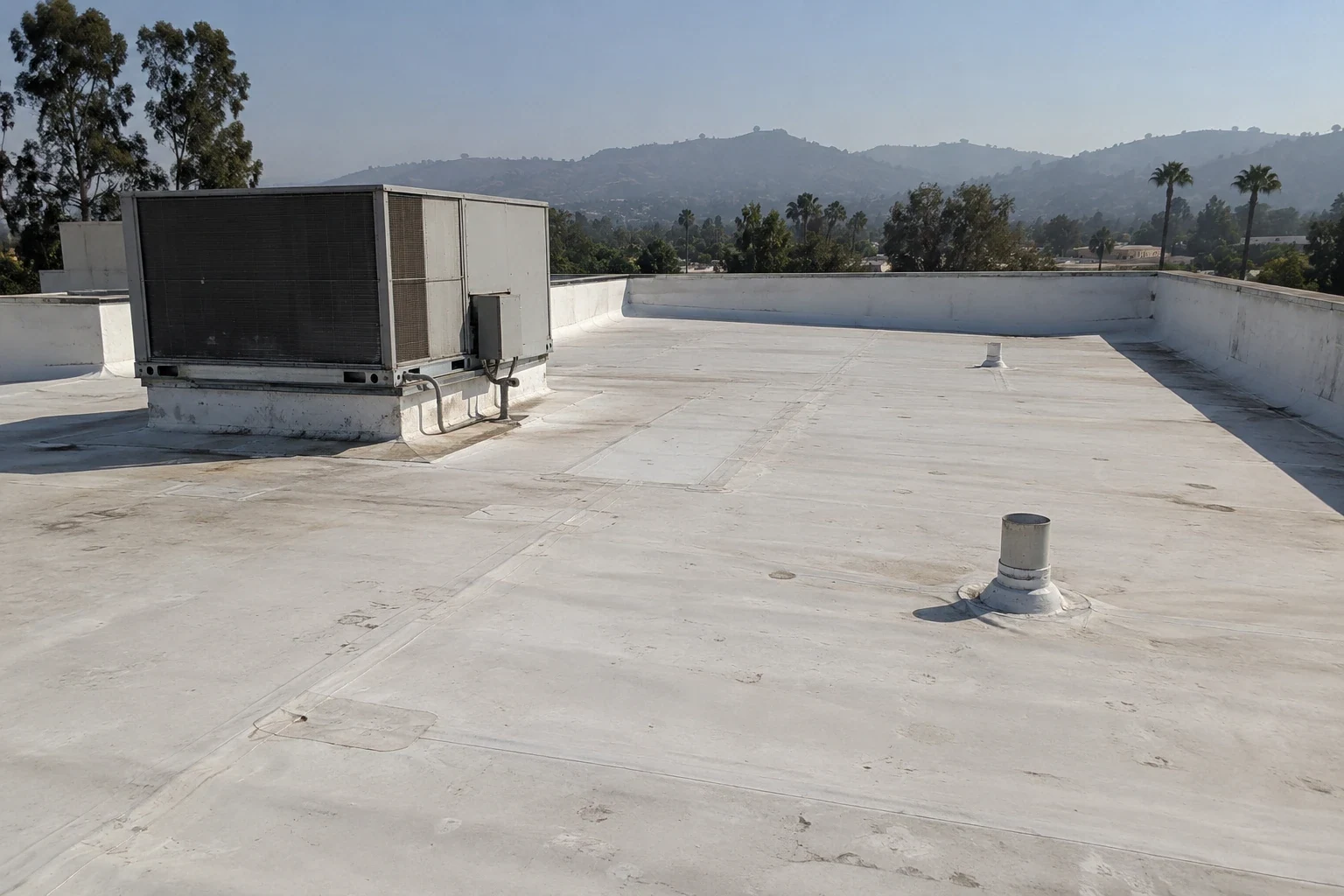
Record the ponding boundary at more than one point in the weather cycle when access allows. Note the approximate depth, visible debris, nearby roof penetrations, and whether water remains at a drain bowl or in a separate depression. A marked plan should identify the slope, outlet, overflow, and edge nearest the pool. Photograph the area from a consistent position and include a scale or reference where it can be used safely. One image without a roof location is difficult to compare later.
Check whether the pool changes after debris is removed or an outlet clears. If the water drains but returns, record the residual outline and the nearby surface transitions. A curb, walkway pad, prior patch, or insulation repair can alter flow and create a dam. Keep maintenance work separate from an elevation correction, since cleaning an outlet cannot flatten a low deck. A roof inspection can record both observations without assigning one cause before the relevant evidence is available.
Inspect the strainer, bowl, clamping ring, leader connection, overflow, and membrane flashing around each outlet. Look for debris, loose parts, damaged sealant, or a blocked route below the visible inlet. A drain may be clear at its rim while the surrounding membrane sits below the plane needed to move water toward it. If the overflow is concealed or inaccessible, note that limit rather than marking it as clear.
Tracy planning describes a network that connects Downtown with commercial destinations through city transit routes. For a commercial roof, the practical point is to account for access and active ground-level movement while planning drain work; do not infer a building's entrance or drainage from a district map. If an outlet must be altered or connected below the roof, identify the plumbing or mechanical trade responsible. A phased work plan can protect interior areas during drain replacement and set a stopping point before the outlet is reopened.
Use a straightedge, level, or other approved survey method to compare the pooled area with nearby high points and outlet elevations. Note the measurement method and reference. A wide depression may reflect deck deflection or insulation thickness rather than a surface defect. Do not add tapered insulation or pourable filler until the assembly, drain height, and roof loading are reviewed. The correction must preserve the required path to both primary and overflow drainage.
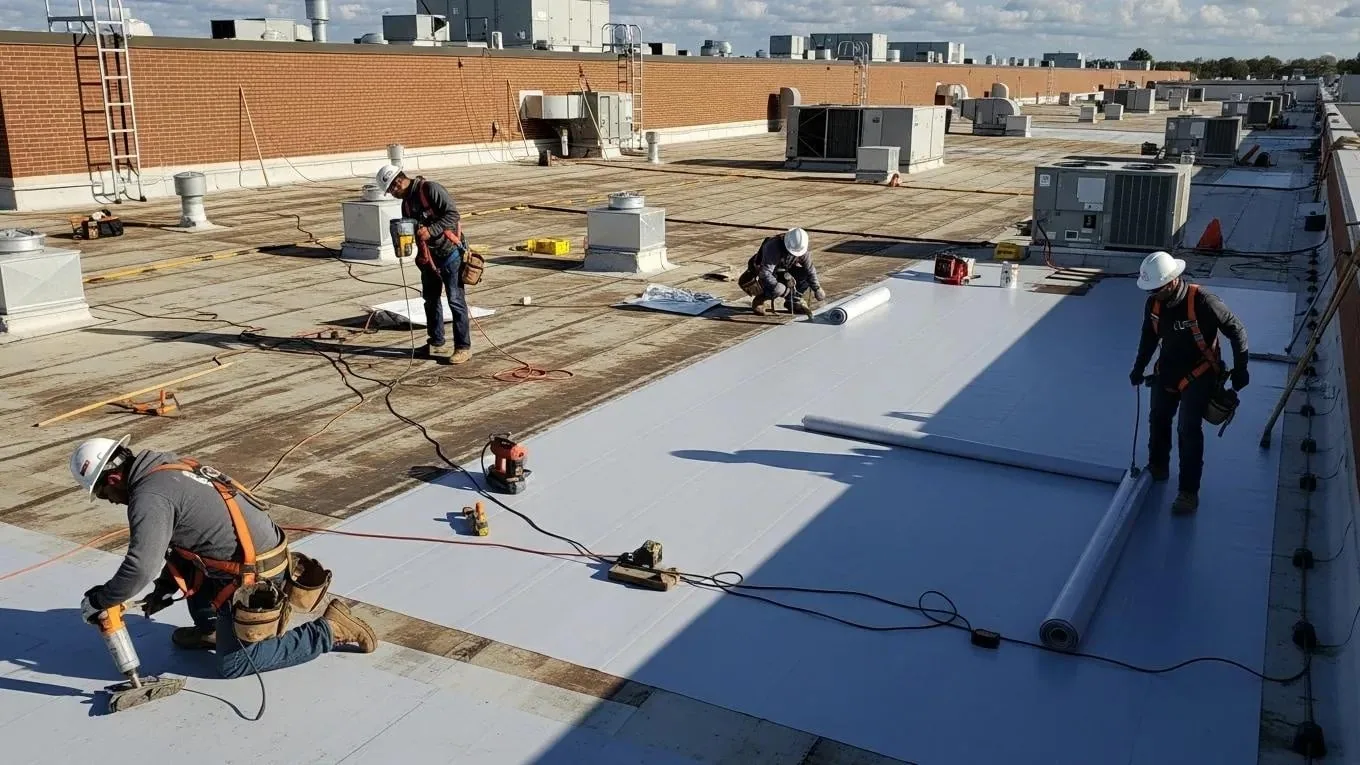
If the roof has several layers, check accessible edges and records for prior recover work. An added layer can raise a drain, change curb clearance, or reduce the amount of slope available at a low point. A TPO roof assessment can identify membrane and detail concerns, while a recover review should verify that the existing assembly and drainage elevations support another layer. Any concealed condition exposed by an authorized opening belongs in the scope record before it is covered again.
Standing water can make a weak lap, curb corner, or termination easier to spot, but the wet outline alone does not identify a leak. Inspect seams at the pool edge, nearby wall transitions, drain sumps, penetrations, and earlier repair patches. Record blisters, open laps, fishmouths, wrinkles, punctures, and edge separation with the exact location. If an interior report exists, trace the likely path separately and do not assume the lowest point is where water entered.
Where the membrane is sound and the outlet or slope can be corrected, a localized approach may be enough. A flashing repair can address a failed drain or curb transition, while a seam repair applies to a confirmed lap defect. If testing is required, record the test area, conditions, and result. Leave untested insulation and deck condition as an open question rather than treating the whole ponded surface as damaged.
For a blocked outlet, remove the obstruction and confirm the flow route. For a damaged drain flashing, define the bowl and membrane work. For a persistent low plane, measure the area to be raised and verify that the drain, overflow, curbs, and roof edge remain functional. Specify material removal, new insulation or fill, membrane tie-in, protection below, and inspection points. Separate a confirmed repair from an allowance for decking or saturated insulation concealed beneath the roof.
If ponding spans several roof zones or follows repeated repair attempts, compare repair with recover or replacement using the same elevation plan. A replacement scope should show how new slope, drain heights, and overflow paths will be set. If the findings remain localized, preserve the low-area measurement in the service record so future maintenance can compare the same points and identify any change after service.
After repair, photograph the corrected plane and outlet, then document the method used to confirm flow. Record whether water cleared, the conditions at the check, and any residual area that was outside the approved scope. Do not describe a drain as performing if it was not tested under conditions that let the path be observed. Add a note for inaccessible leaders, concealed outlets, and any area requiring a separate trade.
Tracy's I-205 planning area places several commercial uses near Grant Line Road and the freeway; buildings in this corridor still have distinct roof elevations and drainage layouts. Displaced material or a changed edge that redirects water should be recorded as a separate finding. Keep the before-and-after plan, measurements, work approvals, and any open questions with the roof record. A maintenance visit can then compare the same low points rather than rely on a general statement that the roof drains well.
The inspection records how long water persists, its depth and area, and the condition of the membrane beneath it. The measured pattern helps distinguish a service item from a slope or assembly problem.
Cleaning can restore flow when debris is the cause. If the water remains after the outlet is clear, check elevation, slope, flashing, and overflow capacity before choosing another correction.
Only when the selected product and roof assembly support that use. A coating does not replace a drain repair or create reliable slope over an unmeasured depression.
Compare the new outline with the original measurement and inspect the lap, adjacent plane, and outlet. The remaining water path may be unrelated to the prior seam work.
List the outlet check, surface measurement, test opening, or other approved observation that supports the repair. State the conditions and areas not included in the check.