Emergency Commercial Roof Repair in Tracy, CA
Commercial Roofing Services
For an active commercial roof leak in Tracy, CA, document the affected zone, protect operations, and separate temporary stabilization from permanent repair.

For an active commercial roof leak in Tracy, CA, document the affected zone, protect operations, and separate temporary stabilization from permanent repair.

Active water entry needs two records at once: what is happening inside and where the roof team can safely investigate. In Tracy, we begin by identifying the affected room or equipment, the time water appeared, and any immediate electrical or access concern. The roof plan then marks a search zone above that area, including drains, curbs, seams, and prior patches. An emergency visit can stabilize an active condition, but the permanent repair still needs a confirmed assembly and a written boundary.
Tracy's criteria list wind exposure C and direct design review to the applicable maps and risk category. That is not a field reading; it is context when a storm has affected roof edges or exposed material. The crew follows current site safety rules and the selected product instructions. For a non-active issue, a scheduled condition inspection can build the record before the next work window.
Keep people clear of wet ceilings, energized equipment, and areas where finishes may fall. Have the facilities lead identify affected rooms, process areas, inventory, and any temporary protection already in place. Record whether the water is active, intermittent, or stopped, and when the report began. A ceiling stain may sit below a longer water path, so use it as a location clue rather than a repair address.
Before dispatch, confirm hatch or ladder access, fall-protection points, escort rules, roof traffic, and who may authorize a test opening or added work. Share current wind, rain, and lightning conditions with the field lead. If the roof cannot be reached safely, document the access barrier and the next safe check rather than promising a repair from the ground. Emergency response is available around the clock, including weekends and holidays, with the immediate safety condition stated first.
If water is near electrical equipment, isolate the affected zone through the property safety procedure and keep the inspection path clear until the responsible site lead approves access.
Use temporary protection only when it can be installed safely and secured without creating another water path. Record the covered zone, fastening or ballast method, and the check needed to remove or replace it. Keep drains and scuppers open; do not route water toward an occupied doorway or electrical area. If a temporary diversion is used, photograph the discharge path and advise the property contact what remains exposed.
A temporary patch does not establish whether insulation below it is wet or whether a nearby penetration is also involved. Mark the temporary work separately from permanent scope so the next crew does not treat it as a finished detail. If the assembly is unknown, use the first safe visit to identify the surface and document the materials. A compatible puncture repair or seam correction can be priced after the damaged area and substrate are visible.
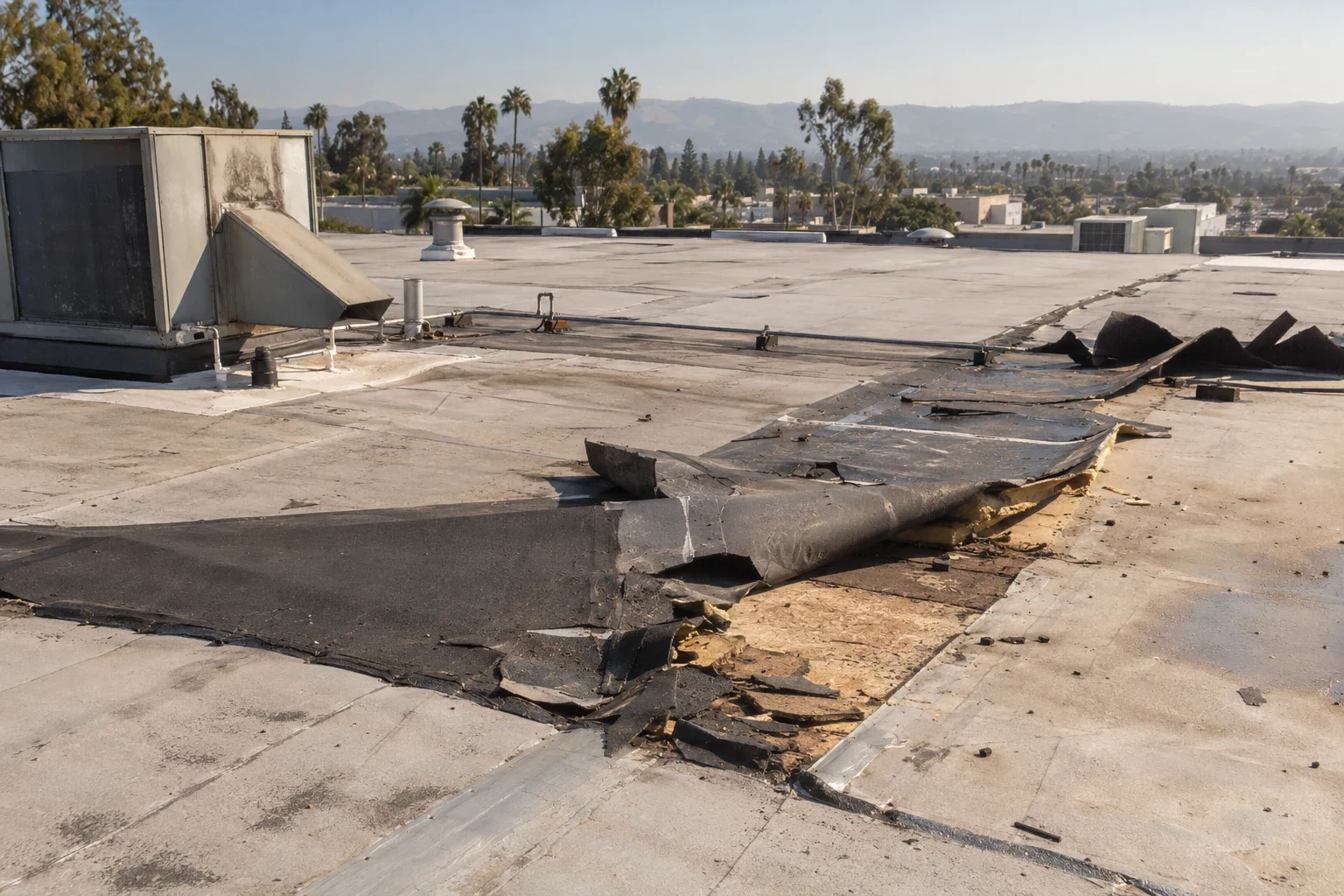
After high wind or hail, photograph displaced edge metal, lifted laps, debris impact, broken skylights, and exposed insulation before cleanup changes the evidence. Mark which conditions are new and which appear to be prior repairs or surface wear. Do not infer a roof failure from weather alone. A focused walk should connect the observed defect to the affected interior report and note any areas that could not be inspected.
The Northeast Industrial PUD spans about 870 acres at Tracy's northeast corner and accommodates warehouse, distribution, rail-dependent, manufacturing, and flex-tech uses. For an operating property, roof access and production timing can matter during stabilization; the planning area does not establish the condition of a particular building. A wind-damage review can track affected details, while a flashing assessment can define the repair if water is entering at a wall, curb, or penetration.
List the active condition, roof zone, immediate protection, access limit, materials identified, and any test the owner approved. State whether the visit includes a permanent repair or only temporary stabilization. If opening the roof reveals wet insulation, damaged deck, or a different membrane, stop at the authorized limit and request direction. The owner should receive a photograph of the exposed condition before added work is covered.
Keep the dispatch contact available to confirm tenant or production access and authorize changes. Record arrival, areas reached, temporary measures, and the next safe inspection. The I-205 Corridor plan locates commercial uses near Grant Line Road and the freeway, while the specific delivery rules come from each property. The I-205 Corridor service area does not replace that receiving plan. For a multi-zone problem, the condition report can hold photos, test limits, and approvals in one file.
Once the source is supported by evidence, draw the repair around the affected detail and state what preparation, replacement layers, and termination are included. Identify whether insulation or deck is within scope, excluded, or subject to an approval after opening. Use materials compatible with the confirmed membrane and follow the technical instructions for surface preparation, cure, and weather limitations. A repair boundary should be repeatable on the roof plan and visible in closeout images.
If water repeats across several zones or moisture extends beyond the initial opening, compare the repair with a broader leak investigation or an assembly review. Tracy's building criteria include a documented design heat high, which informs system review but not the actual workday conditions. The next visit should check the new surface against current temperature, wind, and application limits before proceeding.
Give the facilities lead a short record of the room report, roof zone, observed entry path, temporary measures, permanent work completed, and areas still untested. Attach photographs from repeatable positions and note who authorized each change. List any interior protection to remove and any drain or access item that needs follow-up. A concise log can help the next shift respond without assuming a similar stain has the same cause.
Keep the original incident time, weather notes, and repair materials with the roof plan. If water returns, compare the new mark with the same reference points and inspect the repair limit before widening the search. Use a maintenance visit to revisit details that were not urgent enough for the response window. The record should distinguish closed work from a question the property team still needs to resolve.
Share the affected room, whether water is active, immediate safety concerns, roof access rules, and a contact who can approve testing or added work. Photos and a roof plan help identify the first search zone.
Yes, when the source, assembly, access, and weather conditions support a defined repair. If a concealed layer or substrate changes the scope, document it and get written direction before expanding the work.
Mark the covered zone, method, material, and the condition still exposed. Keep drains open and include the next inspection or removal step so a later crew does not treat the temporary measure as a finished detail.
Photograph displaced metal, lifted seams, and exposed layers before cleanup. Note access or weather limits and compare each observation with the interior report and prior repair record.
Stop when an opening reveals wet insulation, damaged deck, a different assembly, or conditions beyond the marked boundary. Send the owner the exposure record and request written direction before covering it.