Preventive Commercial Roof Maintenance in Tracy, CA
Commercial Roofing Services
Build a Tracy roof maintenance cycle from verified assembly records, drainage checks, repeatable photos, and repairs with clear authorization limits.

Build a Tracy roof maintenance cycle from verified assembly records, drainage checks, repeatable photos, and repairs with clear authorization limits.
A maintenance visit should answer what changed, what needs action, and who has authority to approve it. For a commercial roof in Tracy, start with the last inspection, leak tickets, warranty terms, and the current roof plan. Then map the walkable zones, drainage paths, perimeter details, rooftop equipment, and areas that cannot be reached. A repeatable record is more useful than a calendar reminder alone: it lets the next facilities lead compare the same location and distinguish a new defect from an old patch.
The Tracy design basis is Climate Zone 12, with a two-percent dry-bulb high of 101.2°F. Heat is a planning factor, but it does not prove a roof defect or set an automatic service interval. The inspection record should set the next visit based on actual condition, system guidance, exposure, and owner requirements.
Use the assembly's maintenance instructions, project documents, warranty obligations, occupancy schedule, and observed condition to define timing. A roof with active construction, recurring water reports, recent repair, or changing rooftop equipment may need an earlier review than a stable system. Do not promise a fixed outcome from a visit frequency. Write down why the interval was selected, which zones it covers, and what event will trigger an extra inspection.
At each visit, use the same roof plan or labeled grid. Record the date, weather context, accessible route, and any limit caused by locked areas, equipment, or active work. Photograph conditions from stable positions and mark their location. If an owner has several facilities, keep one register per building and distinguish the roof assembly, warranty, and service history rather than merging records under one property name.
Choose a comparison window that makes sense for the roof and its operating calendar. A post-work review can verify that the crew closed penetrations and removed debris; a later visit can look for movement or recurring marks. Before a planned shutdown, owners may need a record of drains, rooftop equipment, and safe access. After a major weather report, a condition check can document new observations while distinguishing them from older repairs. The calendar should name the trigger and the person who decides whether an extra visit is warranted. It should not imply that every facility needs the same monthly, seasonal, or annual sequence.
For each cycle, compare the new record with the previous one. Carry forward open items with their evidence and due date, then close them only when the approved task is documented. If the zone could not be reached, keep it open rather than marking the entire roof complete. This lets an owner weigh condition, access, and budget without confusing a skipped area with a clear one.
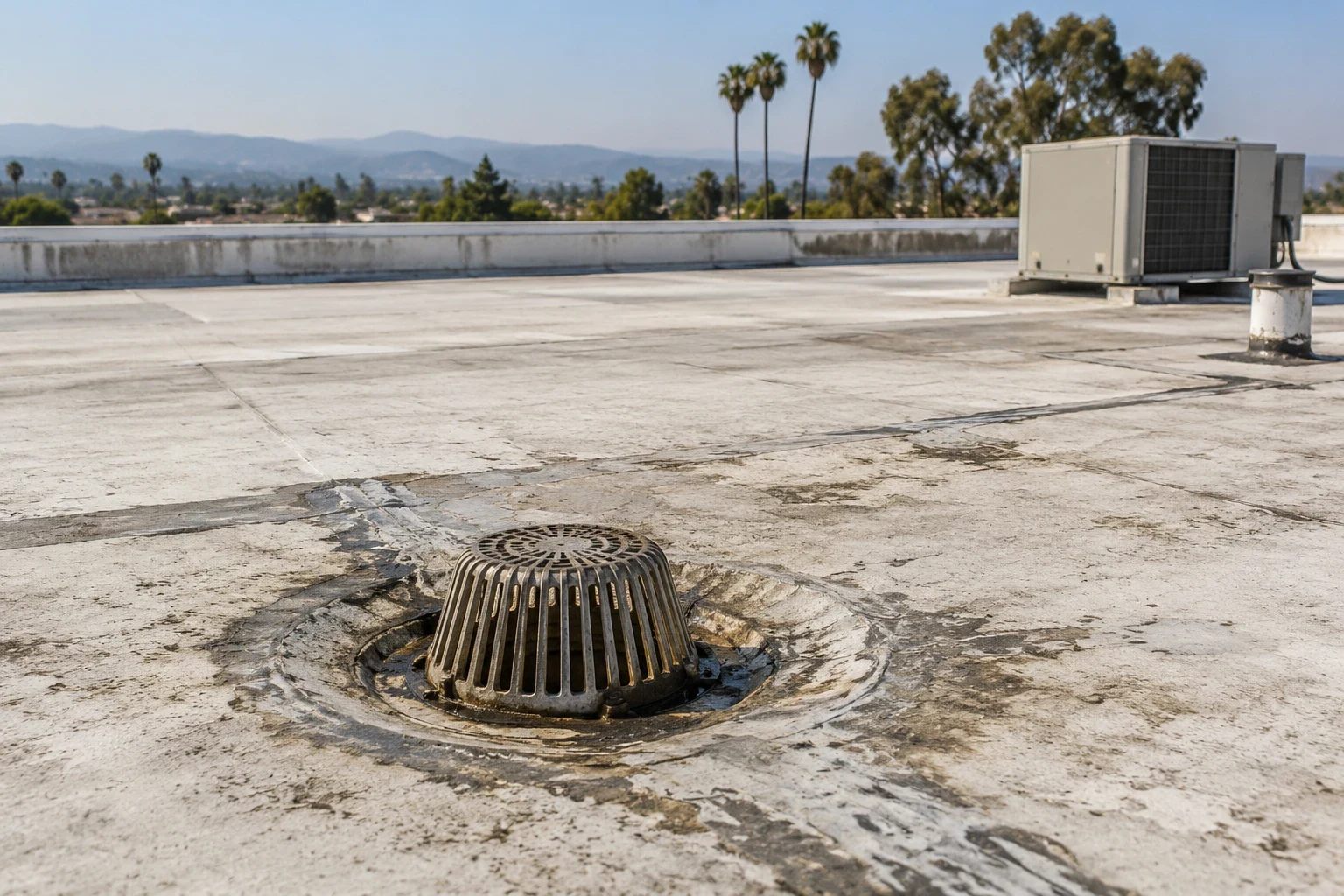
Document drains, scuppers, gutters, overflow paths, and visible debris. Note whether an outlet is clear, whether water marks are present, and whether the route discharges where expected. Do not move equipment or open a drain assembly without permission. If cleaning is approved, state what was removed and take before-and-after photographs. A recurring ponding observation should be logged with location and conditions; it is not by itself proof of structural damage or a reason to alter slope.
When water returns after a storm, connect the ticket to roof and interior zones. The drain review can distinguish a maintenance task from a detail failure. A leak assessment should still trace the entry path before materials are selected. Keep temporary measures and permanent repairs separate in the work record.
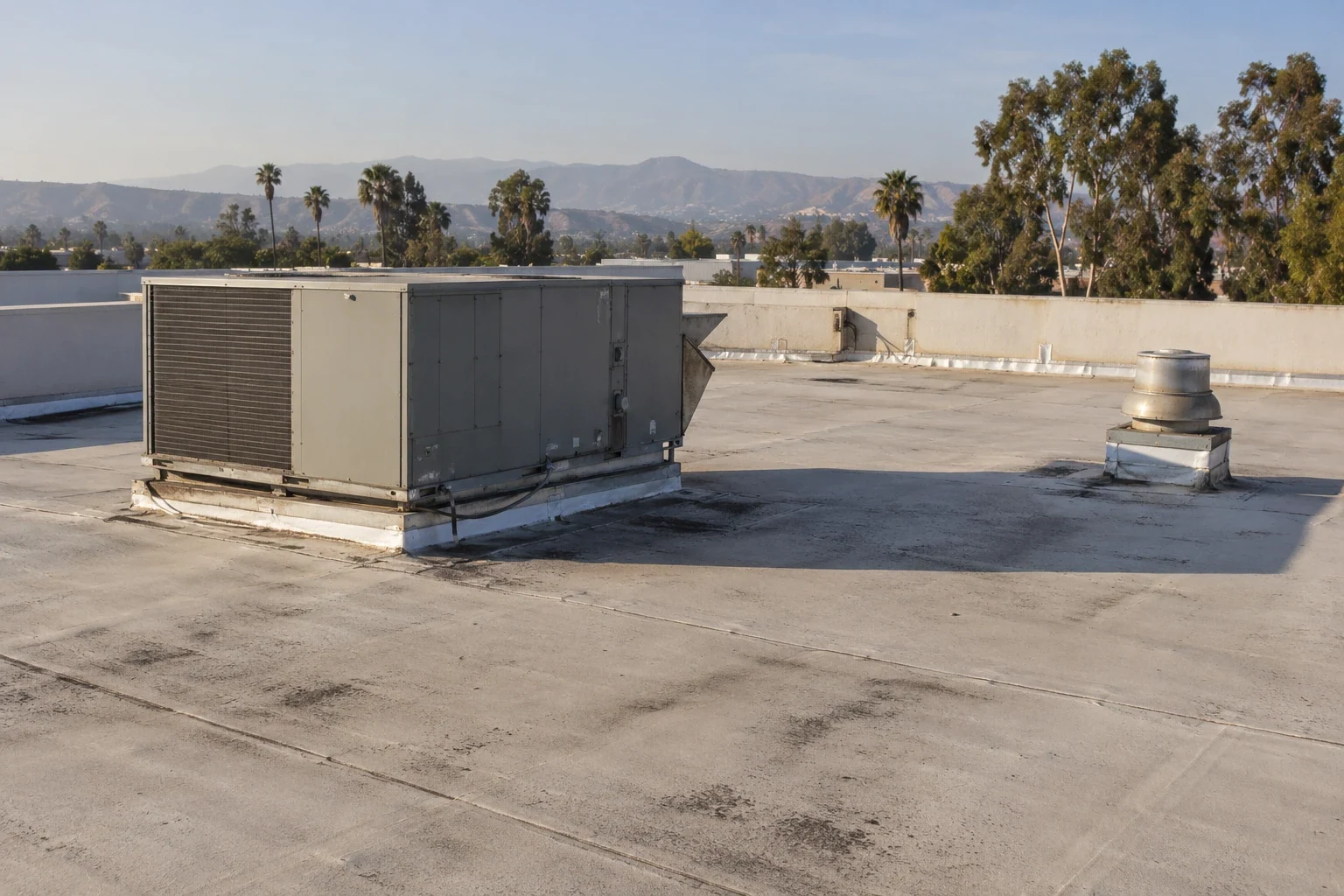
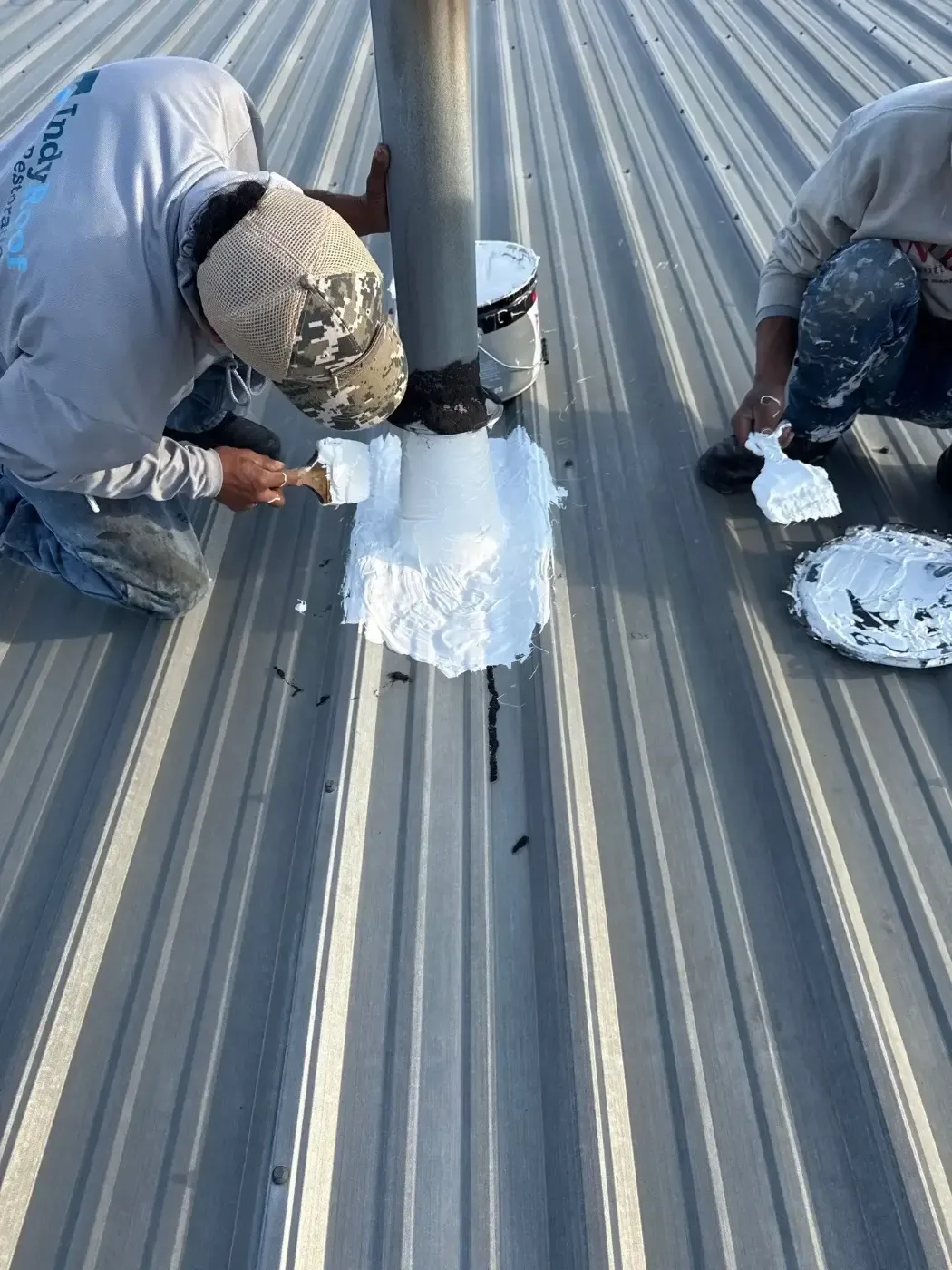
Inspect accessible flashings, seams, penetrations, edge metal, sealant transitions, and equipment supports. Record separation, movement, impact, exposed fasteners, or prior patch edges without labeling every visual change a failure. A detail can be vulnerable because of water flow or movement, but a repair scope needs a confirmed assembly and a defined boundary. If a rooftop unit, curb, conduit, or solar component was added since the prior visit, mark it on the plan and ask for the installation records.
The City describes Tracy's northeast industrial planning area as serving manufacturing, warehouse and distribution, rail-dependent industrial, and flex-tech uses. That broad land-use context helps explain why some owner portfolios may contain different building layouts. It does not describe a specific tenant or roof. Use an individual building record and inspect its actual rooftop penetrations. For a suspected surface-system issue, compare the documentation with a coating restoration review before specifying a maintenance product.
Assign each finding a status: routine cleaning, monitor, investigate, repair proposal, or access needed. State the evidence that supports the status and who must authorize the next action. Small maintenance items can still affect drainage, safe access, or warranty compliance, so write down the approved task and completion proof. If an opening reveals wet insulation, damaged deck, or a different membrane than records show, stop at the scope limit and request owner direction.
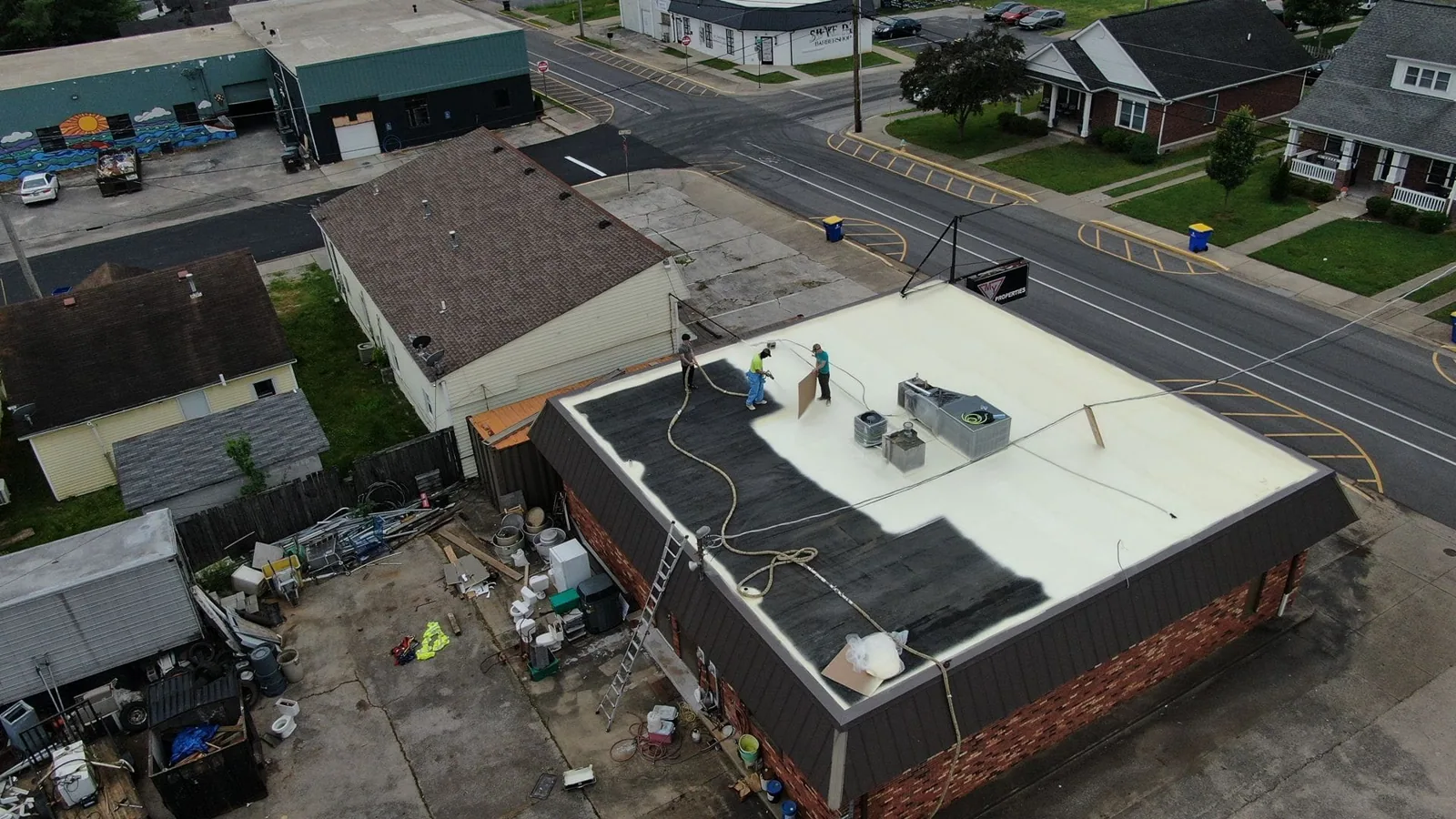
Use a work order that names the roof zone, preparation, material, extent, test, and closeout requirements. Do not use a maintenance visit to quietly expand into unapproved replacement. A warranty review can clarify notice and documentation duties; a condition report can carry unresolved items into budget planning. Keep the owner decision, contractor observation, and work performed distinct in the record.
Store the plan, photos, service tickets, product data, repair boundaries, and approvals under stable building and zone names. A concise log should state what was checked, what could not be checked, what changed, and when the next review is due. Include a named responsible contact for access and a method to report new leaks. When the facilities team changes, the record should allow a new reviewer to understand why an item remains open without relying on an undocumented conversation.
The city highlights access to three interstates: I-5, I-205, and I-580. Near Grant Line Road, the I-205 Corridor Specific Plan maps commercial land uses; this is area context rather than a property-specific access note. Those are citywide transportation and planning references, not evidence about a given building's condition. Use the I-205 Corridor service-area context only as geography; identify the owner's actual property in each work order. When a significant condition develops, follow a defined emergency response process instead of waiting for the next routine cycle.
When a repair changes a roof detail, add the revised boundary to the plan and attach the closeout images. The next reviewer can then compare the repaired area with the original observation instead of reopening an old work order without context.
Set the interval from the assembly instructions, warranty, observed condition, occupancy, recent work, and owner requirements. Record why that interval fits and which events require an earlier review.
It is a planning consideration, not a standalone inspection schedule. Tracy criteria document a high design temperature; visit timing should also reflect the actual roof system, records, exposure, and observed conditions.
Record the roof zone, date, access limits, observed condition, photos, approved work, materials, and next action. Keep recommendations separate from tasks the owner authorized.
Yes, when the owner approves a defined scope and the assembly and repair boundary are established. If concealed conditions differ from the records, stop at the authorization limit and request direction.
Document its location and condition, confirm whether cleaning is authorized, and record the work and result. Repeated water marks may need a separate drainage or leak-path assessment.