Commercial Roof Coating in Tracy, CA
Commercial Roofing Services
Assess a commercial roof coating in Tracy, CA with adhesion tests, moisture mapping, detail repairs, and an application plan tied to the existing assembly.

Assess a commercial roof coating in Tracy, CA with adhesion tests, moisture mapping, detail repairs, and an application plan tied to the existing assembly.
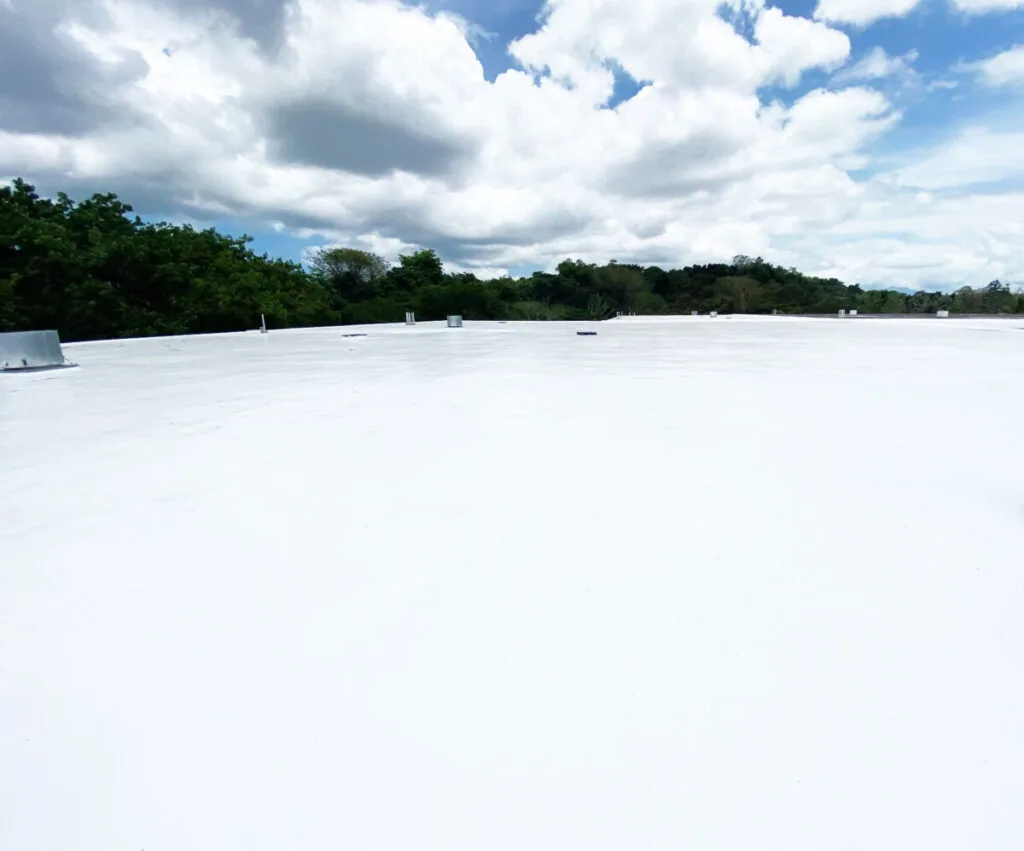
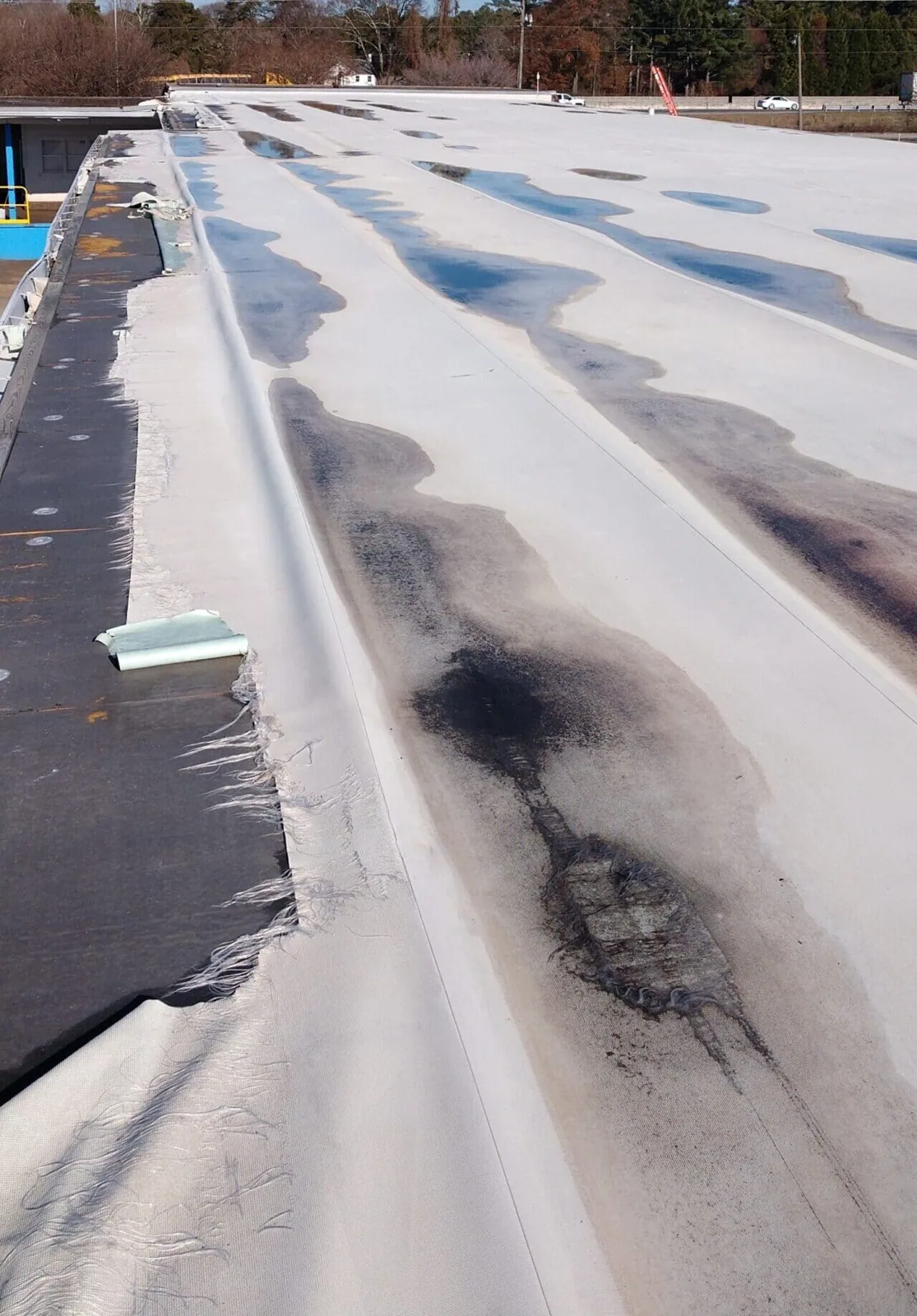
A coating bid needs a defined test area and a documented surface before gallons or film thickness enter the discussion. In Tracy, we map the roof zones, identify the existing membrane or surfacing where possible, and mark blisters, open seams, ponding, and prior patches. The coating remains an option only where the underlying assembly can support it. If the roof has wet insulation, unstable attachment, or details that cannot be repaired within the proposed boundary, the owner needs that finding before comparing restoration with replacement.
Tracy's climate designation is Zone 12, with sustained summer heat recorded as a roof-design consideration. That context informs solar-exposure review and material selection; it does not forecast the roof temperature on an application day. Before work, we check the measured surface, wind, and product limits at each zone. A silicone coating system or another fluid-applied option must match the confirmed substrate and repair plan.
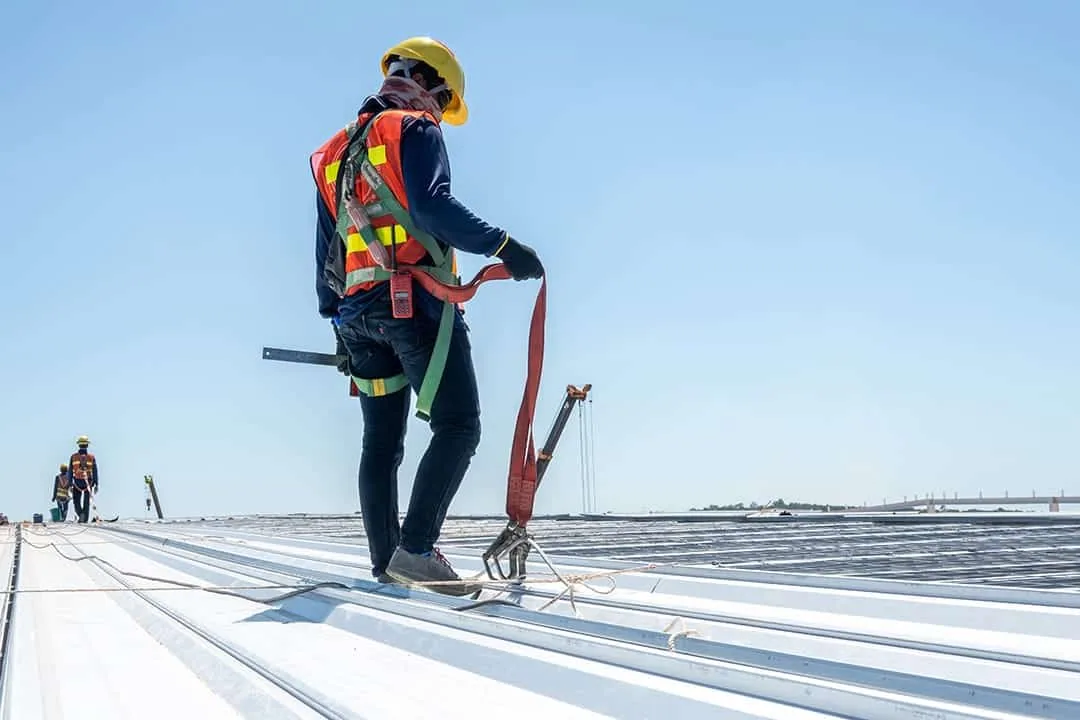
Start with the membrane, coating history, seams, flashing, drainage, and visible movement. Remove loose material only within a controlled inspection area and record what lies below it. Look for widespread wet insulation, delamination, corrosion, brittle surfacing, or an incompatible earlier coating. A coating can renew a suitable surface, but it cannot correct a failed deck or make a saturated layer sound. Separate those conditions on the roof plan before the owner authorizes a larger test.
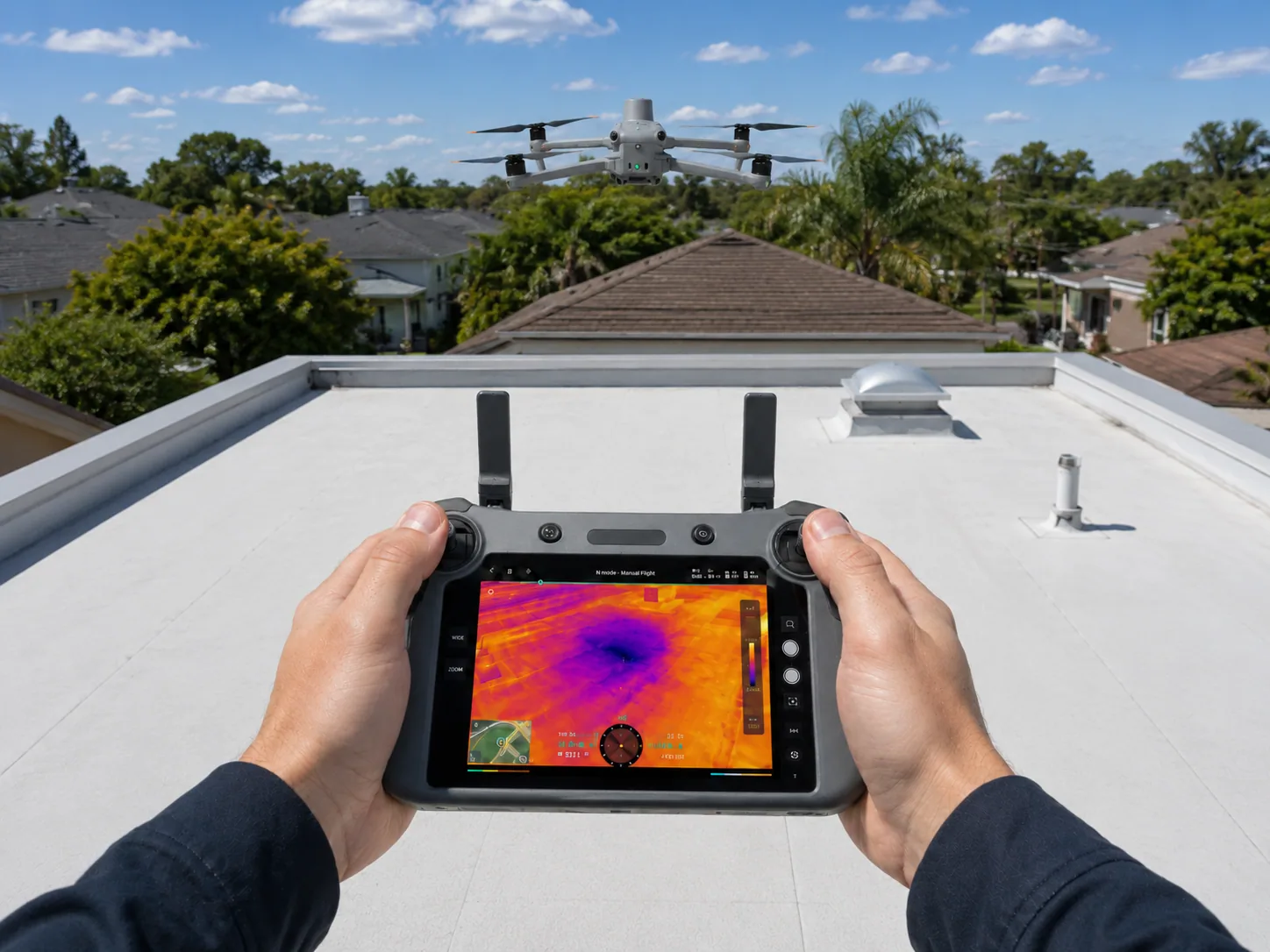
The northeast part of Tracy includes the Northeast Industrial PUD, with manufacturing, warehouse, distribution, rail-dependent, and flex-tech uses. That context may affect access and staging for some commercial roofs; the property record still has to establish the actual assembly. A condition inspection can classify observed areas, and an instrument survey can help select locations for confirmation when the roof construction permits that method.
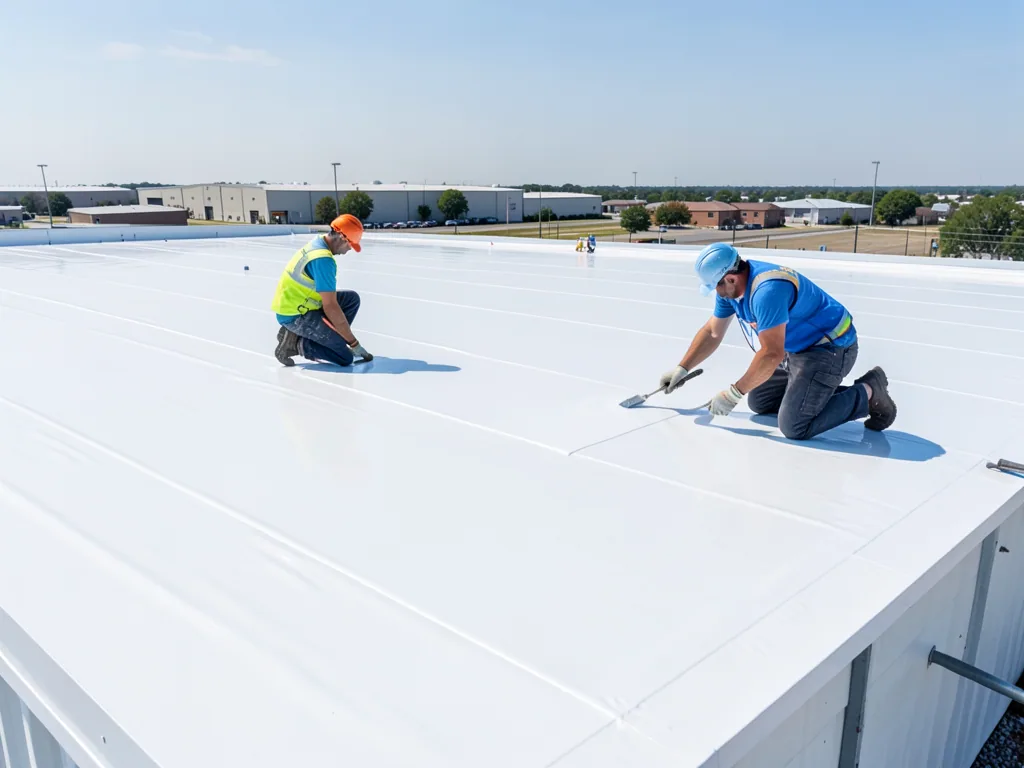
Clean a representative test area using the product instructions, then apply the proposed primer and coating at the specified rate. Record the surface preparation, weather, cure interval, and result. A successful patch on a clean corner does not prove that a chalked field, repaired seam, or shaded area will bond the same way. Test more than one zone when the roof includes different surfacing or prior coatings, and retain photographs with the location label.
If a test fails, identify whether cleaning, primer, substrate, or coating history is the likely cause before selecting an alternate system. Do not turn an inconclusive pull into a full-roof assumption. The test record should state how the sample was prepared, where it sits, and whether the surface had moisture or contamination. A reflective acrylic option may use a different preparation and application approach; compare the technical instructions against the tested surface rather than against a generic product description.
Mark each low area and determine whether ponding follows a blocked drain, a local depression, or a broader change in slope. Record water after nearby surfaces have dried and note debris or discharge restrictions. If a coating proposal simply bridges a wet section, the trapped condition remains below the new layer. Use readings or authorized openings to distinguish surface moisture from wet insulation, then define the removal or repair needed before the coating is applied.
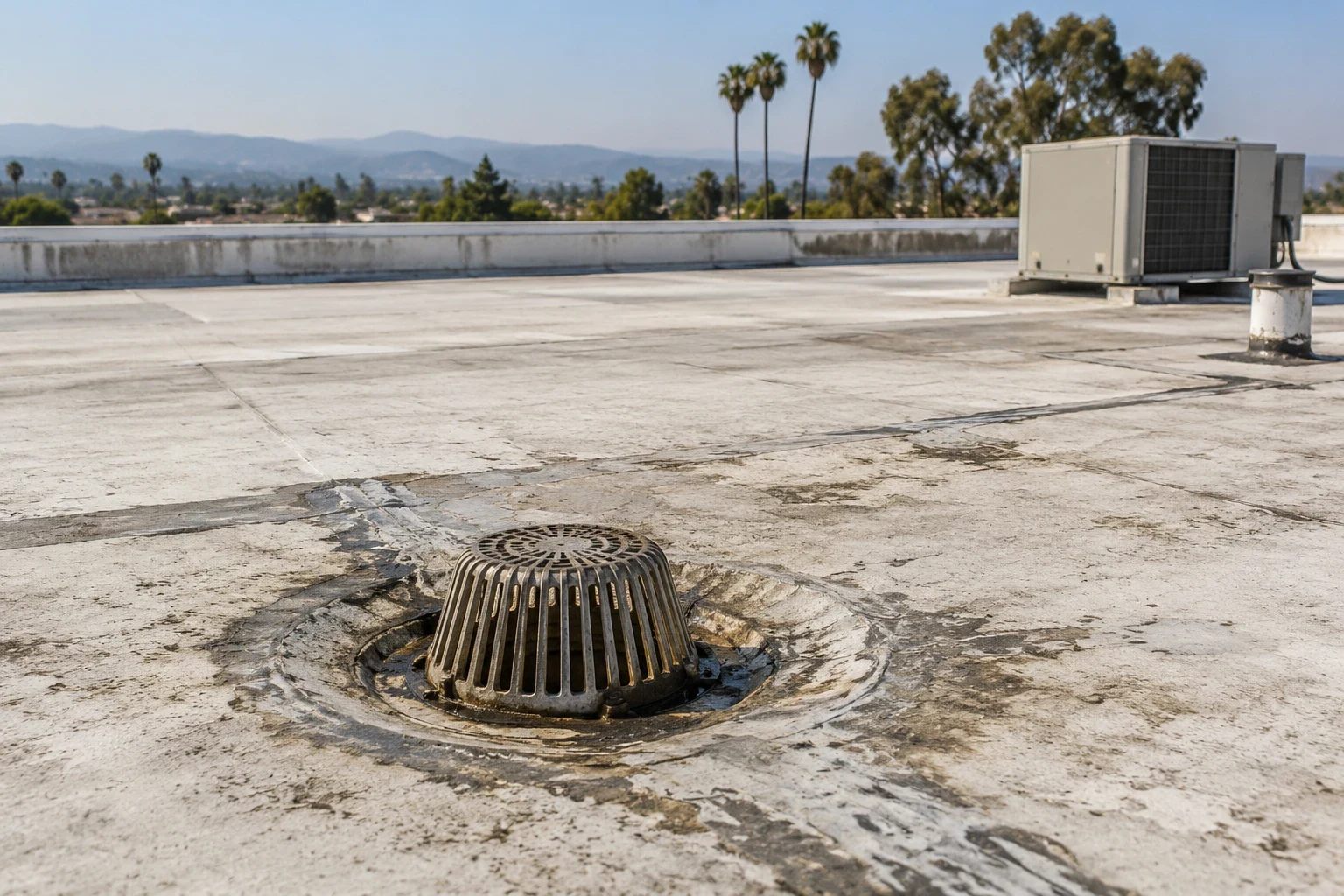
Tracy's industrial planning includes areas for manufacturing and distribution uses, where roof drainage can sit above active space or stored goods. Coordinate access and any interior protection with the facilities lead before testing. A ponding-water assessment can separate an outlet obstruction from a slope issue. The drain and scupper scope should define the membrane tie-in and metal work that a field coating alone would not address.
Coating does not remove the need to repair open laps, loose flashings, curb transitions, penetrations, and perimeter metal. Draw each detail and specify cleaning, reinforcement, primer, and finish coat as required by the selected system. A drain bowl may need a separate compatible detail, while a moving expansion joint can require a designed transition rather than a rigid film. Identify who approves substrate replacement if the repair reveals damaged insulation or deck.
Tracy connects the I-5, I-580, and I-205 routes. Separately, the City's corridor plan maps commercial uses around Grant Line Road near I-205. Those broad locations help orient the service area, not the roof's defect map. A crew still needs the property roof plan and access instructions. For the I-205 Corridor, carry the same marked detail schedule into the work order so the coating ends at an inspected, repairable boundary.
Set the work window from the selected product's temperature, moisture, cure, and recoat requirements. Record the actual surface condition and forecast review used by the field lead, then identify when work must stop. Wind can affect overspray and access; dew or moisture can affect adhesion; a short cure window can change the shift sequence. These controls belong in the schedule because the coating needs a prepared, dry surface and the required film build at every zone.
Stage materials away from drains, skylights, equipment, and pedestrian paths, and protect adjacent surfaces where the instructions require it. Measure application by the agreed method and record the areas completed each day. Keep wet-film checks or other specified verification with the location and lot information. A work plan for an occupied building can coordinate lift access, production windows, and temporary protection without treating the roof as available at all hours.
Compare coating, recover, and replacement using the same moisture map, test results, repair schedule, and drainage plan. Include preparation, detail restoration, primer, coat count, target thickness, excluded areas, and closeout testing. Cost can move with surface cleaning, repair quantities, access equipment, and the number of failed test zones. If those items are undefined, ask for separate allowances and a clear approval point rather than treating a broad coating rate as a complete scope.
A coating can extend a suitable assembly's service path, but the record should not imply a life span or performance the system documentation does not state. Confirm maintenance requirements and any existing warranty conditions in writing. For a roof with widespread concealed damage, a replacement review may give the owner a better basis for a capital choice. Use the marked Tracy zones to set a location-specific inspection and carry those boundaries into the proposal.
Identify the existing surface, attachment, moisture, drainage, and repair history. Map different roof zones and test adhesion where the assembly or coating record leaves compatibility uncertain.
No. It applies to the preparation and surface at that test location. Repeat testing where materials, prior coatings, or roof conditions change, and keep each result tied to its zone.
Only the underlying drainage or slope work can address that condition. Identify whether a blocked outlet, local depression, or broader plane issue is involved before coating the surface.
Use Tracy's design criterion as context, then check current roof temperature, moisture, wind, cure window, and the selected product instructions. Record the actual stop conditions for each shift.
Keep the zone map, surface preparation, test locations, material information, application checks, repaired details, and maintenance requirements together. Note excluded areas and any condition left below the coating for later review.