Acrylic Roof Coatings in Tracy, CA
Roof Systems
Assess acrylic coating adhesion, drainage, surface preparation, and repair limits on Tracy commercial roofs. Get a scope based on documented conditions.

Assess acrylic coating adhesion, drainage, surface preparation, and repair limits on Tracy commercial roofs. Get a scope based on documented conditions.

Peeling at an acrylic coating edge can indicate poor adhesion, movement, incompatible prior material, or moisture below the surface. Start by mapping the roof, testing representative areas as authorized, and documenting what remains bonded. Identify the underlying membrane and locate drains, penetrations, seams, and prior patches. A new coating should not conceal an unstable base. The inspection record should state which defects are visible, what test results establish, and where the assembly still needs investigation.
Tracy's design tables pair Climate Zone 12 with a 101.2°F two-percent average dry-bulb high. This market input is neither a surface thermometer nor a forecast. Schedule acrylic preparation and curing by the manufacturer's limits and conditions measured at the building. A commercial roof inspection can document the existing layers and define the questions that need answers before restoration.
Review prior roof and coating records before assuming the surface is acrylic. Product labels, invoices, maintenance notes, or previous closeout documents can help identify the system. If those records are unavailable, describe the visible characteristics and keep the product identity unconfirmed. Check for cracking, peeling, chalking, blistering, exposed reinforcement, open seams, and erosion around drains. Photograph each area in context and at close range, and mark its location on a roof plan.
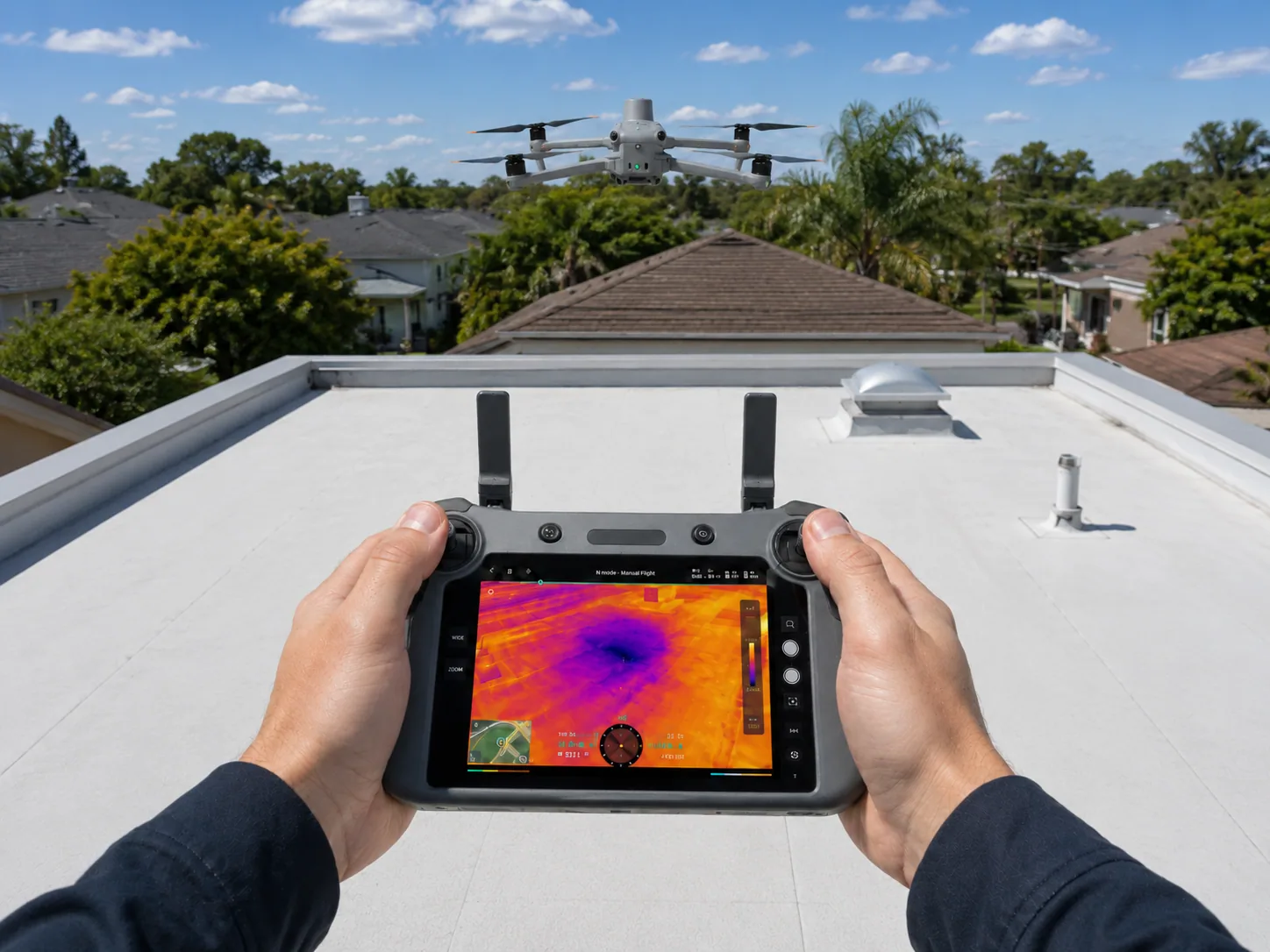
Adhesion checks should cover different roof zones and repair histories. If a test cut or opening is necessary, obtain approval, define the method, and plan how to restore the opening. Record the result at each location instead of extending one test outcome to the entire roof. Where moisture is suspected, an infrared moisture survey may help direct additional checks when the assembly and survey conditions support the method. The report should identify coverage limits and any follow-up that remains.
Surface preparation removes loose coating, dirt, and contaminants that interfere with adhesion. Specify cleaning and abrasion methods that suit the substrate and product instructions. Repair splits, open seams, exposed reinforcement, and weak transitions before applying a field coating. If the coating continues to release after preparation, stop and review the condition rather than bridging it with another layer. Mark the stable perimeter, areas requiring removal, and details that need a separate repair so quantities remain tied to observable conditions.
Confirm primer requirements and compatibility across the membrane, existing coating, patch material, and new acrylic. A silicone product has different material behavior and should not be substituted without checking the assembly requirements; see the separate silicone coating system. Likewise, coating over a spray foam roof requires review of the foam condition, surface preparation, and system instructions. Product selection follows the tested base and scope, not a generic assumption that all coatings bond alike. At transitions, show where field coating stops and flashing or membrane repair begins. Include cure intervals, protection from foot traffic, and the reopening criteria in the sequence. This gives the property contact a clear basis to coordinate other roof work and to identify any area that needs an additional inspection before the coating is accepted.
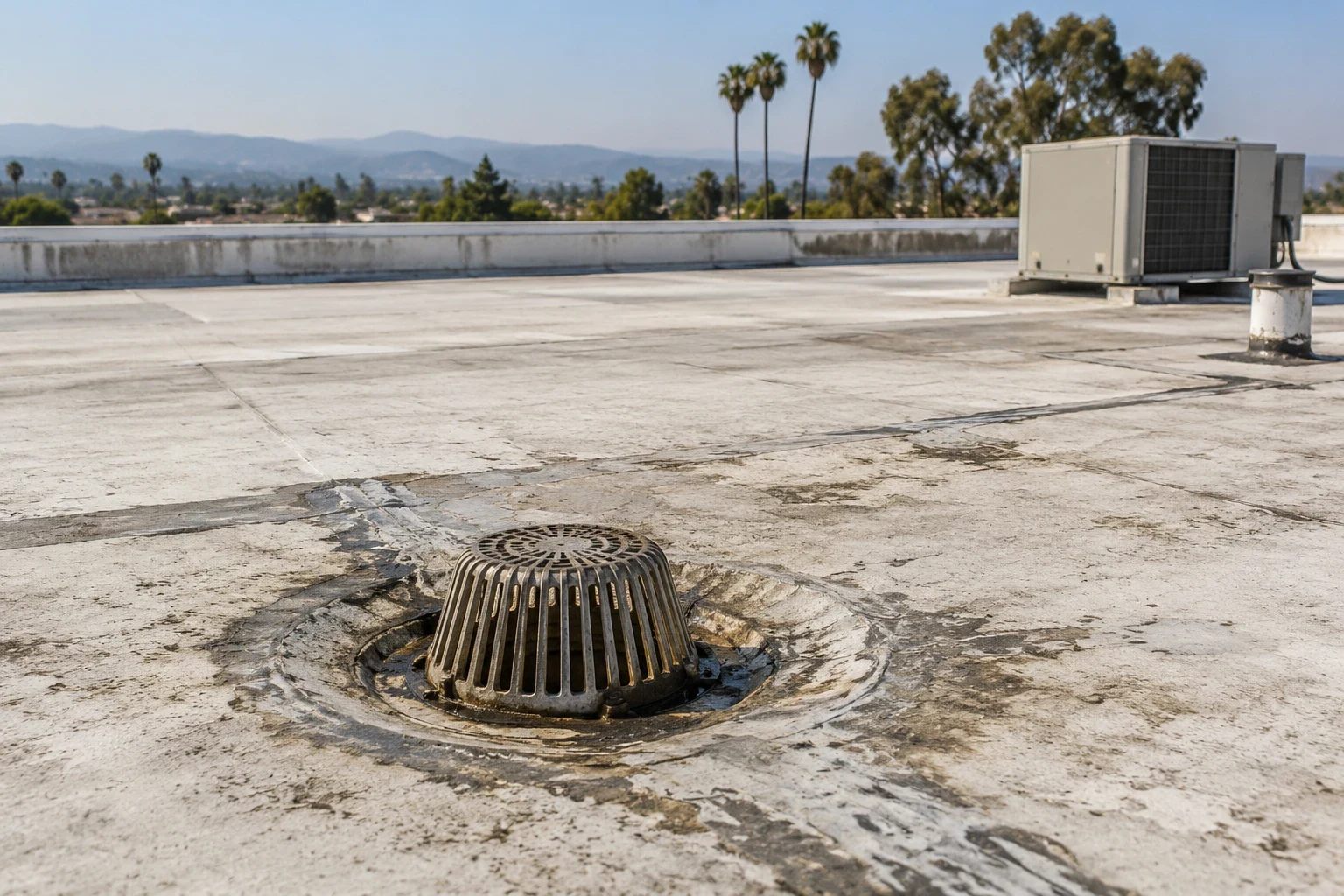
Mark roof slopes, low points, drains, scuppers, and signs of standing water. Record the date and interval after rainfall when ponding was observed, if available. Note blocked outlets, high drain rings, coating buildup, or channels that direct water away from a drain. Acrylic coating does not correct a slope or drain defect by itself. If water is collecting, separate outlet cleaning or geometry correction from the coating quantity and define the intended result for that work.
Tracy's published 101.2°F two-percent dry-bulb high describes a design criterion, not the temperature at a specific roof. Coating application depends on actual substrate condition, moisture, humidity, temperature, and product instructions. Document those observations with the daily work record, especially if conditions require a pause. A drainage assessment can establish outlet and flow conditions before the surface is coated. Keep water-entry reports linked to roof zones without treating proximity as proof of the entry point.
The City's plan designates an 870-acre Northeast Industrial PUD in the northeastern part of Tracy. Rail-dependent industry and flex-tech appear in its land-use mix alongside manufacturing and warehouse/distribution. These permitted categories do not describe one building's roof. For acrylic work, verify the delivery contact, lift approval, work hours, staging point, and access path with that property's representative; map each structure separately.
Near Grant Line Road, Tracy's I-205 plan identifies land for commercial use. This helps locate a destination within the city; gate, unloading, and work-hour directions remain property-specific. For broader dispatch, Tracy connects to Interstates 5, 205, and 580, a regional reference that does not determine a delivery time. A corridor-area roofing review can be coordinated with a site-specific roof plan and access confirmation.
Acrylic repair may fit when defects are isolated and the surrounding system is adherent, dry, and compatible with the repair materials. Recoating requires a wider preparation and coverage plan, including transitions and drainage details. Replacement is worth comparing when the roof base is unstable, wet, incompatible, or repeatedly failing. Evaluate these paths using the same inspection map, adhesion checks, moisture evidence, access assumptions, and exclusions. Separate confirmed quantities from costs that depend on concealed conditions or additional testing.
Request a scope that lists cleaning, removal, patching, primer, product, target thickness, detail work, application limits, and closeout documentation. Tracy's code schedule assigns new submittals received from January 1, 2026 onward to California's 2025 Building Codes. When this coating work requires plans, include its scope in the permit submission. A replacement proposal can be compared with a coating scope, and a roof condition report can keep test results and owner decisions together. The I-205 Corridor offers a broad local reference, while a property-specific roof plan sets the crew's access path and work boundary.
Record surface preparation, repair boundaries, primer, coating product, application conditions, and completed areas. Photograph the full roof zones as well as seams, penetrations, drains, and transitions. Note any substrate or moisture issue discovered during work and how the owner authorized its disposition. Areas excluded from coating should be identified on the final plan so later inspections do not mistake an uncoated section for a missed item. Tie the final photographs to those boundaries, and record any condition that differs from the approved scope. If weather or substrate conditions interrupted work, mark the incomplete zone and the required return step.
Provide the property contact with product information, maintenance requirements, inspection images, warranty documents when applicable, and follow-up locations. Track recurring cracks, adhesion changes, and drainage conditions against the same reference plan. Use observations from the building over time rather than applying the citywide climate criterion as a performance measure. A maintenance inspection can revisit the repairs, confirm that drains remain clear, and document any new change in the coating surface.
Do not assume compatibility. Identify the base where possible, test representative areas, and follow system instructions.
No. Identify drainage restrictions and scope any outlet or slope correction separately.
No. The citywide figure is a design criterion. Use actual site observations and product application limits.
Select locations that represent roof zones, different repairs, and distinct conditions; document test coverage and limits.
Include product identification, preparation, application conditions, completed areas, exclusions, photos, and future inspection points.