Silicone Roof Coatings in Tracy, CA
Roof Systems
Review silicone coating adhesion, drainage, preparation, and repair limits for commercial roofs in Tracy. Get a documented scope before restoration.

Review silicone coating adhesion, drainage, preparation, and repair limits for commercial roofs in Tracy. Get a documented scope before restoration.
A silicone coating can protect a suitable roof surface, but it cannot make a wet or loose assembly sound. Begin by mapping the roof zones, checking adhesion and coating thickness where accessible, and identifying areas of ponding, cracking, or exposed substrate. The assessment should distinguish a coating defect from a problem below it. That record helps an owner decide whether to repair a few locations, restore a larger area, or investigate the existing roof before specifying another layer.
For design work in Tracy, the applicable climate classification is Zone 12; the city's two-percent average dry-bulb figure is 101.2°F. Neither value gives the coating temperature on a scheduled shift. Select preparation and cure timing from product limits and conditions measured at the roof. A commercial roof inspection can document the existing assembly before options are compared.
Identify the roof membrane or substrate beneath the visible coating. Review repair records, product labels, prior closeout documents, and any available drawings. If the base is unknown, record that limitation instead of assuming the coating is compatible with every underlying material. Look for blisters, fishmouths, splits, chalking, loose edges, exposed reinforcement, and repaired cuts. Photographs should show the defect in context and at close range, with the roof-zone identifier visible in the inspection record. Record whether the coating appears continuous, which edges are exposed, and where prior patches interrupt the field. A change in color or texture can guide inspection, but it does not identify the coating chemistry. Note the uncertainty and verify product compatibility before selecting a new layer.
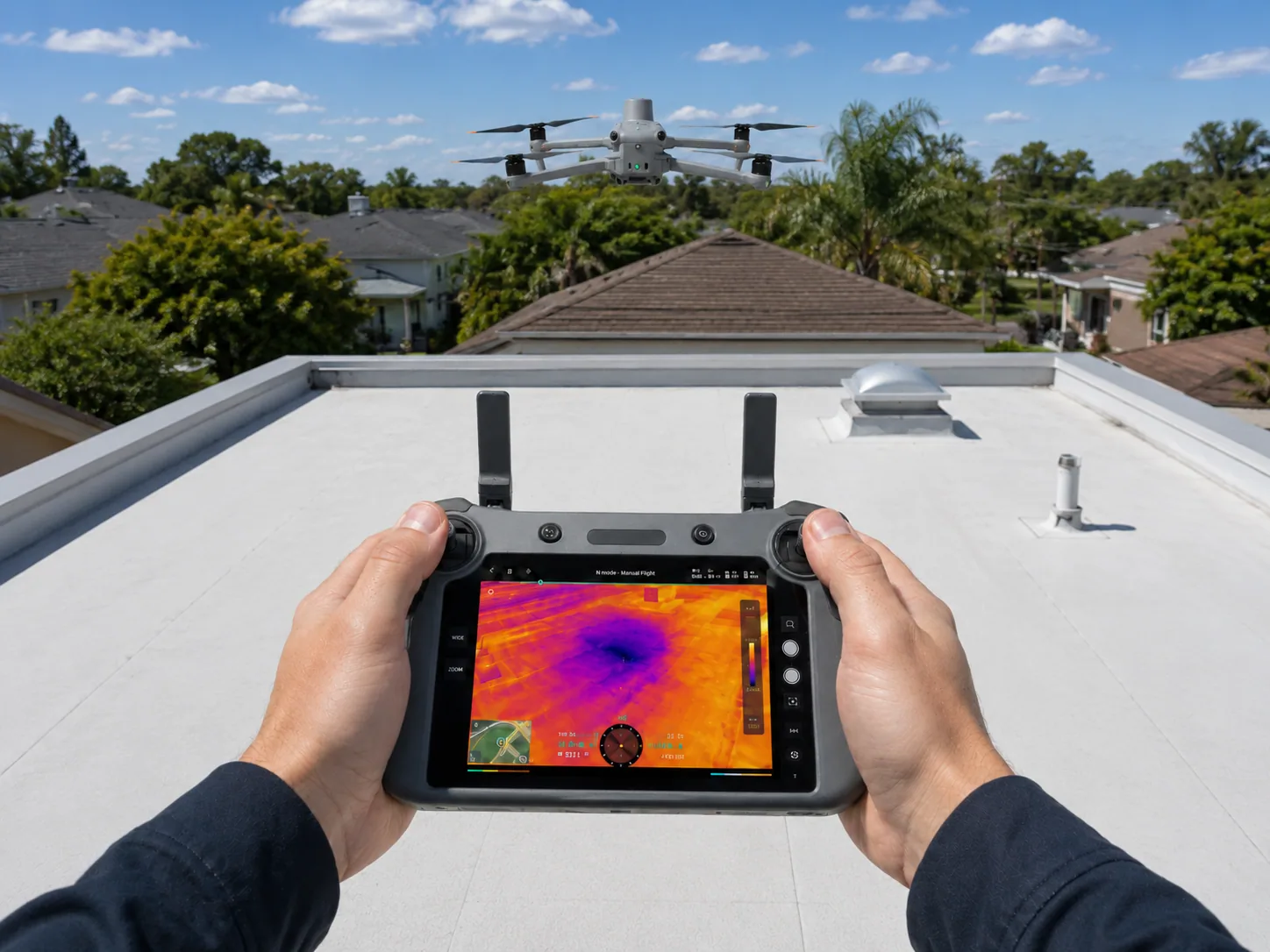
Adhesion needs evaluation at more than one convenient location. Select representative areas across different exposures, repair histories, and drainage conditions. When a test or opening is needed, define its location and obtain approval before disturbing the assembly. Note what method was used and what it can establish. An infrared moisture survey may help select follow-up locations when the assembly and conditions are suitable; it does not by itself identify every layer or confirm adhesion.
Remove dirt, loose coating, and contamination using the method allowed by the selected system. Repair cuts and seams, address rust or exposed reinforcement where relevant, and create firm transitions at drains, curbs, and wall edges. The work plan should state which existing coating remains and where it will be removed. If a surface still releases, bubbles, or shows moisture after preparation, pause for review. Applying another layer across a failing interface can hide the visible symptom without restoring a dependable bond.
Record the product, primer, preparation steps, application rate or thickness requirement, and conditions that affect placement. Confirm the existing coating and repair materials are compatible with the new silicone. A acrylic roof coating has different system characteristics, so the two should not be treated as interchangeable products. Where a sprayed foam roof is the base, review the SPF assembly and its condition before selecting the coating layer.
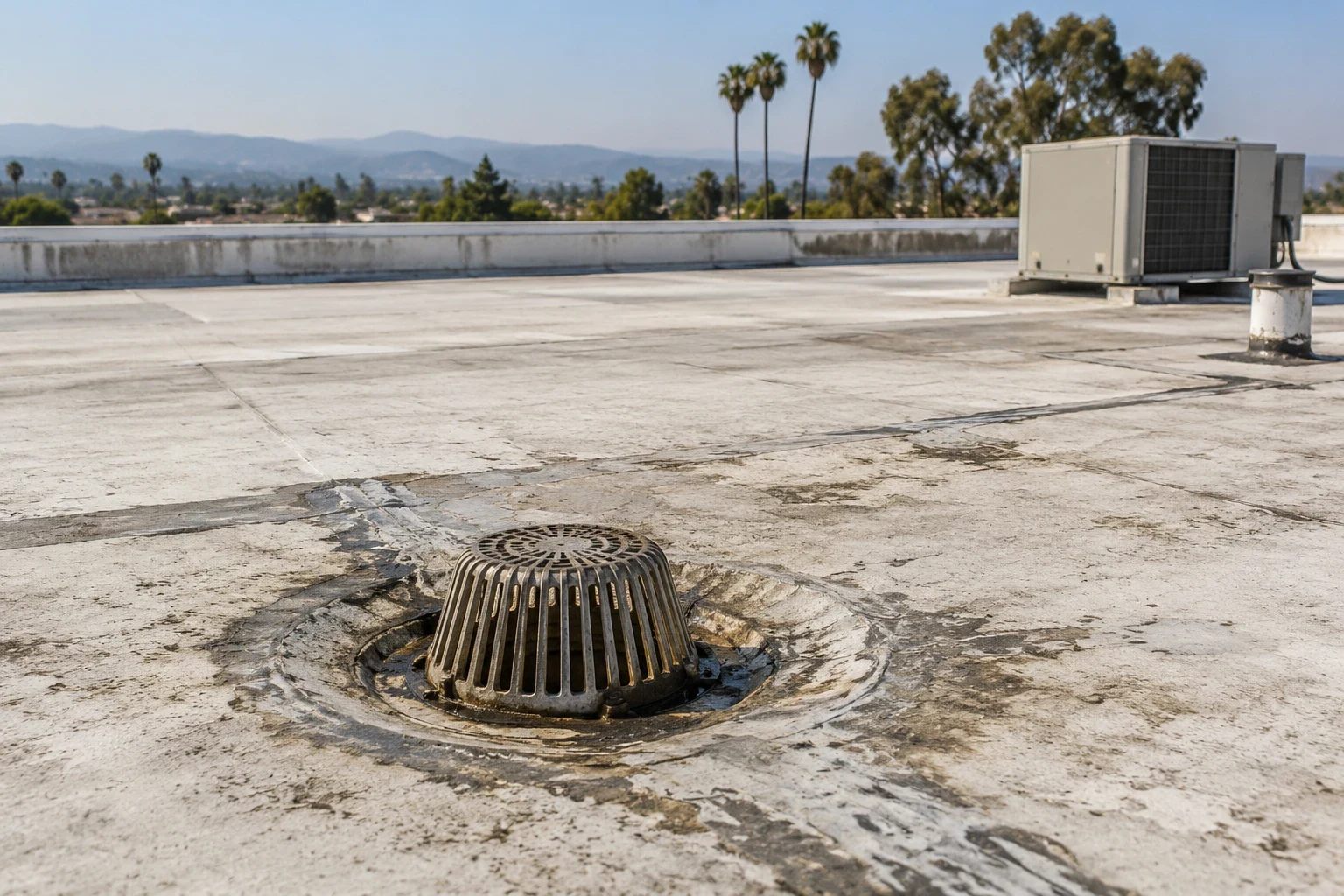
Map drains, scuppers, sumps, crickets, and low spots. Record whether standing water was observed and how long after rainfall the observation took place, if known. A flat-looking photograph cannot establish the depth, duration, or cause of ponding. Check for blocked outlets, raised drain rings, displaced strainers, and coating buildup that interferes with flow. If the surface drains slowly, define whether cleaning, drain correction, or slope work is part of the estimate instead of implying that a coating will resolve the geometry.
Tracy's city design criteria list a 101.2°F 2-percent dry-bulb high, a climatic planning reference rather than a roof-specific condition. Actual application sequencing depends on surface temperature, humidity, substrate moisture, and the coating manufacturer's limits. Keep those observations with the daily work log. A drainage assessment can document outlet condition and water paths before coating work begins. If water entry has reached interior areas, connect the ceiling location to a roof-zone map without assuming the nearest seam is the source. When drainage work is proposed, list the outlet, the observed obstruction or elevation issue, and the corrective step. Keep post-work photographs under the same location labels so the owner can verify the change and compare later observations. Record whether the improvement changes flow across the coated surface.
The Northeast Industrial PUD covers roughly 870 acres on Tracy's northeast side and allows manufacturing, warehouse, distribution, rail-dependent, and flex-tech uses. These are district-wide land-use categories. They can make delivery windows, lift placement, and access coordination worth confirming, but they do not establish the condition or operating rules of an individual building. Ask the property contact about receiving, roof access, occupied hours, material staging, and protection of nearby equipment before setting the work plan.
The I-205 Corridor Specific Plan identifies a commercial node beside Grant Line Road and I-205. Use that map detail to orient dispatch, then rely on the property's contact for unloading and roof entry. Tracy's three interstate connections, 5, 205, and 580, provide the wider travel frame, not a promised arrival time. Put the individual roof, staging zone, and daily tie-in points on the work map.
A localized repair is appropriate when defects are limited and adjacent coating remains bonded to a sound base. Restoration may cover a wider area when preparation, compatibility, drainage, and coating requirements can all be met. Replacement becomes relevant when the underlying assembly is wet, unstable, or unsuitable for another coating layer. Compare options using the same roof-zone map, adhesion checks, moisture findings, access assumptions, and concealed-condition allowances. Keep confirmed work distinct from contingencies that require owner authorization.
Ask proposals to list preparation, repairs, primer, coating material, minimum thickness, transitions, drains, exclusions, and application conditions. For submittals Tracy receives beginning January 1, 2026, the applicable edition is California's 2025 Building Codes. If the coating project needs plan review, include the relevant details in its permit package. A replacement proposal can be evaluated alongside a coating restoration when the existing system cannot support another layer. Include the decision record in a roof condition report.
Take photographs after preparation, at repaired details, during application where useful, and at completion. Identify each image by roof zone and record material names, application conditions, areas excluded, and any change approved during the job. If a test opening found moisture or a weak substrate, show the boundary and disposition before the repair is covered. The closeout record should make it clear which areas received coating and which require another decision.
Give the facilities contact the marked roof plan, repair limits, product information, inspection photos, and maintenance instructions. Note locations to revisit for renewed cracking, adhesion loss, or ponding. Use property observations to compare performance over time; regional climate data is not a substitute for condition tracking. A scheduled maintenance inspection can revisit the same zones and identify whether the coating remains bonded and the outlets continue to drain.
No. Identify the substrate, test adhesion where needed, and confirm compatibility with the selected system.
No. Map water paths and outlets, then scope any drain or slope correction separately from coating.
No. The city publishes a design reference. Use observed surface and weather conditions with the product instructions.
Record the base, coating defects, adhesion checks, moisture limits, drainage, repair boundaries, and excluded areas.
Compare it when the base is wet, unstable, incompatible, or otherwise unsuitable for another coating layer.