Commercial Roof Membrane Puncture Repair in Tracy, CA
Roof Damage Repair
Find and repair commercial roof punctures in Tracy with assembly checks, traffic-path mapping, moisture review, and a documented repair boundary.

Find and repair commercial roof punctures in Tracy with assembly checks, traffic-path mapping, moisture review, and a documented repair boundary.
A small cut in a roof membrane can leave a narrow mark while water spreads farther beneath the surface. We map the opening, inspect the surrounding sheet and substrate, and separate the visible puncture from any concealed moisture question. The city's Northeast Industrial PUD designation groups rail-dependent activity and flex-tech with manufacturing, warehousing, and distribution. Downtown Tracy is a separate center in the city's land-use plan. Those areas point to varied commercial roof settings, but the cause and extent of a puncture come from the specific roof and its inspection record. A roof inspection can set the starting boundary.
Foot traffic, dropped tools, sharp edges, equipment service, or debris can damage a membrane, but the mark alone does not identify who or what caused it. Record the reported activity separately from the observed cut. Inspect nearby walkway pads, service paths, fasteners, seams, drains, and previous patches to determine whether the opening is isolated. A Northeast Industrial PUD service visit still requires property-specific access rules and roof-zone references.
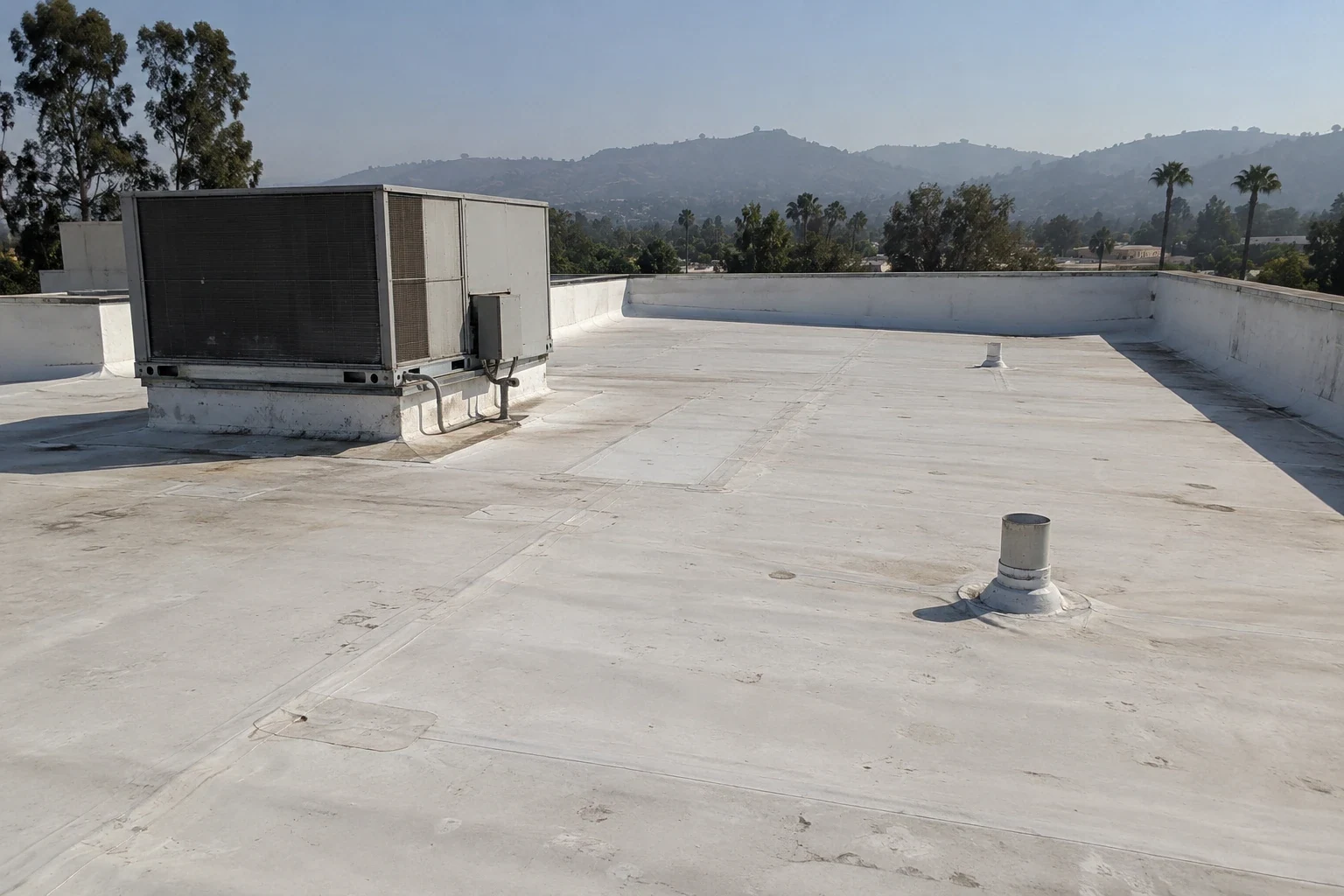
Photograph the cut with an overall roof reference and a close view of its direction, width, and edges. Note whether the membrane is torn, punctured cleanly, abraded, or separated from the layer below. Check for loose material, sharp projections, moisture, and movement around the opening. If the defect sits near a seam or curb, inspect that transition as a separate detail instead of extending the puncture quantity to cover it.
Look below the membrane only where the assembly can be checked safely or an approved test opening has been released. Record whether insulation, cover board, or deck is visible and what condition can be confirmed. A TPO system review can identify compatible patch materials when the actual membrane is confirmed, but the system label does not establish the layer beneath it. Mark any uncertain construction for a separate test decision.
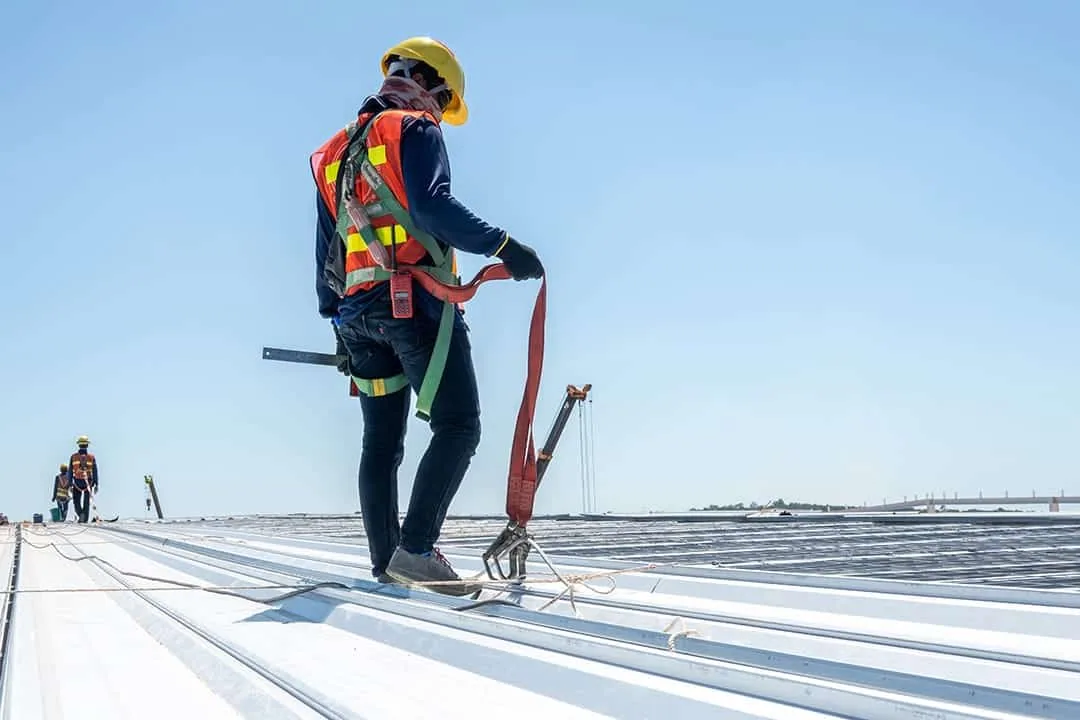
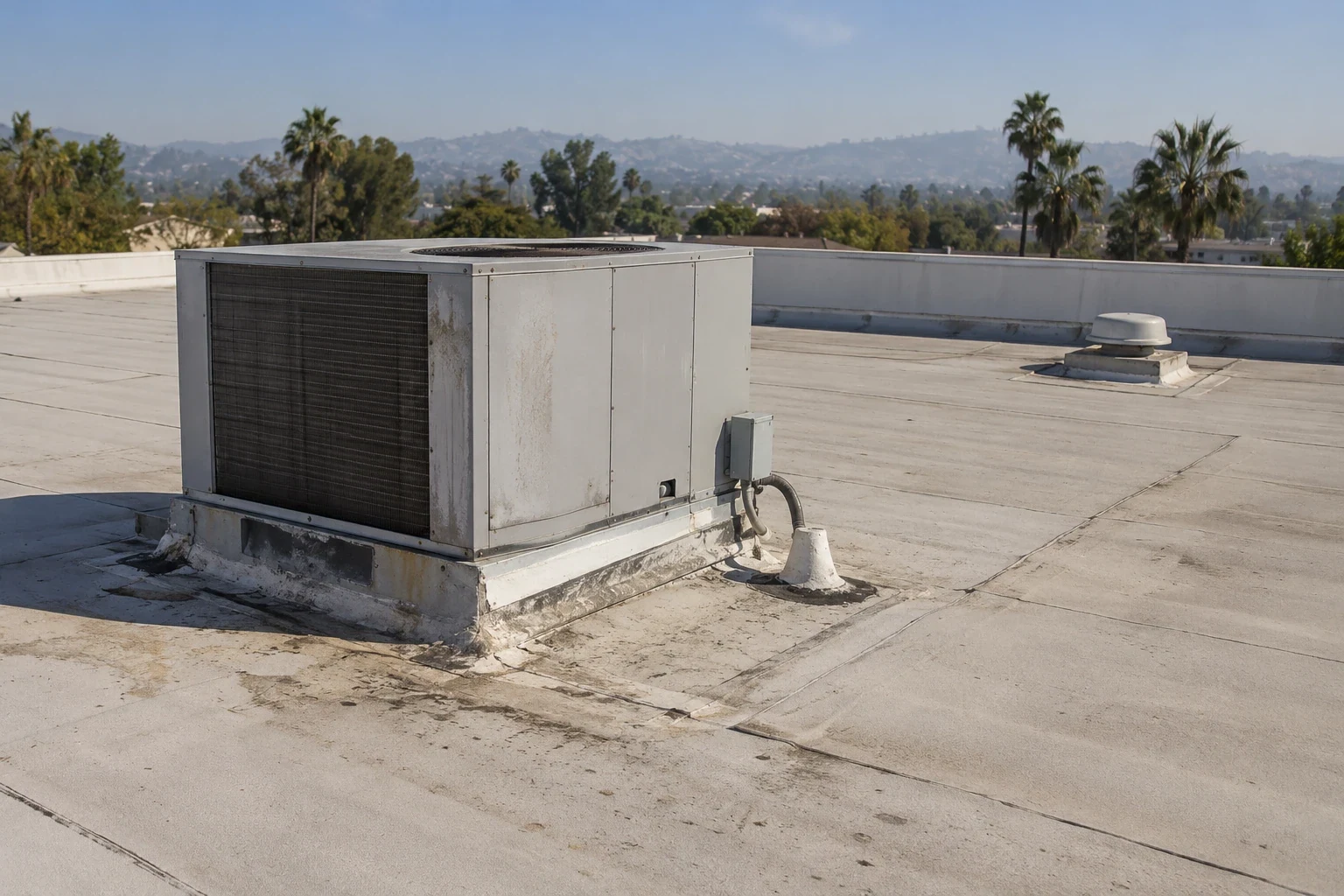
Walk the route that maintenance staff or service trades use to reach rooftop equipment. Inspect walkway pads, changes in direction, access ladders, loose fasteners, and any point where a pipe, tool, or panel edge could contact the sheet. Note where protection ends and whether a puncture occurs nearby. This can help the owner decide whether to extend a walkway or add a protection detail, but the record should not assign responsibility without evidence.
Tracy planning places commercial uses near Grant Line Road and I-205, and describes Downtown as a distinct land-use center connected to other commercial and residential areas by the transit network. Those are broad geography facts, not evidence about a site's roof traffic. At an occupied building, the facilities contact can identify the approved service route. A maintenance inspection can revisit walkway protection, drain clearance, and earlier repairs using the same roof map.
Walkway pads can conceal abrasion or a puncture underneath, so note each pad's location and edge before moving it. Follow the owner's release process and return the protection to the approved position after inspection. If the pad itself has shifted, record the condition and identify whether it needs reset or replacement. Keep that maintenance action apart from membrane repair quantities unless the exposed material shows damage that has been measured and approved.
Match an interior report to the puncture location, but keep the two points separate until the path is supported. Inspect nearby slopes, laps, penetrations, drains, and low areas that may carry water from the opening. Record the room or equipment area and the time reported, then mark which roof zones were examined. If the puncture is dry but a stain remains, the leak may follow another detail or a prior entry path.
An interior-to-roof leak assessment can connect observations without treating the closest defect as the source. Where insulation may be wet, a survey or authorized opening can refine the removal boundary. Record method, conditions, sample location, and exposed layers. Do not include materials outside the confirmed or owner-approved test area as though they were already established. Keep access limits visible so the owner can see which part of the assembly remains unresolved.
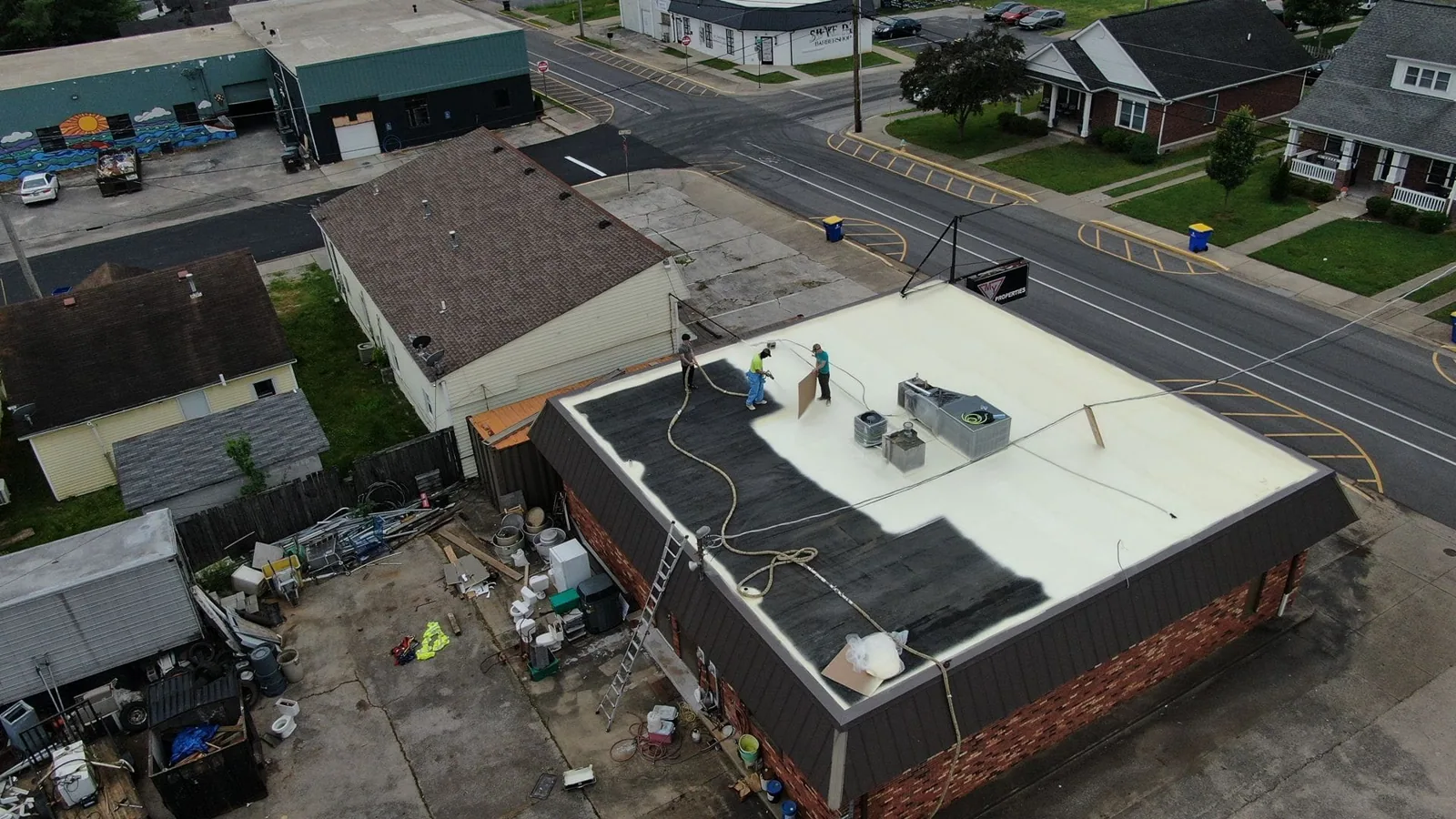
Choose a repair material that matches the membrane and the manufacturer's installation requirements. Remove contamination and loose edges to sound material, then prepare the area for the selected tape, patch, weld, or adhesive detail. Extend the patch far enough to bond beyond the damaged edge without covering a seam or drain connection that needs its own correction. The work ticket should identify the preparation and patch geometry, not simply say seal cut.
Tracy's building criteria classify city wind exposure as C and refer design speed selection to applicable maps and risk category. This informs design review; it does not set a patch dimension or prove the membrane's attachment. If the puncture falls near a roof edge or panel joint, inspect the wider connection and document any separate movement. A seam assessment or flashing inspection can define those adjoining defects without merging them into the puncture repair.
A local patch may be appropriate when the membrane is stable around the opening, the substrate is sound, and water has not affected a larger area. Multiple cuts along a service path, brittle material, repeated repairs, or confirmed wet insulation may justify more investigation. Compare the proposed work with a marked roof plan and state each included puncture, preparation step, tie-in, access item, interior protection, and inspection hold point. Keep the owner-approved limit clear if the repair area changes after removal.
If several zones have damage, evaluate repair against recover or replacement using measured quantities. A commercial repair scope should show why the selected boundary is adequate, while a replacement comparison needs evidence that broader work is warranted. A localized opening should not become a system replacement solely because one patch is visible. The roof condition and the owner's planned use drive that decision.
At completion, mark the puncture location, patch dimensions, material, surface preparation, and date. Include a before-and-after image that ties the close-up to a permanent roof reference. Record whether walkway pads were reset or added, what interior area was protected, and whether a moisture test remains pending. If the opening was part of a larger work order, show which adjacent seams, penetrations, or low areas were not included.
A future service visit should compare the same route and repaired location with the dated record. Inspect the patch edge, nearby sheet, and traffic protection before assuming the repair failed or remains unchanged. If water returns, map the new report to the roof before enlarging the old patch. That comparison gives the property contact a supported next step and keeps the repair history usable after staff or maintenance vendors change.
It can allow water into a layered assembly, where moisture may move beyond the visible cut. Testing and marked locations help set the confirmed removal boundary.
Only if inspection confirms the seam needs work and the approved detail accommodates it. Record the joint as its own condition and quantity.
Map the service route and check where walkway protection ends. The owner can then review pad placement, equipment access, and any trade route that crosses the membrane.
No. The city criterion informs building design. Patch dimensions follow membrane requirements, damage extent, substrate evidence, and the approved detail.
Include one view that locates the repair on the roof and one that shows the prepared opening and finished patch. Label each by date and roof reference.