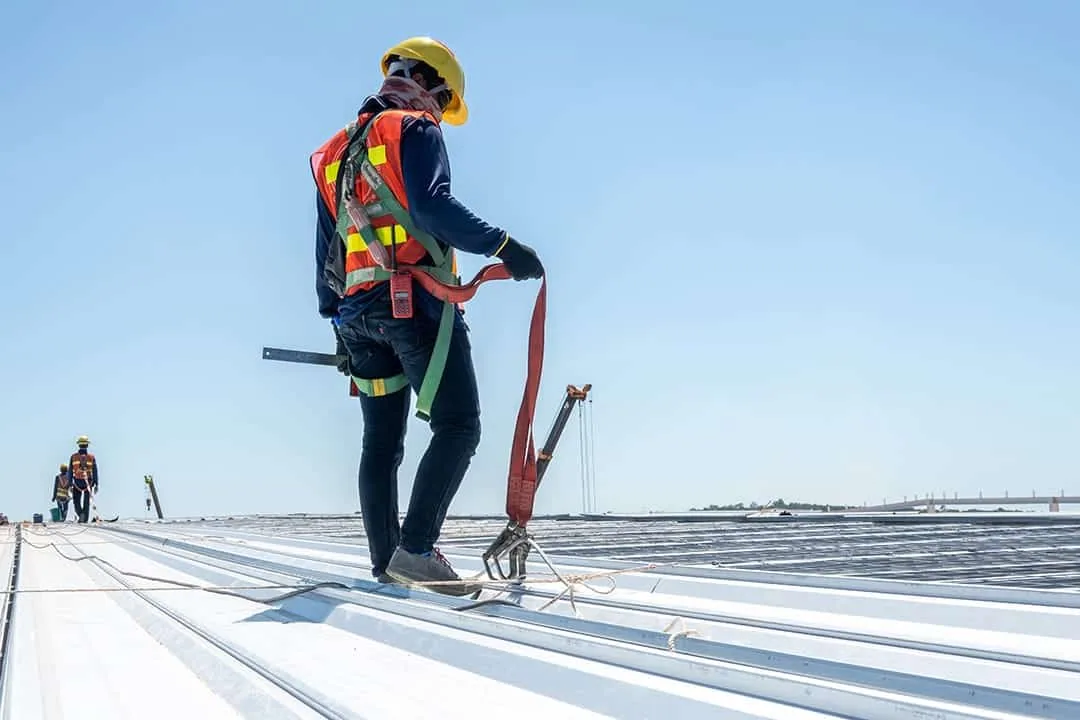
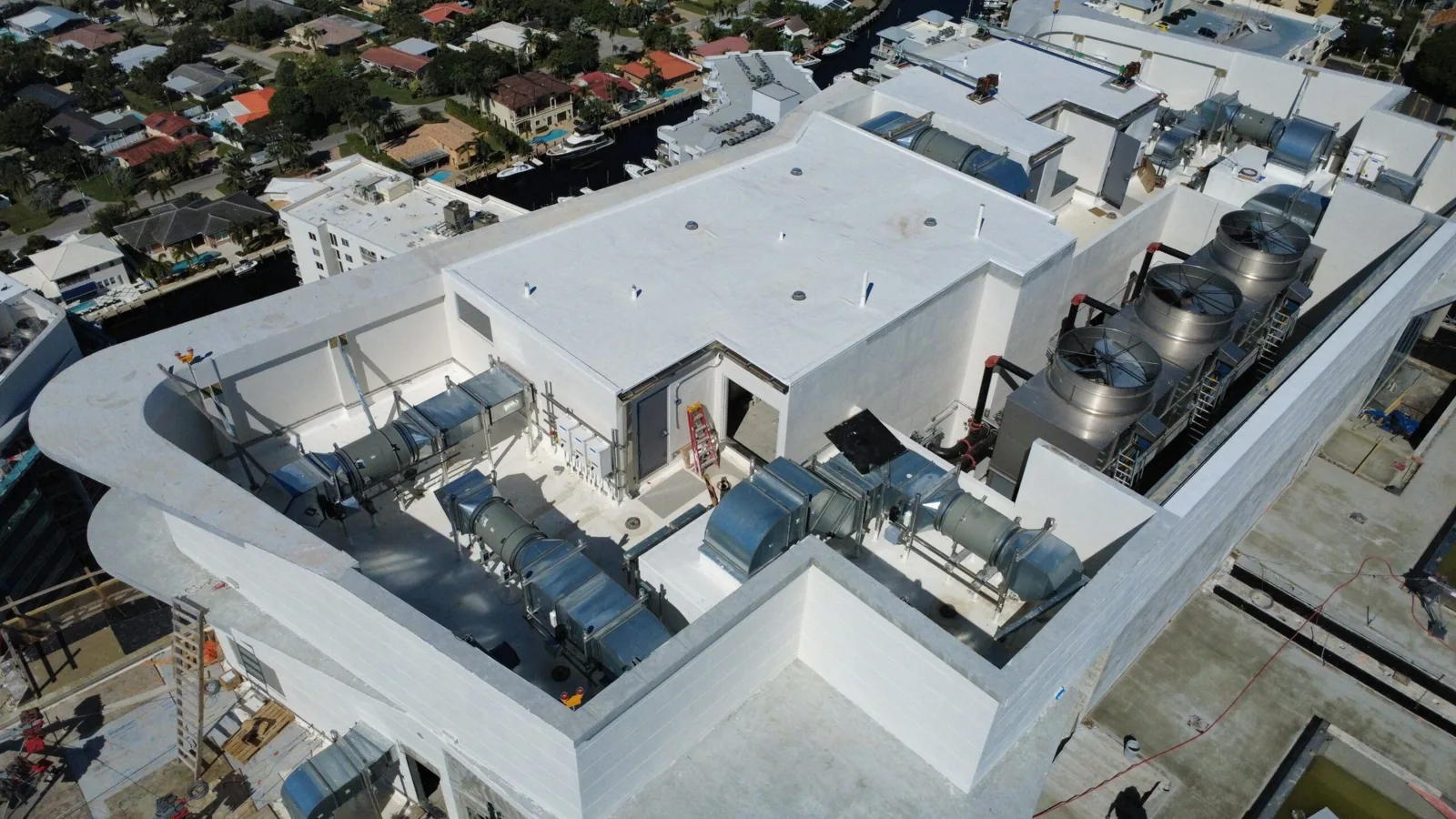
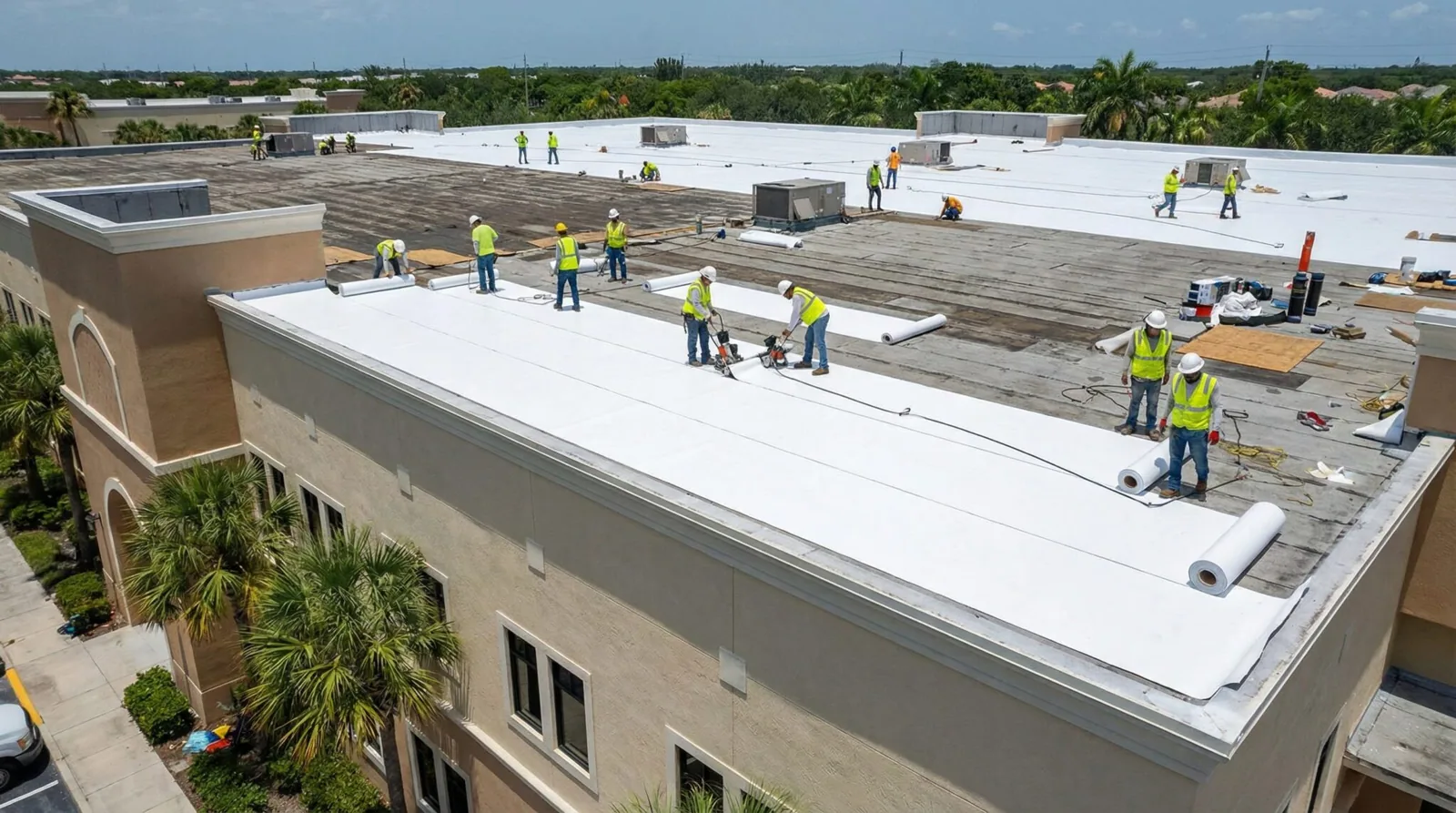
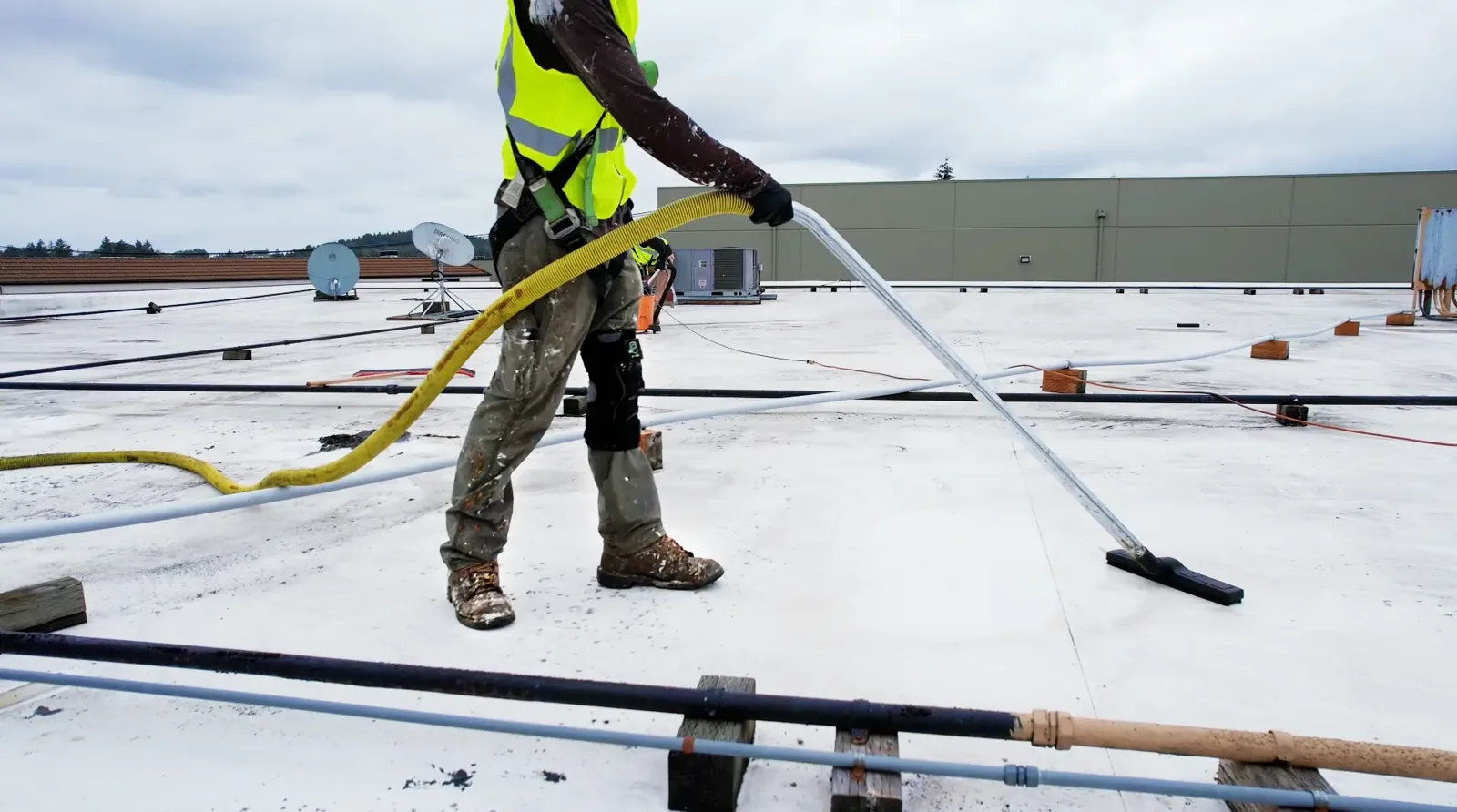
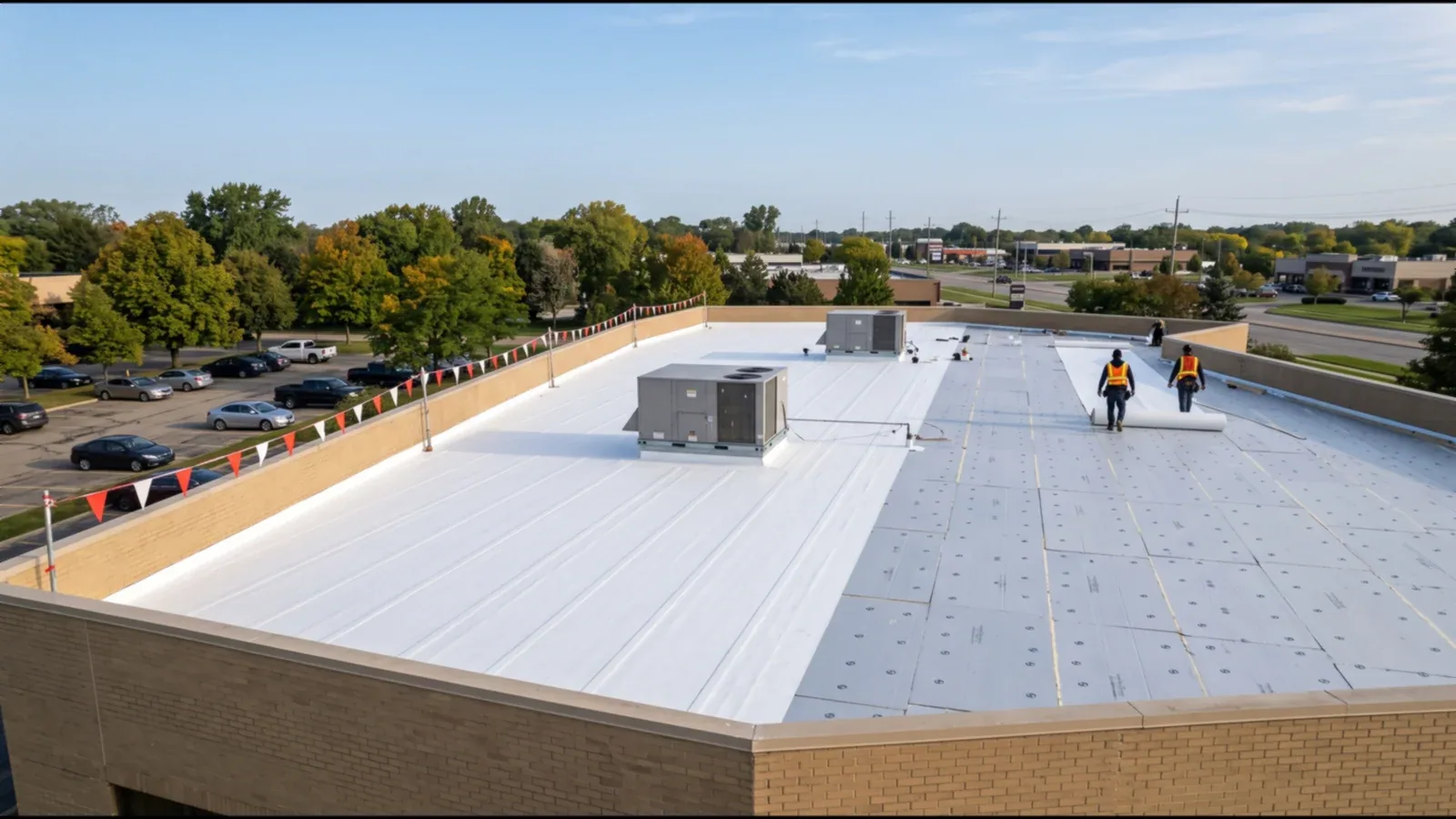
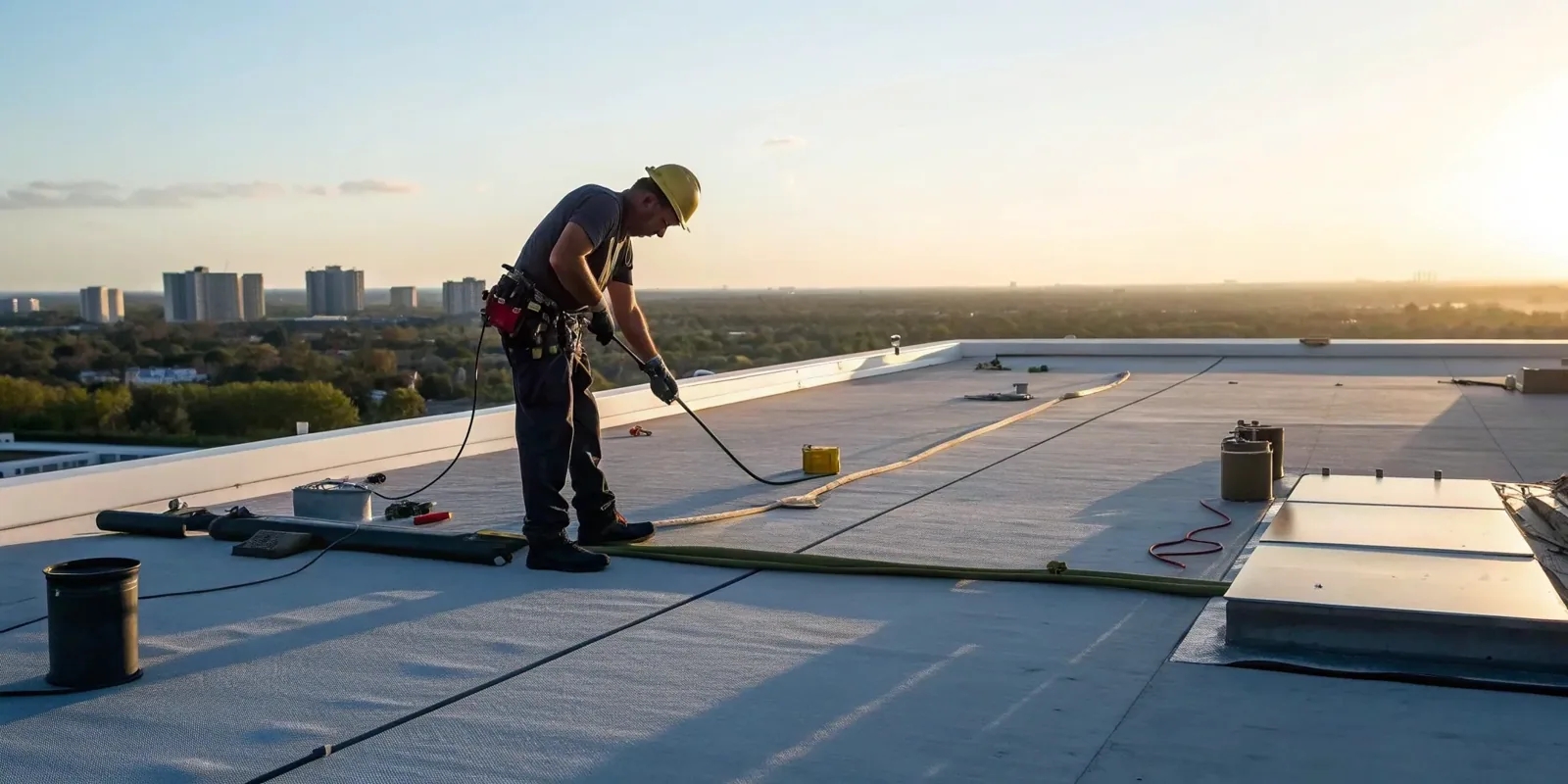
Versico Commercial Roofing in Tracy, CA
Roofing Manufacturers
Versico TPO, EPDM, and KEE roof service in Tracy, with seam repair, inspection limits, and system choices documented against a roof plan.

Versico TPO, EPDM, and KEE roof service in Tracy, with seam repair, inspection limits, and system choices documented against a roof plan.
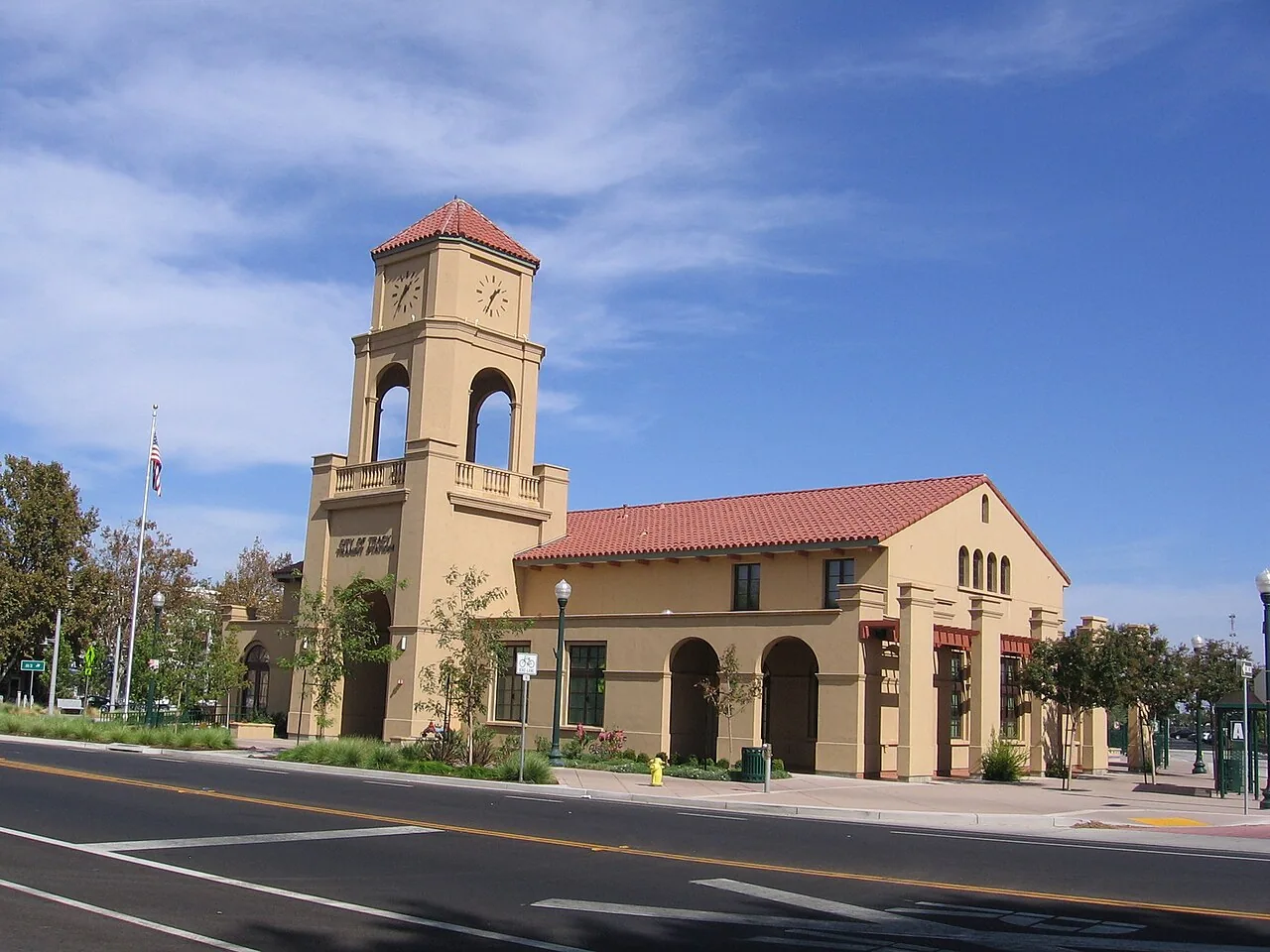
A blister along the edge of an old patch can hide a different failure than the one visible at the surface. We map the roof zone, examine the Versico membrane and nearby detail, and record which layer is confirmed before setting a repair boundary. Versico systems include TPO, EPDM, and KEE options, so the inspection starts by identifying what is installed. A compatible detail depends on the actual sheet, seam, substrate, and previous work, not only the manufacturer's name.
South Tracy Business Park is part of the city's broader industrial planning geography. The I-205 Corridor Specific Plan covers a separate area with retail, service-commercial, and light-industrial designations. Those names help organize a service route across Tracy, while the property drawing and access instructions guide the inspection itself. A commercial roof inspection can connect the Versico assembly record with current conditions and the decision the owner needs documented.
Look at exposed edges, seams, penetrations, and past repair areas before naming the installed sheet. A TPO surface, EPDM membrane, or KEE product may require a different repair preparation and tie-in. Compare the roof plan and installation records with field details. If an overlay or partial replacement changed the assembly, label each section separately. Where the system remains unclear, mark it as unconfirmed and identify the evidence or test that could resolve the question.
An approved test opening can show the membrane, cover board, insulation, and deck at one point. Photograph the sequence and condition, then keep that result tied to the sampled roof zone. Do not generalize one sample to the whole property without additional evidence. A KEE system review or a EPDM repair assessment can frame material-specific questions once the sheet has been identified.
At a TPO or KEE seam, inspect the weld along its length and at the corners, patches, curbs, and changes in plane. Look for a lifted edge, contamination, a wrinkle that holds water, or a prior repair that interrupts the lap. Record the exact end of the condition instead of assuming it continues across the roof. On EPDM, check the lap and flashing transitions as part of the same roof zone. A repair estimate should identify preparation, seam method, and tie-in area.
If a seam has been repaired more than once, compare the photos and service tickets before repeating the same detail. Determine whether movement, substrate condition, or a nearby transition could be contributing. A seam failure inspection can distinguish a localized split from a larger assembly concern. Keep adjacent wet insulation, attachment questions, or damaged cover board as separate scope items, since they may require testing or approval before removal.
Start at the interior report and mark the room, date, and whether water is active. Compare it with the roof plan, then inspect the likely plane, drains, penetrations, and earlier patches. A leak can travel across the deck or framing, so a ceiling mark may sit away from the entry detail. Photograph both the suspected path and the defect that can be confirmed. Leave the rest of the area as an open question until inspection or testing reaches it.
If moisture might extend below a Versico membrane, an infrared moisture survey may help select follow-up points when construction and conditions fit the method. Mark the evaluated boundary and any untested section on the plan. For active water, emergency response is available around the clock, including holidays. We record temporary protection separately from a permanent repair or replacement so the facilities lead knows what was stabilized and what remains to be authorized.
Tracy's 2025 criteria place the city in Climate Zone 12 and use 101.2°F for the two-percent dry-bulb high. Treat that figure as a design input, not a reading at a Versico roof or a forecast for a particular shift. Before seam work, adhesive, or coating, we compare actual surface and substrate conditions with product instructions. If the work period changes, record the roof zone closed at the end of the shift and any location still protected temporarily.
Tracy lists wind exposure C and sends design wind-speed decisions to the applicable maps and risk category. The building's fastening documents and perimeter details should be reviewed before attachment changes are proposed. South Tracy Business Park is identified for small and midsize companies, while the I-205 Corridor Specific Plan includes a different mix of commercial land uses. Neither planning area determines a roof's attachment, material, or wind condition; those points come from the property record and project criteria.
A local correction may be appropriate where one lap, puncture, or flashing detail is confirmed and the surrounding membrane and substrate can accept a tie-in. If failures recur across separate zones or testing finds wet layers, compare the repair with replacement. State the measured area, preparation, removal depth, insulation, edge metal, drainage, equipment interfaces, protection below, and exclusions. Keep a concealed-condition allowance separate from confirmed quantities and define what evidence would trigger it.
When comparing Versico with another system, use the same roof plan, access assumptions, and scope boundary for each option. A replacement estimate should identify the assembly and transitions. A repair plan should show which areas remain outside the work. If the owner wants an alternate membrane review, a GAF system comparison or Soprema membrane assessment can be framed against the same substrate and operating requirements.
A service history should identify which Versico system was confirmed, the zone inspected, the condition observed, and the work completed. Add dated photographs, patch materials, seam locations, drain conditions, and any open test. If a roof includes areas installed at different times, keep their assembly descriptions separate. A record that combines unrelated sections can make a later estimate rely on a repair that did not cover the reported location.
The I-205 Corridor Specific Plan and South Tracy Business Park are separate Tracy geographies. For owners with properties in both areas, keep the receiving contact and roof map with each site file. A Corridor service visit uses the instructions for that property's address. A maintenance review can return to the same seams, drains, and transitions and identify an inspection date for unresolved conditions, rather than re-opening the full scope without a reason.
At completion, return the marked zone plan, dated images, Versico material description, preparation, seam or flashing detail, and approved changes. Identify the extent of work and any section not reached, tested, or included. If removal exposed a different substrate, document the finding and the revised boundary. The record should show what was repaired and what still needs a separate inspection or owner decision.
Keep the closeout with the assembly record, proposal, and earlier repair tickets. A later leak can then be compared with the same roof zone and system detail. We can review the property plans, access rules, and inspection evidence with facilities staff, then document whether the next step is another repair, additional testing, or a replacement comparison.
We compare installation records with exposed edges, seams, and roof details. An approved test can confirm layers at a specific zone when documents are incomplete.
A limited repair can fit when the sheet and substrate around it remain serviceable. The scope should define preparation, weld or lap treatment, and the tie-in boundary.
Compare assembly, removal depth, insulation, edge and drain details, access, protection, and exclusions. Use the same measured roof area for each proposal.
The published climate value guides design review. Current surface and substrate conditions, safe access, and the system instructions determine the work sequence.