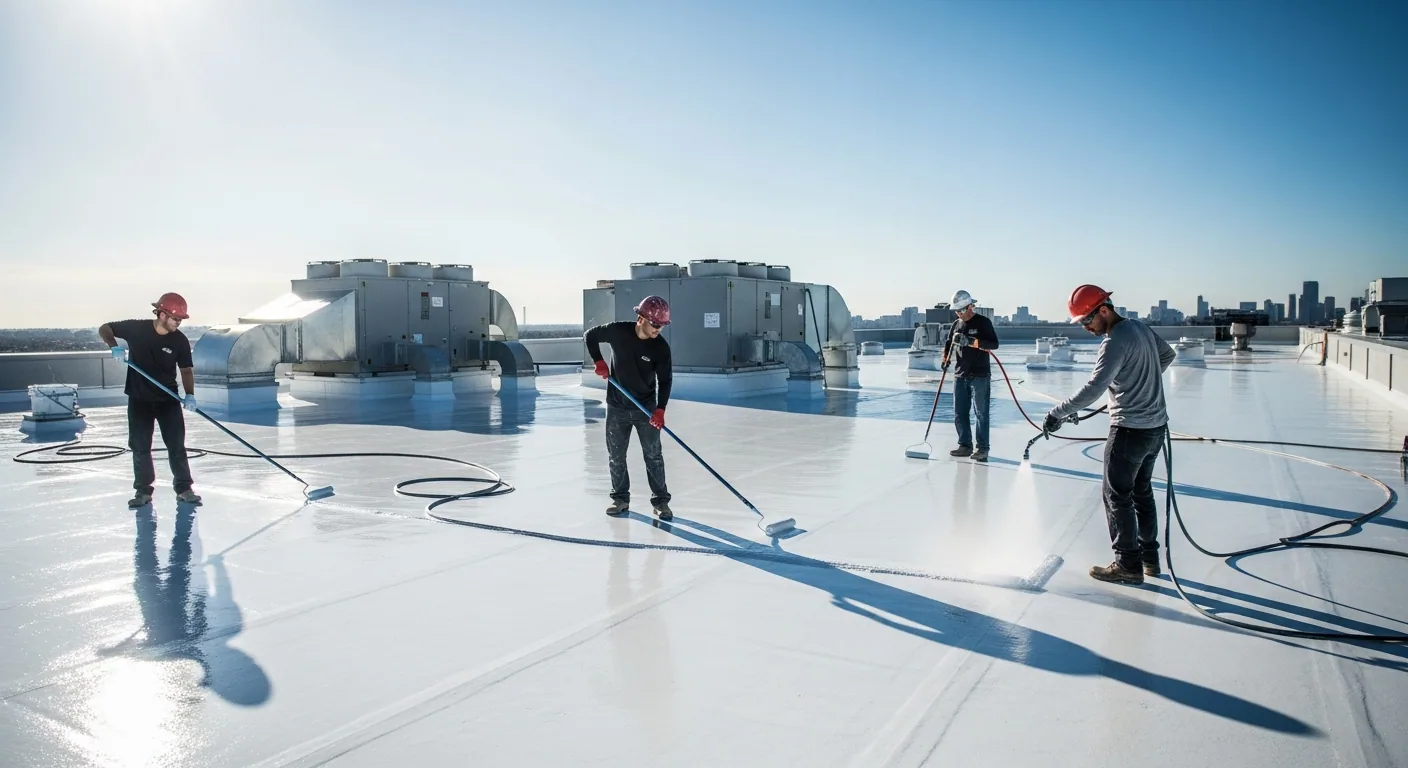
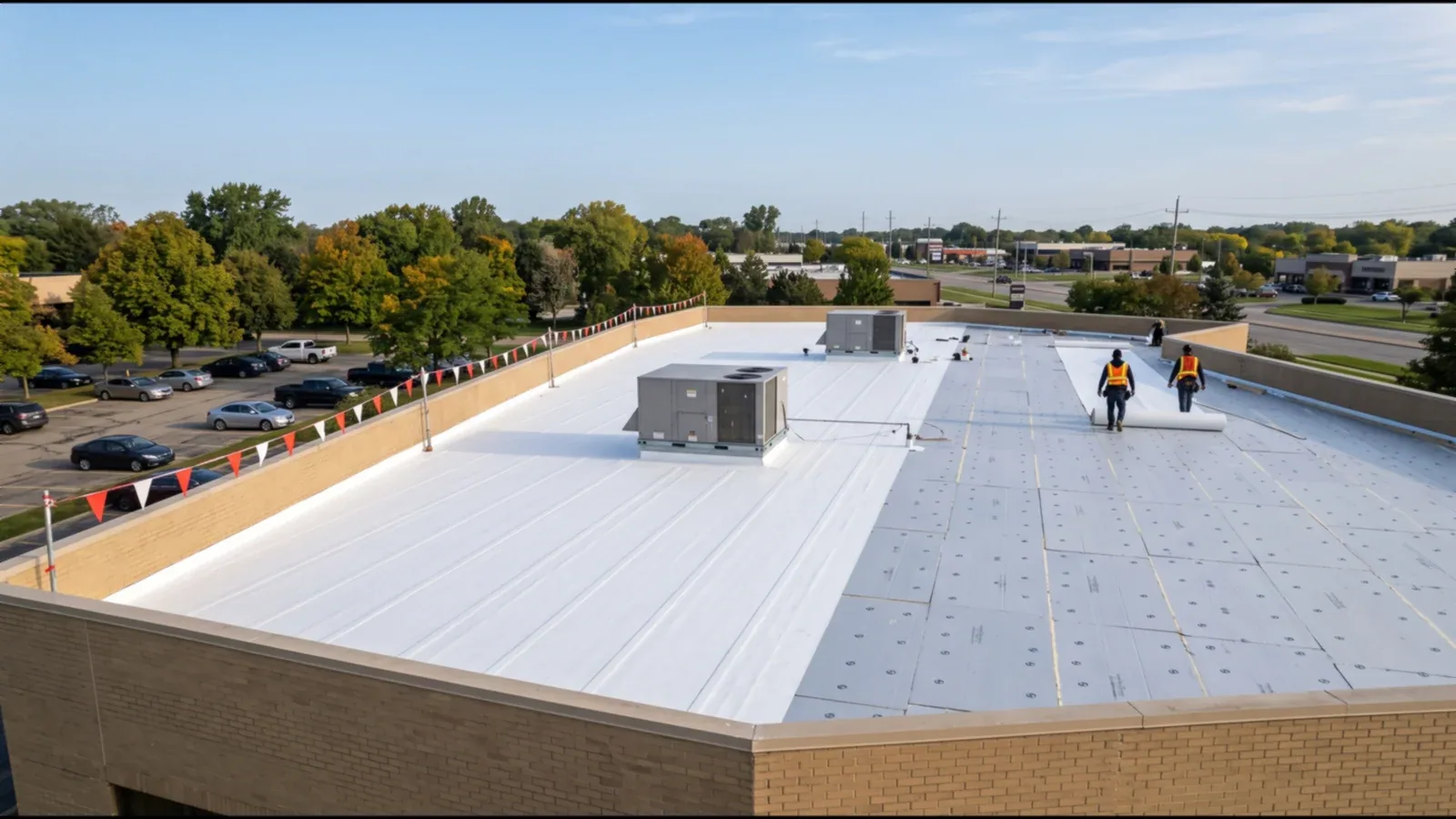
Soprema Commercial Roofing in Tracy, CA
Roofing Manufacturers
Soprema commercial roof inspection and repair in Tracy, with membrane, flashing, coating, and substrate details documented before scope approval.

Soprema commercial roof inspection and repair in Tracy, with membrane, flashing, coating, and substrate details documented before scope approval.
A split in the modified-bitumen lap may sit beside a separate flashing failure, leaving two conditions to map before estimating. We map each condition, identify the Soprema assembly from available records and exposed layers, and set the boundary that the inspection reached. Soprema commercial systems include membrane and liquid-applied options, but the repair choice follows the installed material and substrate evidence. The owner gets a record that separates a confirmed defect from a layer or moisture question that still needs testing.
Tracy's industrial plan includes office and flex-tech alongside general and light-industrial designations. Downtown is treated separately as the city's central land-use area, with transit connections to commercial and residential destinations. Those places help orient service coordination across the market, not describe a particular building's roof. A roof inspection can connect the property's assembly record with current conditions and the next repair or renewal decision.
Start with the installation file, previous proposals, warranty paperwork supplied by the owner, and visible edges. A roof may contain modified bitumen, TPO, an overlay, or a liquid-applied detail; separate sections may not match after additions or repairs. Confirm each material at an exposed edge or approved test opening. If the evidence does not settle the system, leave it unidentified rather than using surface appearance as a substitute for the assembly record.
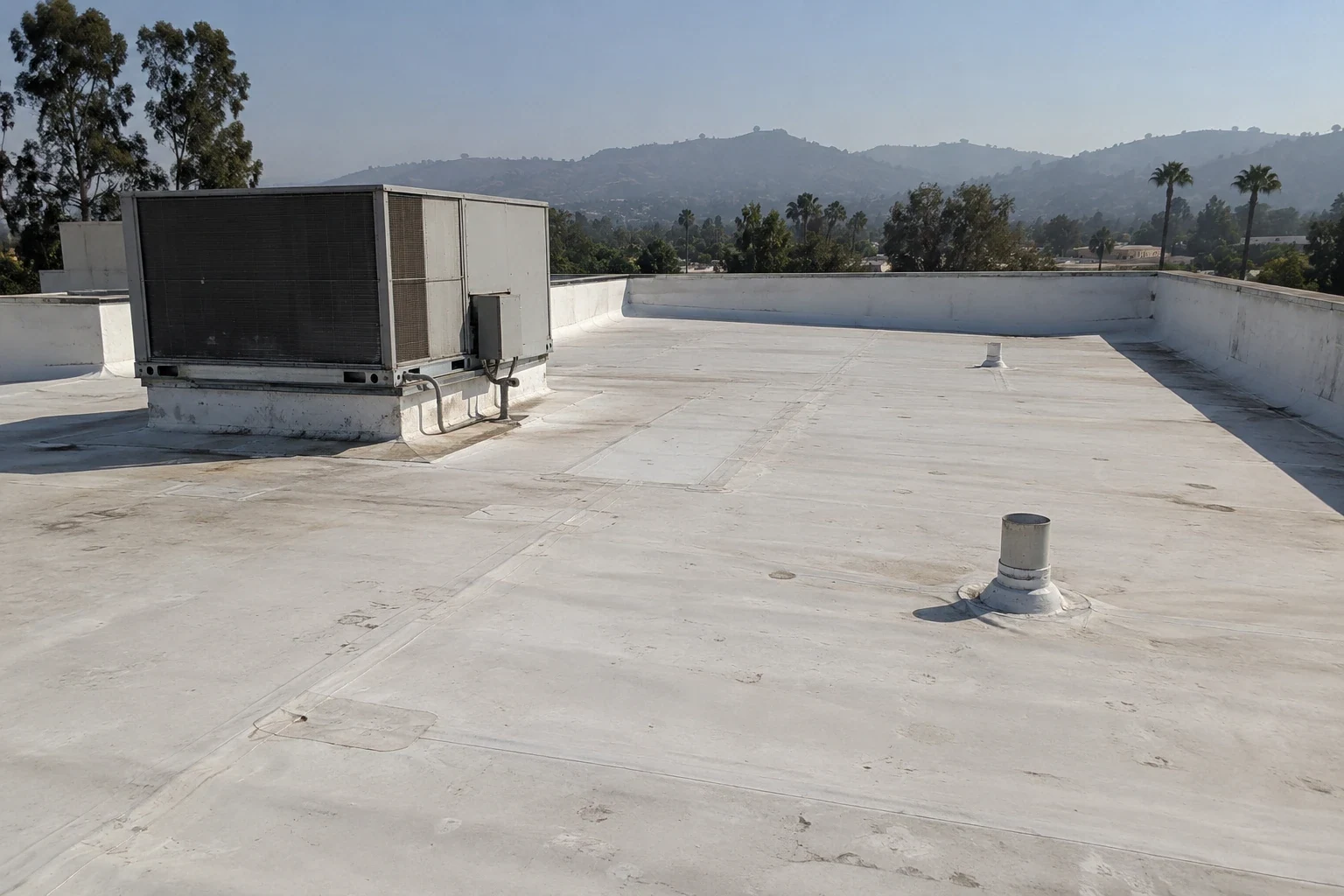
At a sample location, photograph layer order, attachment, insulation, cover board, and deck. Record whether layers are intact, wet, compressed, or damaged. Keep the sample location on the plan so the result is not applied to a different roof zone. A modified-bitumen roof review can focus on the cap sheet, laps, and flashing; a TPO system inspection can address heat-welded seams once the membrane is identified.
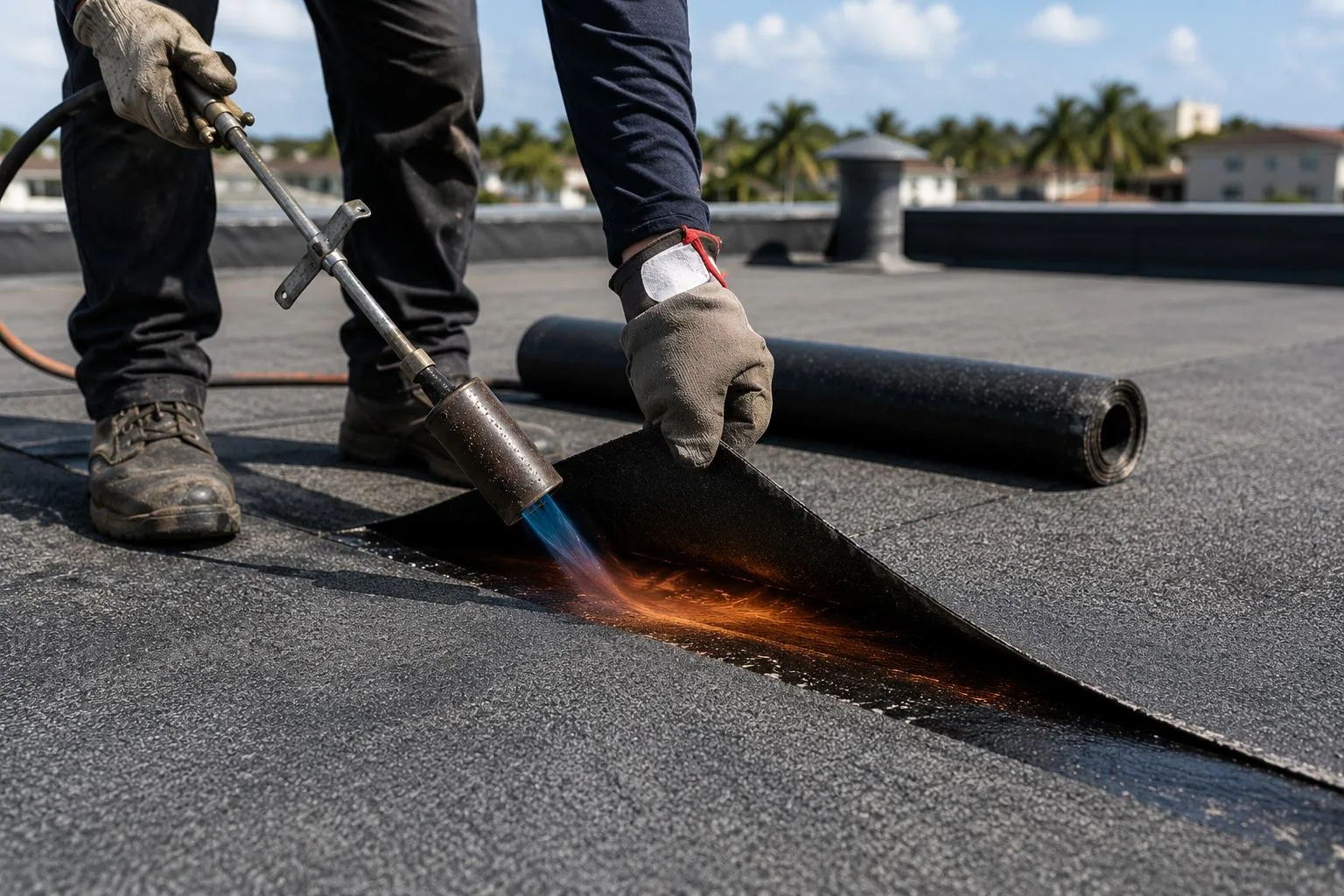
On a modified-bitumen area, inspect the lap, granulated or smooth surface, end joint, and nearby penetration. Look for an open seam, displaced surfacing, a blister, or a patch that bridges a movement point. Photograph the detail and its relation to drains, curbs, and roof edges. Record whether the concern is surface wear or a condition that reaches the underlying plies. The repair description should name preparation and the tie-in, not only the visible square footage.
For liquid-applied flashing or coating, check substrate cleanliness, adhesion, thickness at transitions, and whether the surface below is dry enough for the specified work. A visually continuous coating can still conceal an untested layer. Mark the area reviewed and the limit of any adhesion or moisture test. If defects repeat across separate zones, compare the surface repair with a larger restoration or replacement scope instead of expanding a patch without new evidence.
Record the room, date, and active status of the leak report, then match it to the roof drawing. Inspect the likely roof plane, drainage path, membrane seams, penetrations, and previous work. Water may move along a deck or framing member before reaching the room below. Keep the suspected route distinct from the defect that is actually visible at the roof. If the path is uncertain, identify what access or test would answer the question.
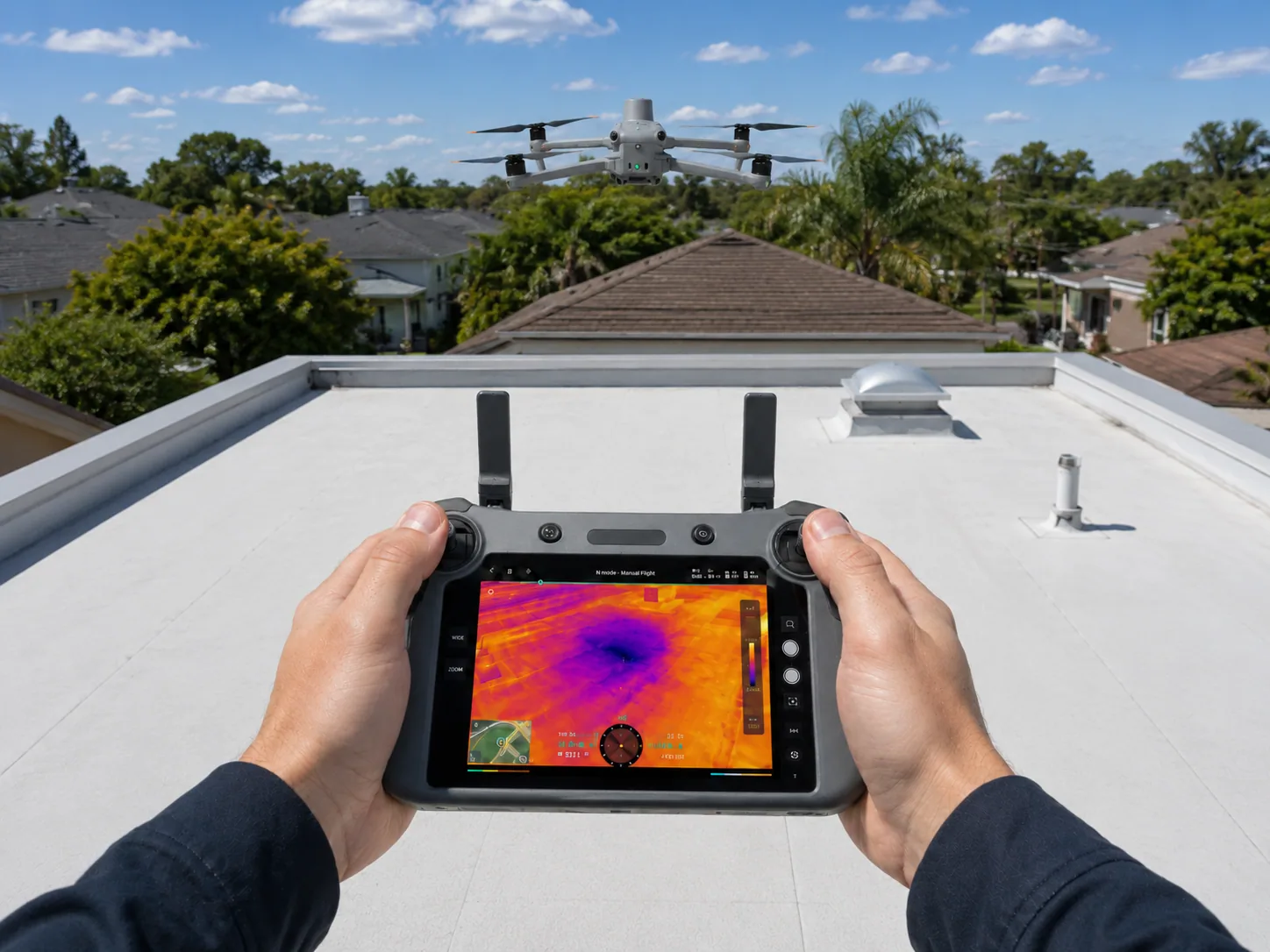
If a damp area may continue below the membrane, an infrared assessment can help identify where a closer test could be useful when roof construction allows. Mark the evaluated area and leave other sections open. If water is active, emergency service can respond any hour, including weekends and holidays. Record the temporary protection, material, and limit separately from permanent Soprema work so the facilities lead knows what still needs approval and pricing.
For plan-level design, Tracy's Zone 12 classification accompanies a 101.2°F high in the two-percent dry-bulb case. This value supports design review; it does not report a roof surface or forecast a work shift. Before a Soprema membrane, bitumen, or coating application, we check current substrate and surface conditions against the material requirements. If conditions delay the work, show which roof area was completed and what protection remains at the open boundary.
Wind design in Tracy uses exposure C and the applicable maps and risk category. That does not establish the existing fastening on a particular Soprema roof. Review the project criteria and available attachment records before considering a perimeter change. The I-205 Corridor Specific Plan assigns commercial and light-industrial uses near a broad freeway corridor, while Downtown Tracy has a different land-use role. These places are useful service-map references; the building's construction and wind design remain a project-specific question.
A repair can remain local when the failed lap, penetration, or flashing is confirmed and the adjoining material can accept a tie-in. If water damage, loose surfacing, or substrate concerns extend beyond that point, establish a test or revised quantity before proceeding. For each choice, list removal depth, insulation, edge metal, drains, equipment interfaces, disposal, protection below, and excluded areas. Separate known quantities from concealed-work allowances so approval applies to a defined scope.
For restoration, the proposal should identify preparation, adhesion checks, compatible transitions, and any condition that would rule out the work. A coating assessment can make those requirements visible. If replacement is the comparison, a replacement proposal should show assembly layers and tie-in conditions. An alternate Sika Sarnafil system review or Carlisle membrane comparison should use the same roof map and performance needs.
The Soprema file should hold the roof plan, system identification, dated photographs, repair boundaries, test locations, and the next action for each open condition. Mark the areas inspected, areas not reached, and any layer that remains unknown. Where a prior coating, patch, or overlay is present, record its location and the evidence used to identify it. The next estimator can then see whether a reported defect falls inside a completed repair or requires separate review.
Downtown Tracy and the I-205 commercial geography are separate locations for service planning. Neither substitutes for site access information, so keep receiving rules and roof-entry details with the property record. A Corridor service appointment should follow the instructions supplied by the building contact. A maintenance inspection can revisit the marked laps and transitions and update the owner on what remains suitable for repair or requires further testing.
At closeout, provide a marked roof plan, dated photos, material description, surface preparation, completed tie-in, and authorized scope changes. Identify the repair boundary and any area left outside the work. If an opening revealed an unexpected layer or wet substrate, attach the finding and revised quantity to the same plan before recording the added work as finished.
Keep the final record with the Soprema system documents and service tickets. A later report can be checked against the repair location, material, and drainage path. We can review the roof plan, prior work, and access limits with the facilities team, then document whether the supported next step is maintenance, a defined repair, more testing, or a replacement comparison.
We compare project records with visible edges and approved test results. If the assembly remains uncertain, we identify the information or opening needed before recommending a material-specific repair.
A local correction can fit when the lap failure is limited and nearby plies and substrate remain serviceable. The estimate should show preparation, tie-in, and any test boundary.
It should identify the existing layer, surface preparation, adhesion checks, moisture limits, and detail transitions. Those points show whether restoration can be compared with replacement.
Keep the marked zone, before-and-after photographs, material, preparation, approvals, and unresolved tests together. The next inspection can compare the same locations.