PVC Roofing for Commercial Buildings in Tracy, CA
Roof Systems
Plan PVC roof inspection, welded seams, flashing, drainage, and chemical-exposure details for commercial buildings in Tracy before repair or replacement.

Plan PVC roof inspection, welded seams, flashing, drainage, and chemical-exposure details for commercial buildings in Tracy before repair or replacement.
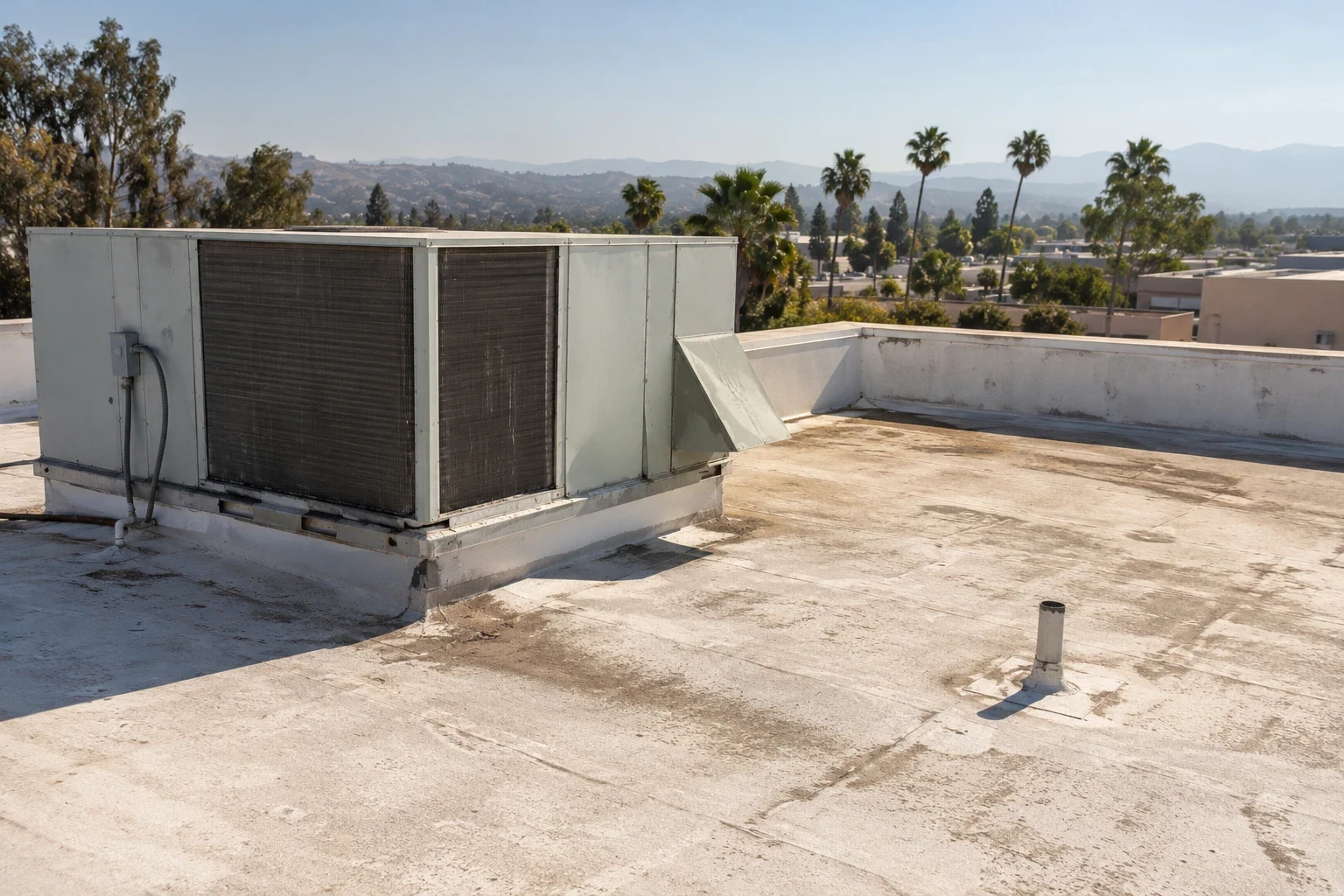
Grease near an exhaust curb can change which PVC detail belongs in a repair scope. We map the residue, note the sheet and flashing, and record where runoff carries it before choosing a cleaner or patch. A surface that looks intact may still have a weak weld or a gap at the curb. Start with the assembly and the exposure, then mark what the inspection can confirm without disturbing active equipment.
In Tracy's 2025 design criteria, the mapped climate zone is 12 and the documented two-percent dry-bulb high is 101.2°F. The figure belongs to design context, not a roof-temperature reading. For PVC work, we check the actual surface, current conditions, and material instructions before installation or repair. A commercial roof inspection can document the system and mark test areas before a bid sets the work boundary.
PVC is a flexible thermoplastic single-ply membrane commonly selected where certain oils, greases, or other contaminants may contact the roof. Compatibility depends on the exposure and the specific material, so identify the exhaust, discharge, maintenance path, or process source before writing a product recommendation. Note whether residue sits on the surface, has softened a sheet, or appears beneath a seam. Do not treat one clean sample as proof for every roof zone.
City planning documents group manufacturing, warehouse, distribution, rail-dependent industrial, and flex-tech uses among Tracy's northeast industrial land. A roof above such spaces may face different maintenance access and rooftop discharge conditions, but land use alone does not establish a chemical exposure. The facilities lead can identify equipment and service routines, while the roof inspection records the visible membrane response. A photo-marked condition report keeps the observed deposit apart from a suspected cause.
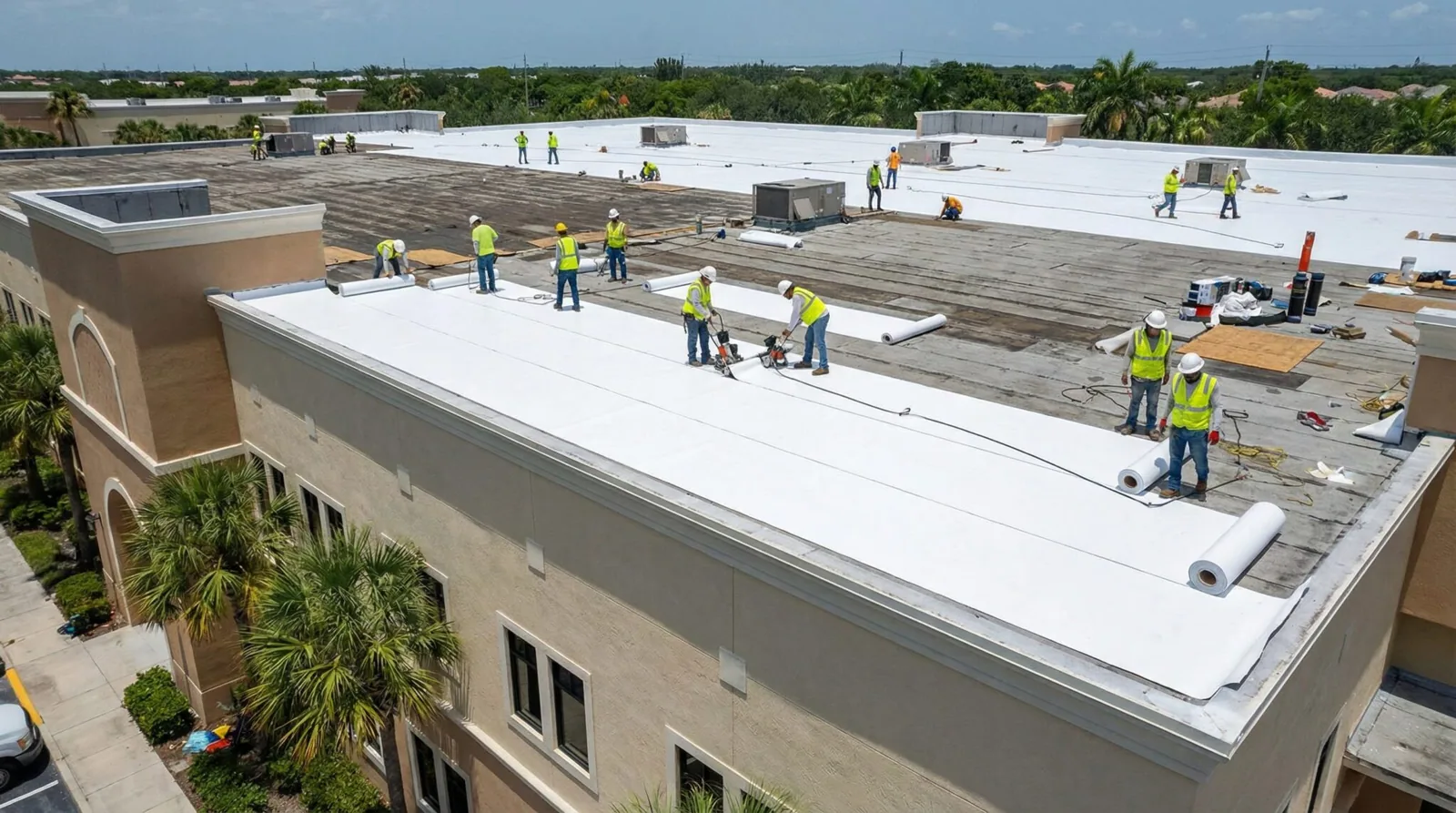
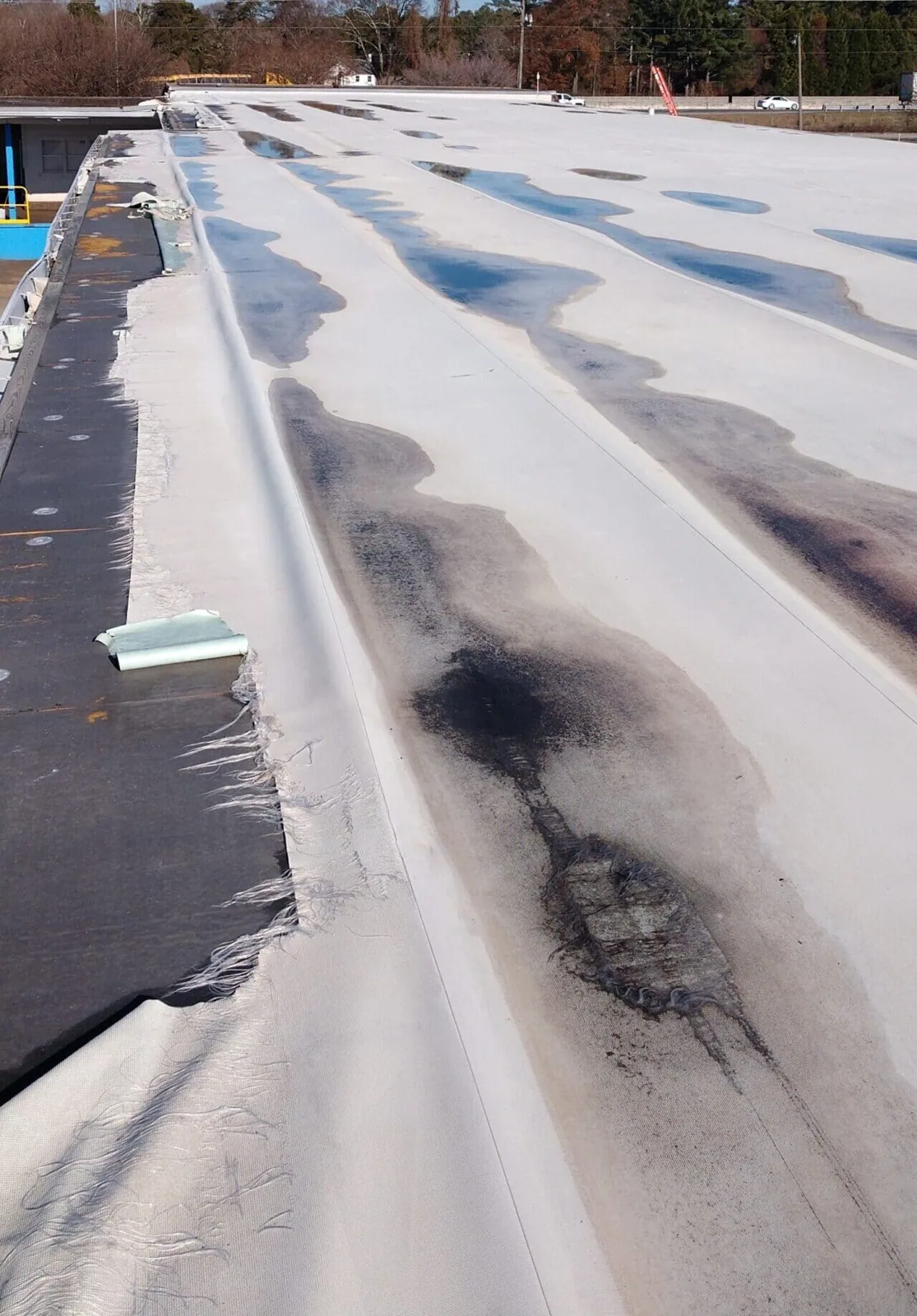
PVC seams are heat welded. A sound weld forms a continuous bond between clean, prepared sheets; a weak section may reflect contamination, incorrect settings, poor access, or a change in membrane condition. Probe test strips before production and repeat them when the surface or conditions shift. Mark the test location and result, then separate a weld opening from a tear through the sheet. That distinction affects patch size and how the repair terminates.
At a curb, the field lap, vertical flashing, and corner treatment all need to work as one assembly. A patch that bridges dirt or stretches over a moving edge can release again. Show the owner where the repair starts and ends, along with any accessory that must be replaced. A TPO assembly also uses welded seams, while an EPDM roof follows a different joining approach; compare the actual system details rather than choosing by color.
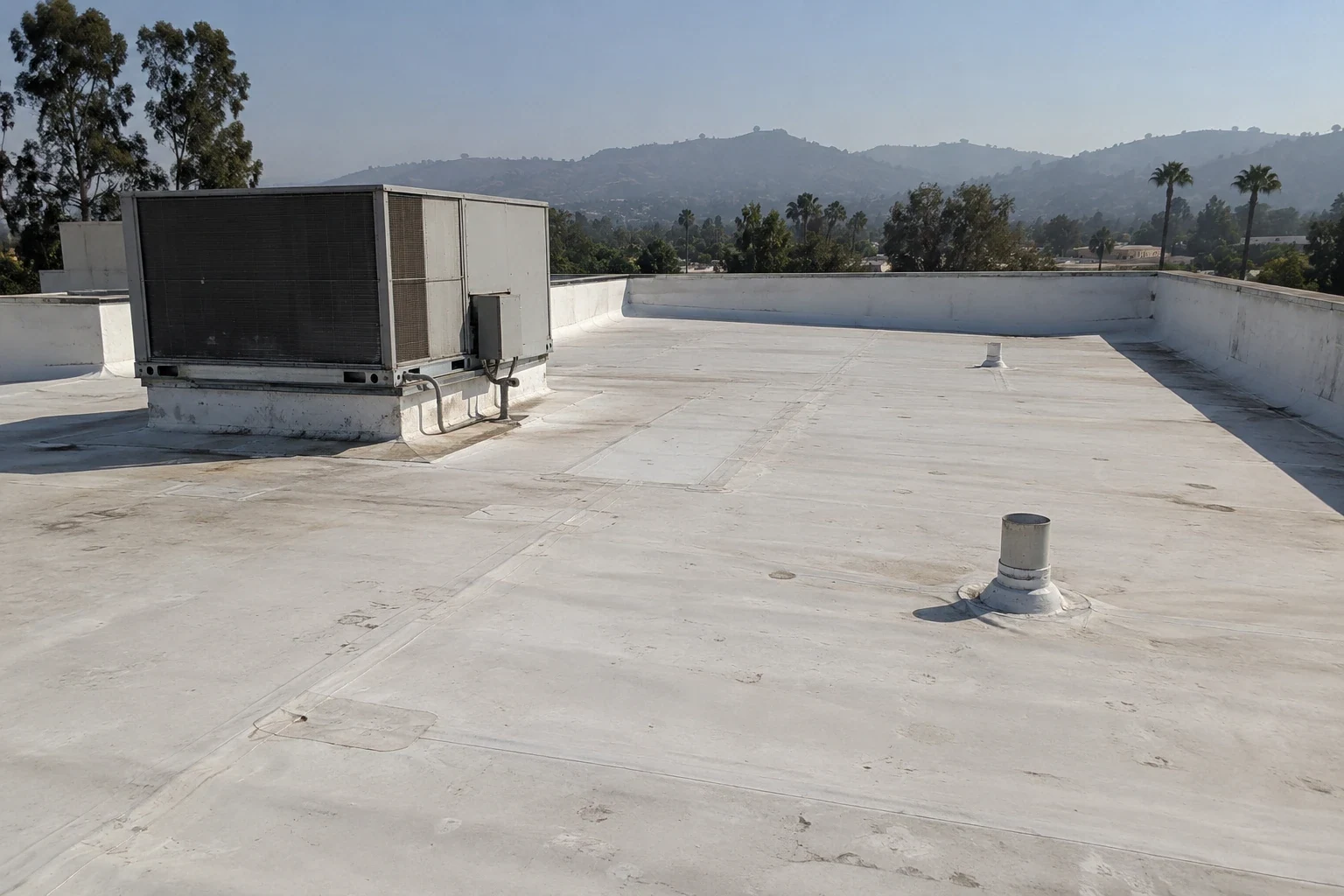
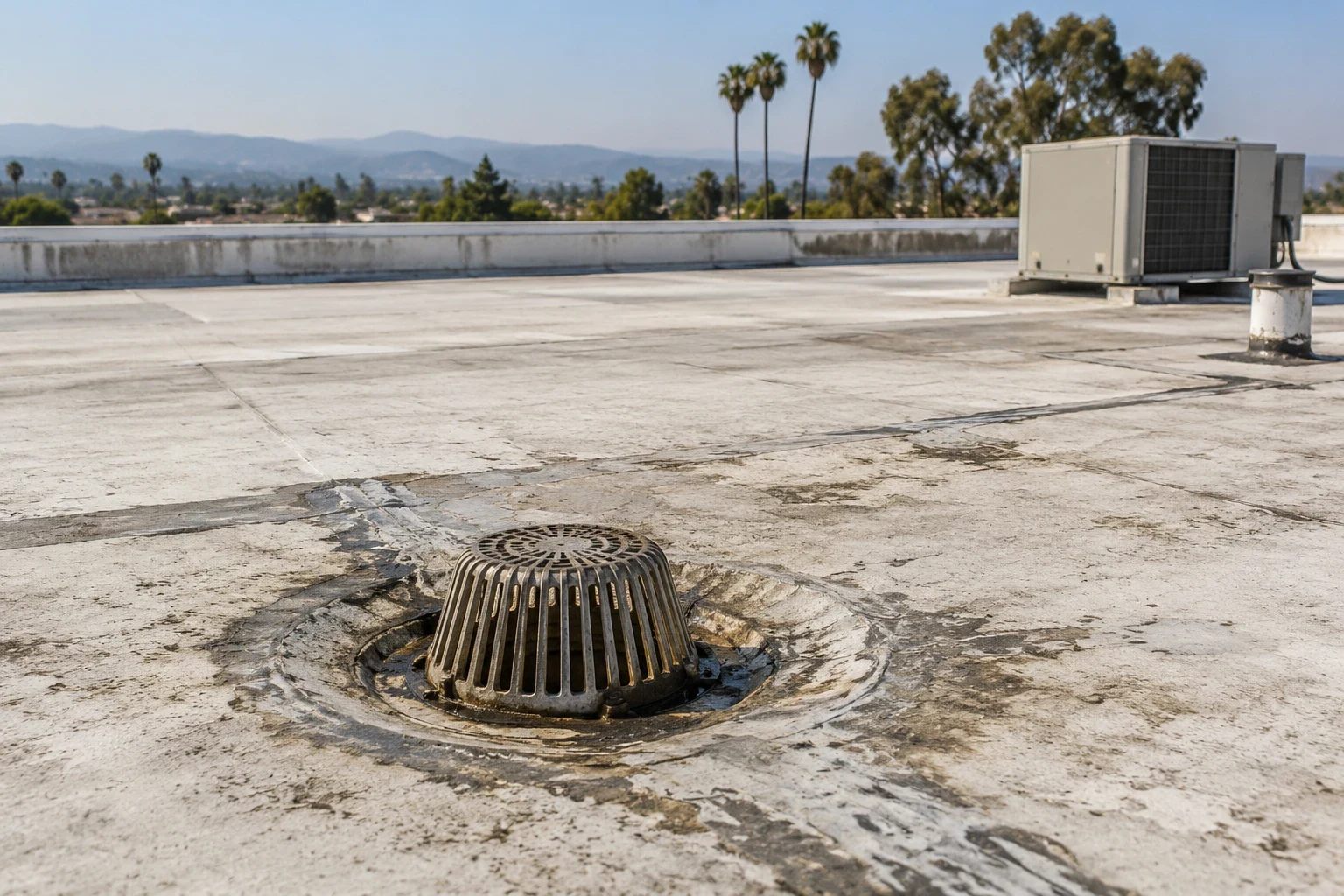
Look at drain bowls, strainers, sumps, and overflow openings before deciding that a discolored area is a membrane defect. Debris or a blocked outlet may hold water against a seam; a low spot may keep a residue in place after flow stops. Photograph the surface before cleaning and record what returns after the outlet is clear. Keep the membrane observation separate from a process source that has not been confirmed by the property team.
Trace each drainage path across roof zones and mark where a curb, pipe rack, or patch changes the flow. A drain and scupper inspection can define the detail around the outlet, while a ponding-water review looks at the plane that feeds it. Tracy's I-205 Corridor plan includes commercial uses near Grant Line Road and I-205; this broad area helps orient the service territory, but the roof map must establish actual flow.
Terminations at walls and equipment require a compatible membrane accessory, secure attachment, and a watertight connection to the field sheet. Check corners, counterflashing, pipe boots, and expansion joints for splits, lifted edges, or a sealant bead that no longer bridges the gap. Record the material at each transition before specifying a primer or accessory. A detail repair needs clear prep, weld length, reinforcement where required, and a finish that can be inspected.
Wind criteria make perimeter and corner review part of the scope. Tracy lists Exposure C and directs design wind speed to applicable maps and the risk category; that city criterion does not set the fastening schedule for an individual building. Use project drawings and measured conditions for the decision. Where access is limited, note the uninspected edge and secure an approved route for follow-up. The Downtown Tracy service area is a broad district reference, not a claim about a particular roof.
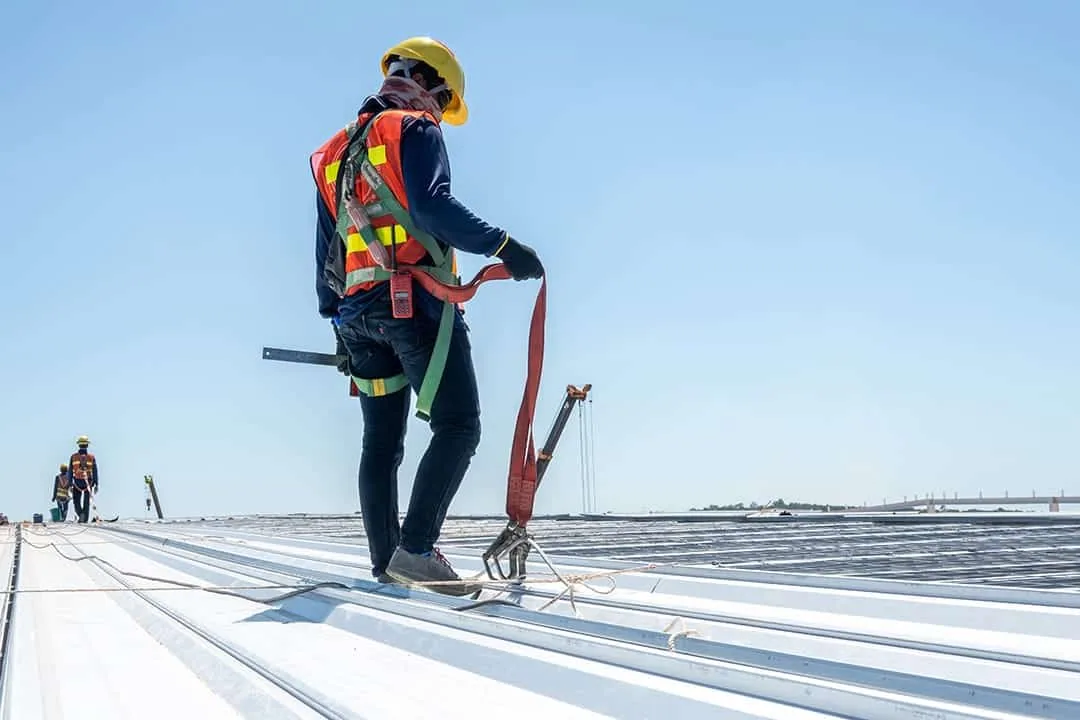
Weld quality depends on a prepared surface, equipment settings, travel speed, and operator technique. Establish the settings on a test strip, let the weld cool, and confirm the bond before moving into production. Keep loose debris and moisture out of the work path. At shift end, identify any open edge and record the temporary seal and protection so the next crew does not treat an unfinished tie-in as complete.
Map lift routes, deliveries, rooftop access, interior protection, and equipment shutdowns with the property lead. If a process exhaust must remain active, plan the work around it and protect the crew from the discharge path. An occupied-building schedule can identify daily work zones, while follow-up photos and a written scope record preserve decisions if the owner is tracking damage or a repair history.
A localized weld or flashing repair can fit where the sheet remains sound around the affected area. Repeated release, chemical damage, widespread moisture, or failing attachment may require a broader assembly review. Compare options against the same map, photographs, test results, and exclusions. Identify which observations are confirmed, which require an authorized opening, and what condition would trigger additional work. That record protects the owner from comparing a spot patch with a proposal that replaces an entire roof zone.
For a recover or replacement, review the substrate, insulation, drain height, perimeter metal, and compatibility with materials that will remain. Use the repair boundary as a cost and schedule control, not as a guess about concealed damage. The I-205 Corridor is part of Tracy's broad commercial geography; the building's own plan and access requirements set the job sequence. Keep product submittals, weld tests, repaired details, and maintenance instructions in the closeout record.
Before mobilization, agree on a stop point if a test opening exposes wet insulation or a substrate that cannot hold the specified attachment. Photograph the exposed layers, protect the opening, and obtain written direction before extending the repair. Closeout should identify the membrane lot, test locations, repaired seams, and any areas deferred for access or approval.
Review the actual exposure, material compatibility, drains, exhaust routes, and membrane condition. A nearby industrial use alone does not establish what reaches the roof or which system fits.
Prepare a test strip, set the hot-air equipment for the sheet and conditions, let it cool, and probe the bond. Record each test point and repeat when the membrane or surface changes.
It can address a confirmed opening if the field sheet and curb flashing provide a sound repair boundary. Inspect the corner, vertical transition, and adjacent weld before closing the scope.
Photograph and map it first, then ask the property contact to identify the equipment or discharge source. The roof record should distinguish the observed material from an unconfirmed cause.
Repeated seam failure, damaged sheet, widespread wet insulation, or compromised attachment can broaden the decision. Compare the same confirmed zones and exclusions in each proposal.