Grocery Store Roofing in Tracy, CA
Property Types We Roof
Plan grocery roof repairs in Tracy around receiving, refrigeration equipment, drainage, and store access. Get a clear repair boundary and work sequence.

Plan grocery roof repairs in Tracy around receiving, refrigeration equipment, drainage, and store access. Get a clear repair boundary and work sequence.
Water near a refrigerated case needs a roof map before insulation or ceiling material is removed. We match the store report to the roof zone, inspect the nearest curb, pipe support, drain, and seam, and record which area can be accessed. The first visit separates an active roof opening from condensation or another unresolved path. That keeps the repair boundary tied to evidence, while the store contact can plan any interior protection or trade release that the next step requires.
Tracy's sustainability plan connects transportation and warehousing, along with food manufacturing, to San Joaquin County agricultural production. That is a regional economic context, not a statement about a particular store's stock or roof. We set the work sequence from the building's actual access rules and equipment layout. A commercial inspection can document the roof zones before materials are ordered.
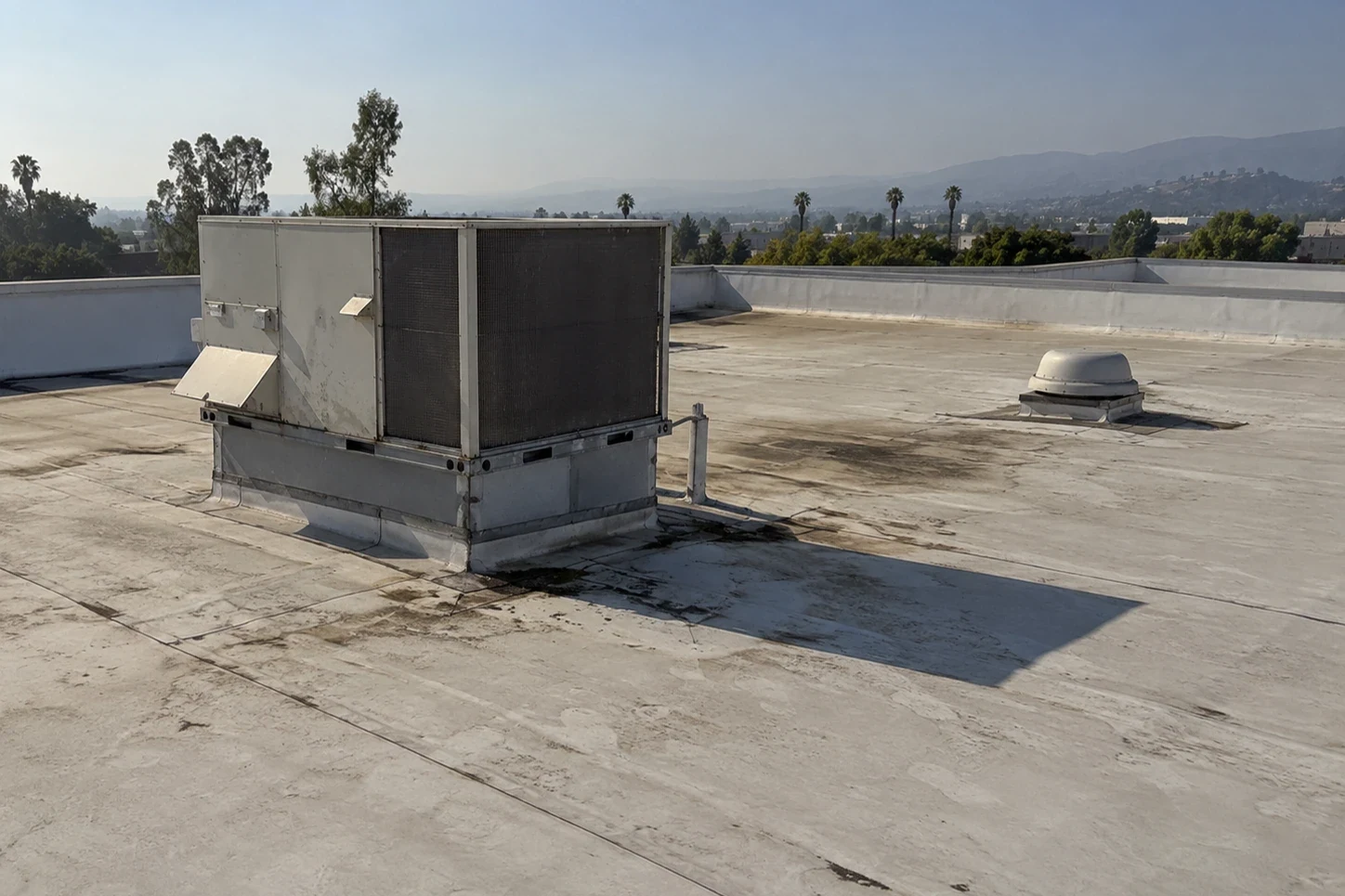
Identify rooftop condensers, refrigeration piping, exhausts, electrical supports, and any curb or penetration connected to the reported room. Mark each item on the roof plan and inspect its membrane turn-up, fasteners, flashing, and nearby seam. If equipment sits on supports that cross a joint or drain path, photograph the full transition before suggesting a patch. Do not move a line or disconnect a unit within a roofing ticket unless the mechanical trade has released that work.
Food retail buildings can rely on uninterrupted cooling and receiving, but each store sets its own priorities and safe access window. Confirm whether a roof opening affects a cooler, freezer, or sales area below, and who can approve temporary protection. A daily work plan should show which section will be closed, how it will be dried in, and what remains open for store staff. Keep the release contact and refrigeration coordination with the roof-zone record.
Review repair tickets, prior recoveries, system labels, and exposed edges before naming the roof material. A patch may conceal a previous penetration or a wet layer, and a coating can hide a seam that needs a separate repair. Record the visible condition, the material identified, and any area that still requires a test. If an opening is authorized, document layer order, moisture, substrate, and restoration detail before work continues.
Tracy's northeastern industrial district includes warehouse and distribution uses alongside manufacturing, rail-dependent industry, and flex-tech. These broad planning categories are relevant to regional freight geography, but they do not identify a grocery roof's construction or delivery arrangement. A shopping-center roof plan or large retail roof record may be useful for comparing property groups, while the store under review still needs its own marked assembly and access limits.
Start at the reported room, note when water appeared, and locate the roof area above it. Follow seams, curbs, pipe penetrations, parapets, drains, and repair patches that could carry moisture away from the entry. A ceiling mark can be distant from its opening. Photograph both the interior report and roof condition with zone references, and keep moisture indications separate from confirmed wet insulation. If concealed layers affect the decision, state the test and approval needed before estimating removal.
Tracy is classified in Climate Zone 12, and its published two-percent dry-bulb design figure is 101.2°F. This is a design criterion, not a reading from a particular grocery roof or a measure of refrigeration performance. Use current surface conditions and product limits to plan application. An infrared survey can help select test locations when the assembly supports the method, and a roof insulation review can document the layer question if an opening is approved.
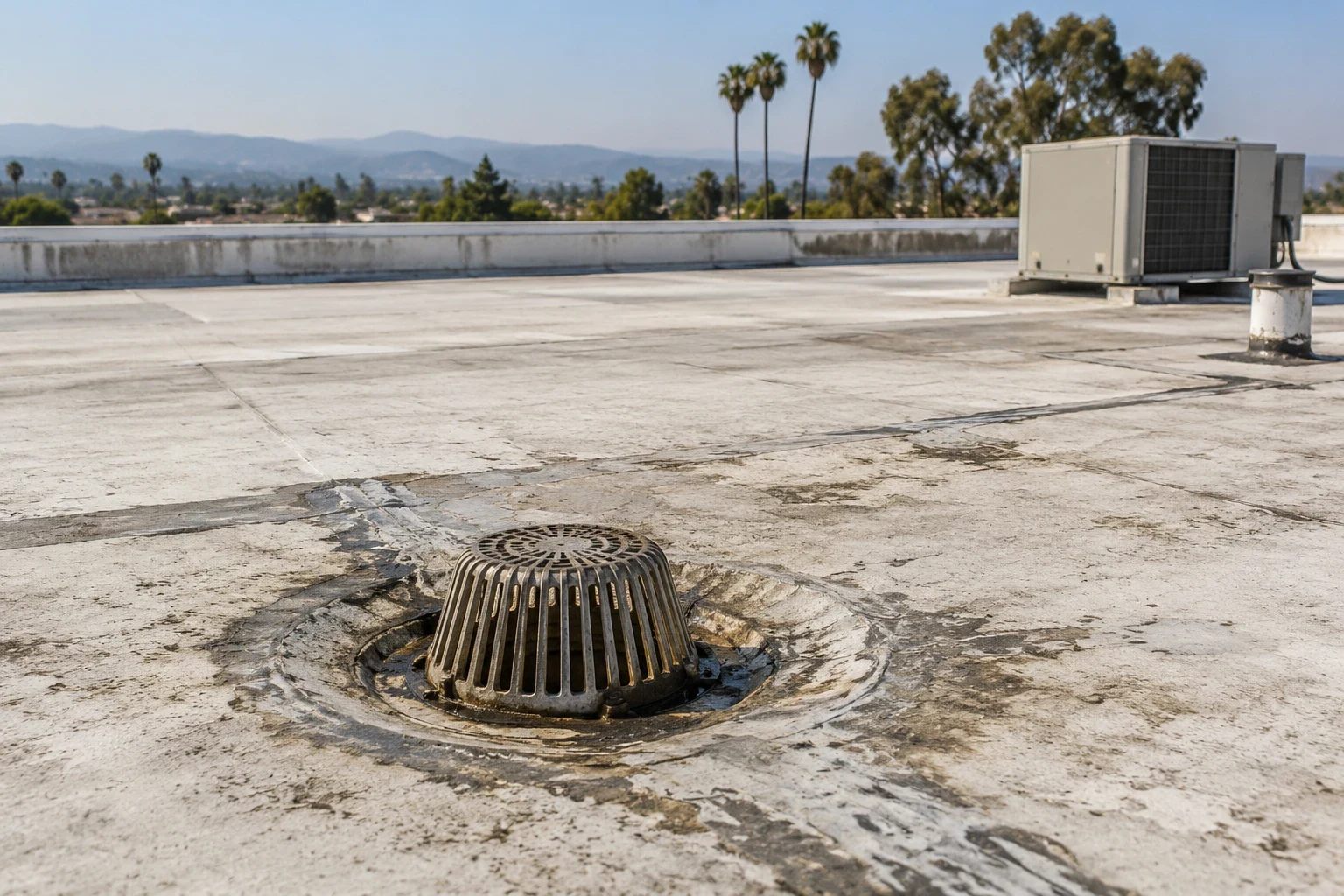
Trace runoff from the affected section toward its drain, sump, scupper, or overflow. Check whether a strainer is blocked, a drain tie-in is open, or the roof plane holds water near a curb. Record the observation time and weather context if available. A clear bowl does not prove that water can reach the outlet, and a low spot does not tell us which layer is wet. Keep cleaning, slope correction, and membrane repair as separate items when the findings call for different work.
Tracy's I-205 Corridor Specific Plan locates commercial uses near Grant Line Road; property records, not the plan, define each roof scope. Its broad geography helps orient dispatch, while the property's receiving contact controls the delivery route and unloading location. A roof visit in the I-205 Corridor still needs the store's approved access instructions. A drain and scupper inspection can mark the outlet connection and identify whether an obstruction or membrane detail changes the repair boundary.
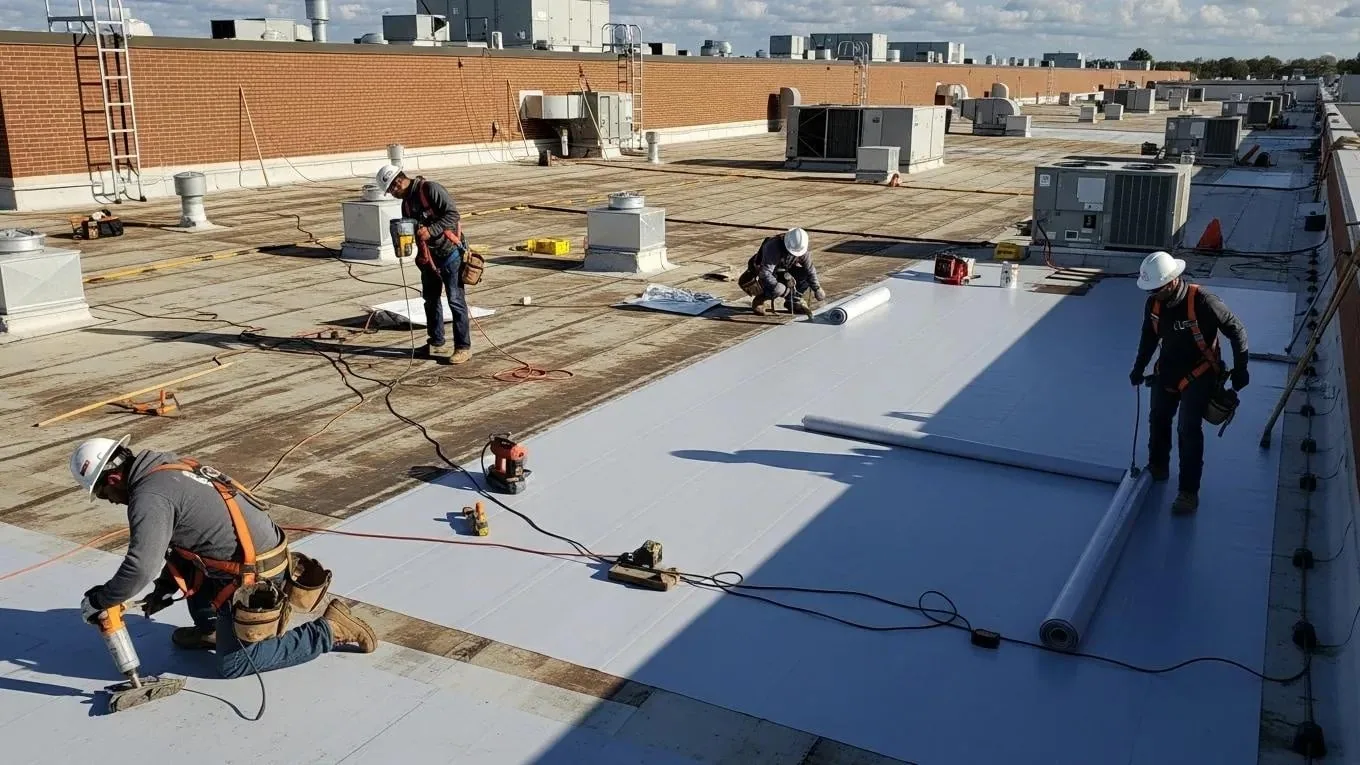
For active leakage, identify the room below, the inventory or equipment protection already in place, and the roof section that can be stabilized. Keep temporary covering apart from permanent repair, and list any refrigeration or electrical trade release before opening the assembly. The plan should set a daily stopping point and show how the exposed section will be closed. If weather or a concealed condition interrupts work, mark the temporary state and the person who will authorize the return.
Tracy's business profile describes national retailers, restaurants, small businesses, and continued commercial growth. It does not identify any individual grocery operation. The site manager provides the actual delivery schedule, receiving rules, and access limits. An occupied-building roof sequence can set access, protection, and tie-ins by zone. For urgent water entry, emergency roof response can address immediate exposure while keeping permanent repair quantities open until the assembly is checked.
A localized repair may be enough when a single seam or curb has failed and surrounding layers remain dry and attached. Repeated leaks near equipment, movement in multiple seams, or wet insulation can justify a broader test. A recover or replacement option should show drain height, equipment transitions, removal depth, interior protection, and the end-of-shift tie-in. Price observed work separately from concealed conditions that depend on an authorized opening.
City planning describes Tracy in relation to three linked routes: I-580, I-5, and I-205, which connect the regional network. This helps orient material planning, but arrival and unloading depend on the store's approved route. A replacement estimate can be compared with repair when the existing assembly cannot support another local correction. A roof condition file should retain test points, marked photos, the repair limit, and any refrigeration or trade coordination still open.
Photograph the repair preparation, exposed layers, finished seam or curb, and the surface around the completed detail. Record the system, repair method, tie-in, access limit, and any material changed after approval. Identify whether interior protection was removed and whether another trade has an unfinished task. A closeout note should show what happened at the roof and what the store team still needs to monitor without promising that an unseen layer was cleared.
Send the roof plan, refrigeration layout, leak tickets, prior repair photos, and receiving rules before requesting a visit. We will map the affected zone and return confirmed findings, unresolved tests, and the recommended next action. A maintenance inspection can revisit the same drains and equipment curbs. Preserve the store's access window with each service record so the next inspection can be scheduled without assuming the earlier route remains available.
It identifies an operational concern, not the roof entry point. We map the room or equipment zone to the roof and record the evidence needed to distinguish a leak from another moisture path.
Inspect support points, penetrations, flashing, nearby seams, and drainage. Any disconnection or equipment movement must be released to the responsible trade before roofing work begins.
A zoned plan can keep unaffected areas in service when access and protection are approved. We set a daily boundary and dry-in point with the site contact.
No. It is a municipal design figure. Current roof and weather conditions must be checked against the chosen product's application requirements.
Equipment coordination, access, drain details, wet layers, removal depth, and temporary protection can change the work. We separate confirmed quantities from items that need testing or approval.