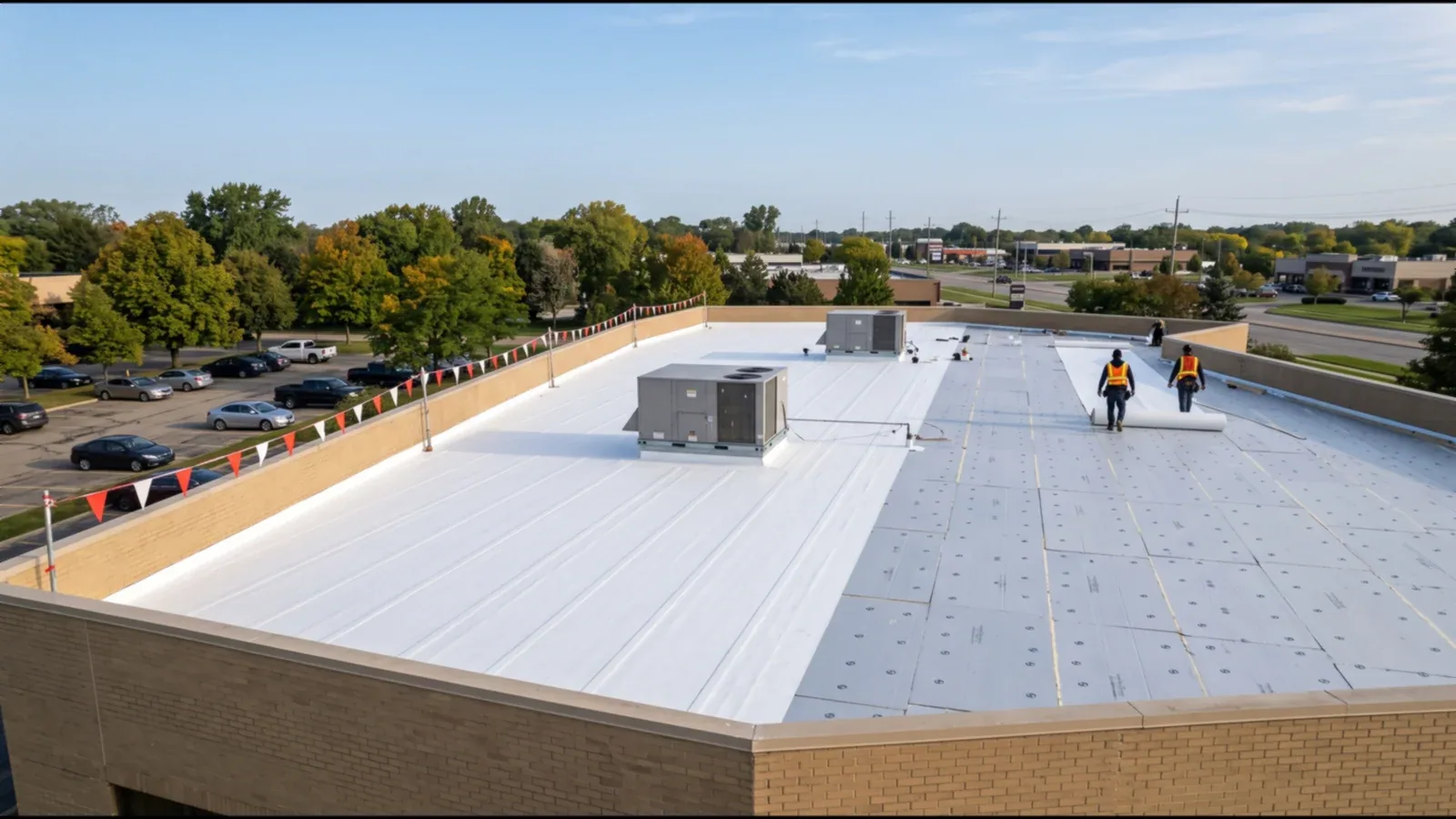
Holcim Elevate Roofing in Tracy, CA
Roofing Manufacturers
Holcim Elevate commercial roofing in Tracy, with TPO and EPDM inspection, seam repair, drainage review, and replacement scopes tied to field evidence.

Holcim Elevate commercial roofing in Tracy, with TPO and EPDM inspection, seam repair, drainage review, and replacement scopes tied to field evidence.

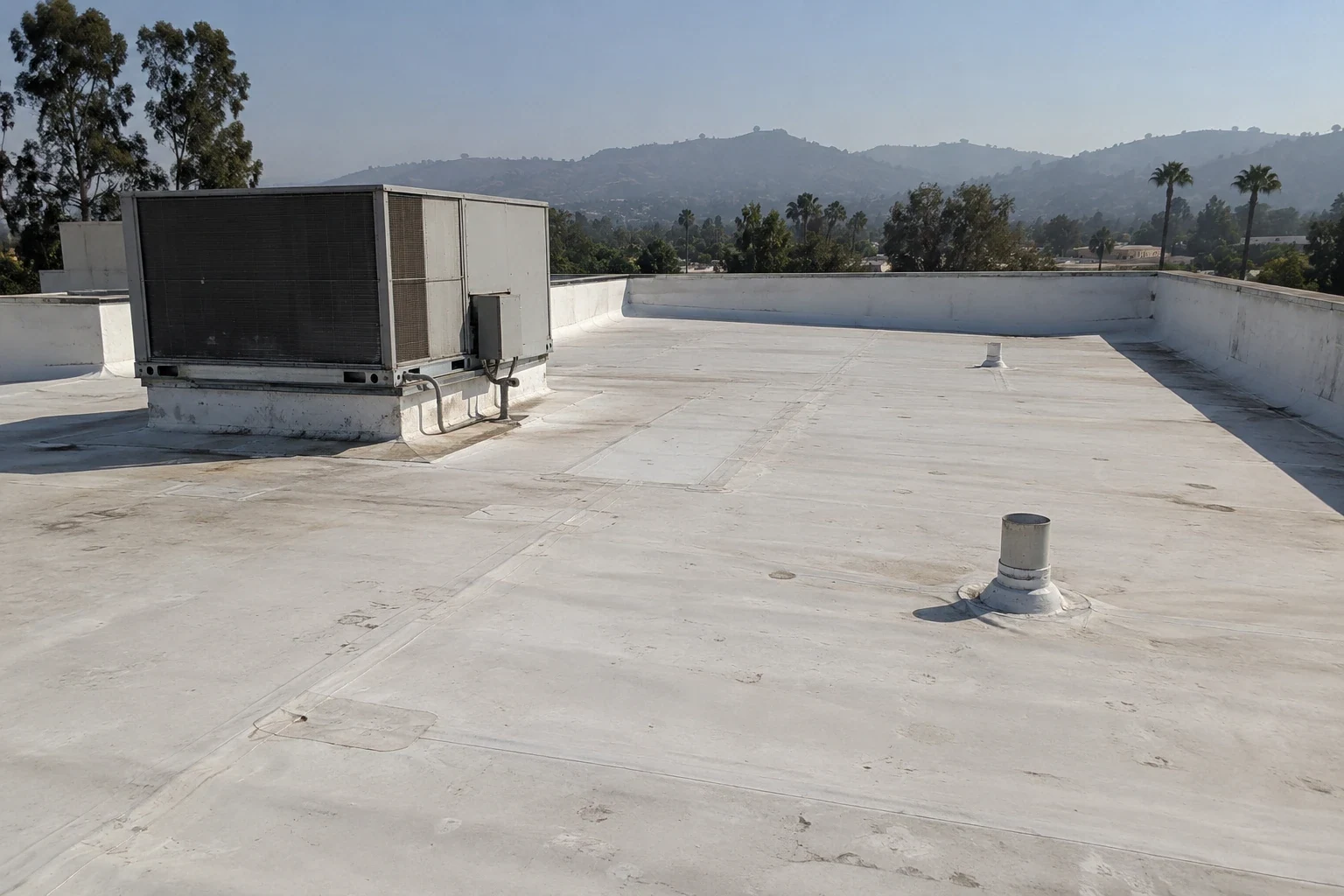
A loose edge at a Holcim Elevate membrane can signal a local termination issue or a larger attachment question. We inspect the perimeter, nearby seams, and the roof layers that can be confirmed, then draw the work limit on the roof plan. The system may be TPO or EPDM, and the repair method follows the material actually installed. We keep any layer or moisture question open until records, an exposed edge, or an approved test supports the next decision.
South Tracy Business Park sits within the city's industrial planning geography and was developed for small and midsize companies. The I-205 Corridor Specific Plan covers another broad mix of commercial uses, while Downtown Tracy has a separate land-use designation. Those districts help orient a service schedule across the city; they do not identify a roof system. A roof inspection begins with the property's drawings, repair history, and site access requirements.
At a lifted corner or edge, inspect the adjacent sheet, term bar, flashing, cleat, and substrate before estimating the correction. Look for loose fasteners, a split membrane, a poorly bonded lap, or an earlier repair that ends at the same transition. Photograph the detail and the surrounding roof zone so the owner can see whether the condition is isolated. If the edge continues around a parapet or curb, mark where the inspection stops and where added access would be needed.
For wind design, Tracy uses exposure category C and points project teams to the applicable map and risk category. That information belongs to project design; it does not establish the attachment at a particular Holcim Elevate roof. Review available fastening documents and visible conditions before proposing an upgrade. A TPO roof detail review can focus on sheet attachment and welded seams, while a EPDM assembly assessment can consider its field sheet and edge connections.
A building may have more than one generation of roofing after overlays, additions, or isolated replacements. Compare Holcim Elevate records with exposed edges and drain transitions instead of assigning one system to every roof plane. At an approved opening, record membrane type, cover board, insulation, deck, and attachment at the sampled area. Note whether each layer is intact, wet, crushed, or uncertain. The inspection should show where that evidence applies rather than implying it describes every section.
For a repair, surface cleanliness, compatible flashing, seam preparation, and tie-in width all affect the result. If the existing sheet cannot be identified, stop material selection until a document check or authorized test resolves the question. An insulation and cover-board review can separate substrate correction from membrane work. When a system change is under consideration, compare how the proposed layer will meet drains, equipment curbs, parapets, and adjacent roof sections before pricing the full area.
A reported ceiling stain gives us an interior location and date, not a confirmed roof entry point. Match the room to the roof plan, then inspect the drainage path, penetrations, seams, and previous patches in the likely zone. Water may move along framing or a deck flute before it appears below. Photograph each observed condition, label the direction and location, and keep a suspected path separate from the defect confirmed at the roof surface.
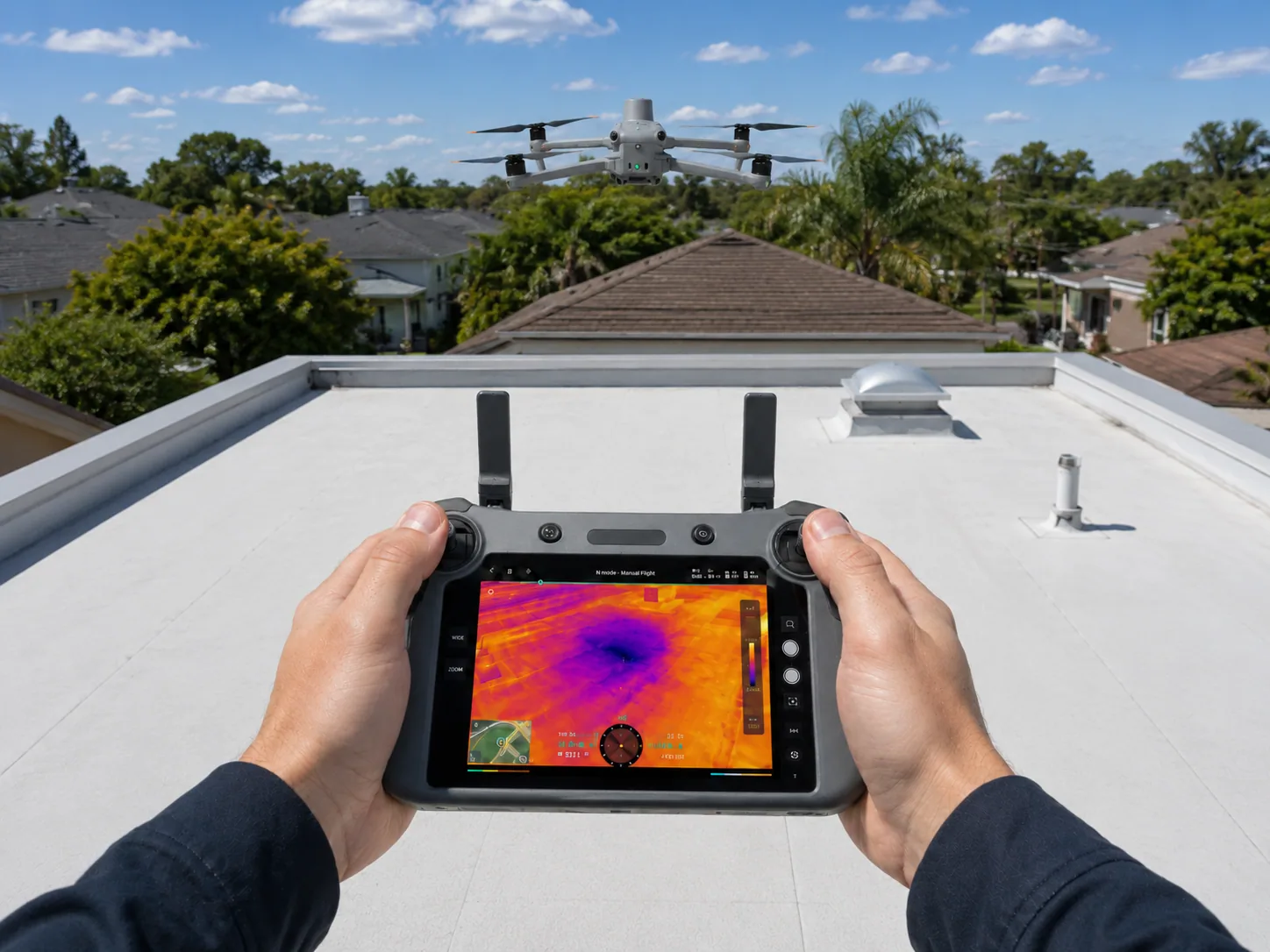
If moisture might continue beneath the sheet, thermal imaging can narrow where a follow-up opening may answer the question when the assembly permits it. The plan should show the tested boundary and any areas that were not evaluated. For a leak entering now, emergency dispatch remains available overnight, on weekends, and during holidays. Record temporary protection separately from the permanent Holcim Elevate repair so the owner can see what still needs approval, access, or pricing.
In Tracy's published criteria, the design climate is Zone 12 and the two-percent dry-bulb high is 101.2°F. That figure informs design review; it does not report the surface temperature of a Holcim Elevate roof or set the workday forecast. We compare current substrate and surface conditions with material instructions before deciding whether a seam repair, adhesive, or coating can proceed. If the window shortens, record the area closed and what remains for another visit.
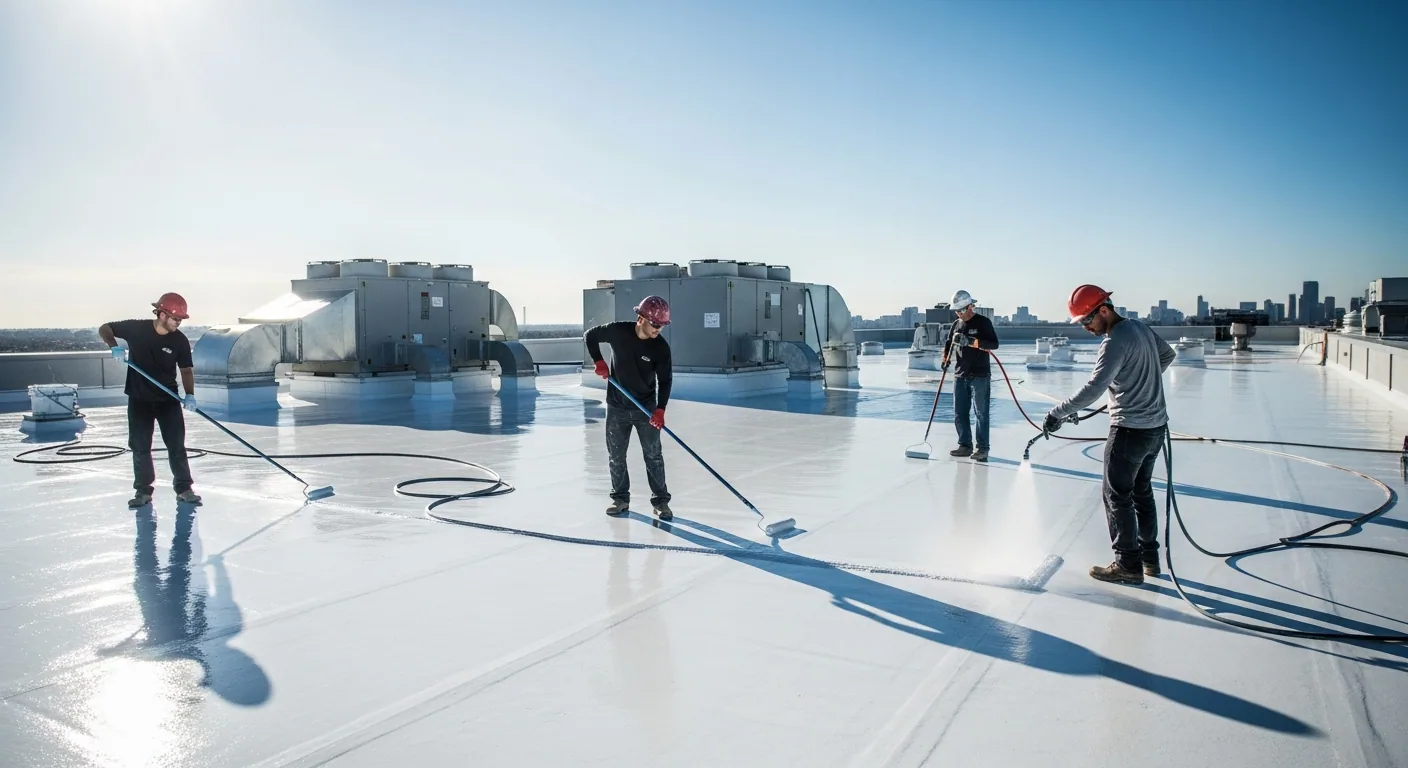
The City's code schedule also ties its 2025 California Building Codes to new submittals received beginning January 1, 2026. When a project requires plans, include the application and relevant drawings in the scope schedule. A permit date does not resolve membrane compatibility or attachment. Those questions remain tied to the assembly record and proposed work. For a coating, a restoration assessment should state preparation and testing requirements before the owner compares it with replacement.
A bounded repair can make sense when one seam, curb, flashing, or perimeter detail is confirmed and the surrounding material remains suitable for a tie-in. A recurring leak or several failed zones may justify additional testing and a replacement comparison. For each option, list measured area, removal depth, insulation, edge metal, drains, equipment interfaces, protection below, and exclusions. Keep concealed conditions as an allowance with a defined trigger, not as an assumed quantity in the base scope.
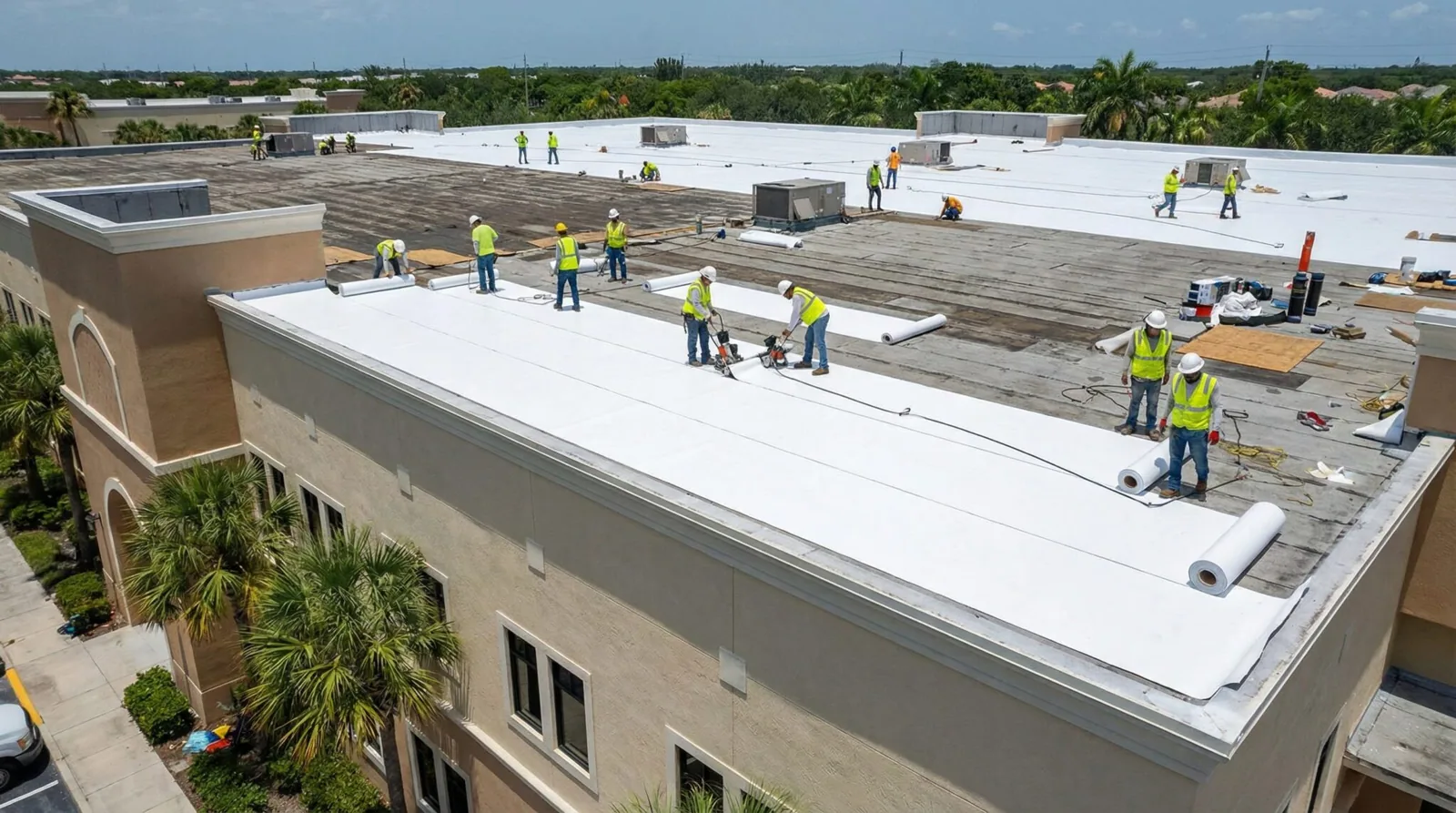
With a Holcim Elevate replacement, show how the new assembly terminates at existing walls, equipment, and adjoining roofs. State whether the project includes disposal, substrate repair, or a new cover board. A replacement estimate should use the same plan as a repair proposal so the owner can compare them. If another manufacturer is being reviewed, a Versico system comparison or Johns Manville membrane review can be framed around the same building record and performance needs.
For every Holcim Elevate service visit, record the zone, membrane type where known, date, observed detail, action taken, and any follow-up test. Keep photographs with the roof plan and distinguish completed repairs from areas that were not opened or reached. When an asset has multiple roof sections, preserve a separate assembly description for each one. This gives facilities staff a reliable comparison for the next inspection without treating a prior patch as a building-wide solution.
The city has named employment geographies such as the Industrial Areas Specific Plan and South Tracy Business Park. A regional service list can use those names to group visits, but scheduling and access come from the property contact. A South Tracy Business Park visit should still follow the instructions for the specific address. A maintenance inspection can revisit mapped seams, drains, and perimeter details and assign each remaining condition a clear next action.
The closeout should include the roof plan, dated repair photographs, material description, surface preparation, tie-in location, and approved scope changes. Mark any area left outside the work and identify whether temporary protection remains. If an opening reveals wet insulation, a damaged deck, or a different membrane, include the evidence and revised boundary before describing the added work as complete.
Keep the final record with product information, prior proposals, and service tickets. A later leak can then be compared with the Holcim Elevate area actually repaired. We can review the assembly evidence, access limit, and owner decision together, then document whether the next step is maintenance, further testing, or a wider replacement scope.
First identify the membrane and failed detail. We inspect the adjacent sheet, substrate, and tie-in area, then define the smallest boundary supported by the condition evidence.
It may be possible when the surrounding material and attachment are serviceable. The estimate should show the perimeter detail, preparation, tie-in, and any test needed before work expands.
No. It is a design reference. Current surface conditions, product instructions, substrate condition, and safe access determine whether work proceeds on a given day.
Map each area and record its membrane, repair history, and access limit separately. That prevents one test or patch from being applied to uninspected sections.