Heat and UV Roof Damage Repair in Tracy, CA
Roof Damage Repair
Assess heat and UV roof wear in Tracy by membrane, coating, and flashing condition, then compare repair or restoration using documented surface evidence.

Assess heat and UV roof wear in Tracy by membrane, coating, and flashing condition, then compare repair or restoration using documented surface evidence.

A chalky surface or brittle edge is a reason to inspect the assembly, not an automatic instruction to coat it. We map the affected roof zone, check the finish, seams, flashing, and drainage, then identify what a test can confirm below the surface. Tracy's 2025 design table lists a two-percent average dry-bulb high of 101.2°F and places the city in Climate Zone 12. That is design context for the market, not a reading from a specific roof or a forecast for application day. The repair decision still depends on the material and observed condition.
The Northeast Industrial PUD includes warehouse, distribution, manufacturing, rail-dependent, and flex-tech uses. The I-205 Corridor plan includes several commercial and light-industrial categories. Those broad areas suggest varied building uses, not a uniform roof type or heat failure. A roof inspection should name the actual surface, assembly, and transition where degradation appears. A Northeast Industrial PUD visit begins with property-specific access and roof records.
Surface chalking, color change, cracks, blisters, exposed reinforcement, and open edges point to different conditions. Record whether wear lies on a coating, membrane, metal panel, or surfacing, and inspect the nearby laps and terminations. A visual check should separate a weathered top layer from a split or loose seam. If the surface is dirty or damp, note that condition before taking adhesion readings or preparing a repair.
Test a representative area only after the owner authorizes its location and the product requirements are known. An adhesion check can help determine whether an existing coating remains attached, but one sample does not describe every roof zone. A coating restoration assessment should identify preparation, primer, reinforcement, and the substrate condition that must be met. Keep the test location, ambient conditions, and result together so a future reviewer can see why the recommended area was selected.
Temperature changes can move sheets and metal relative to their supports. Look for shrinking membrane at a parapet, a wrinkle that pulls at a curb, a fastener line that has opened, or a lap that no longer holds. Record movement by roof zone and compare it with the details that secure the field and perimeter. If the assembly has an existing coating, inspect the coating and the membrane below it as separate layers.
Tracy's wind design classification uses exposure C, with new design speeds chosen from mapped values and the building's risk category. That criterion does not diagnose heat wear or establish the fastening on an existing roof. Check the actual attachment and edge condition before recommending reinforcement. A seam repair assessment can map an open lap, while a puncture review handles a separate cut or abrasion. Keep those conditions distinct from broad surface aging.
Heat-related surface wear can coexist with moisture below, but appearance alone does not establish the insulation condition. Follow an interior report to the roof plan and inspect the path through drains, curbs, seams, and previous patches. If concealed wet material would change the repair quantity, select a survey or approved test opening that fits the membrane and conditions. Record the areas examined and any access limit.
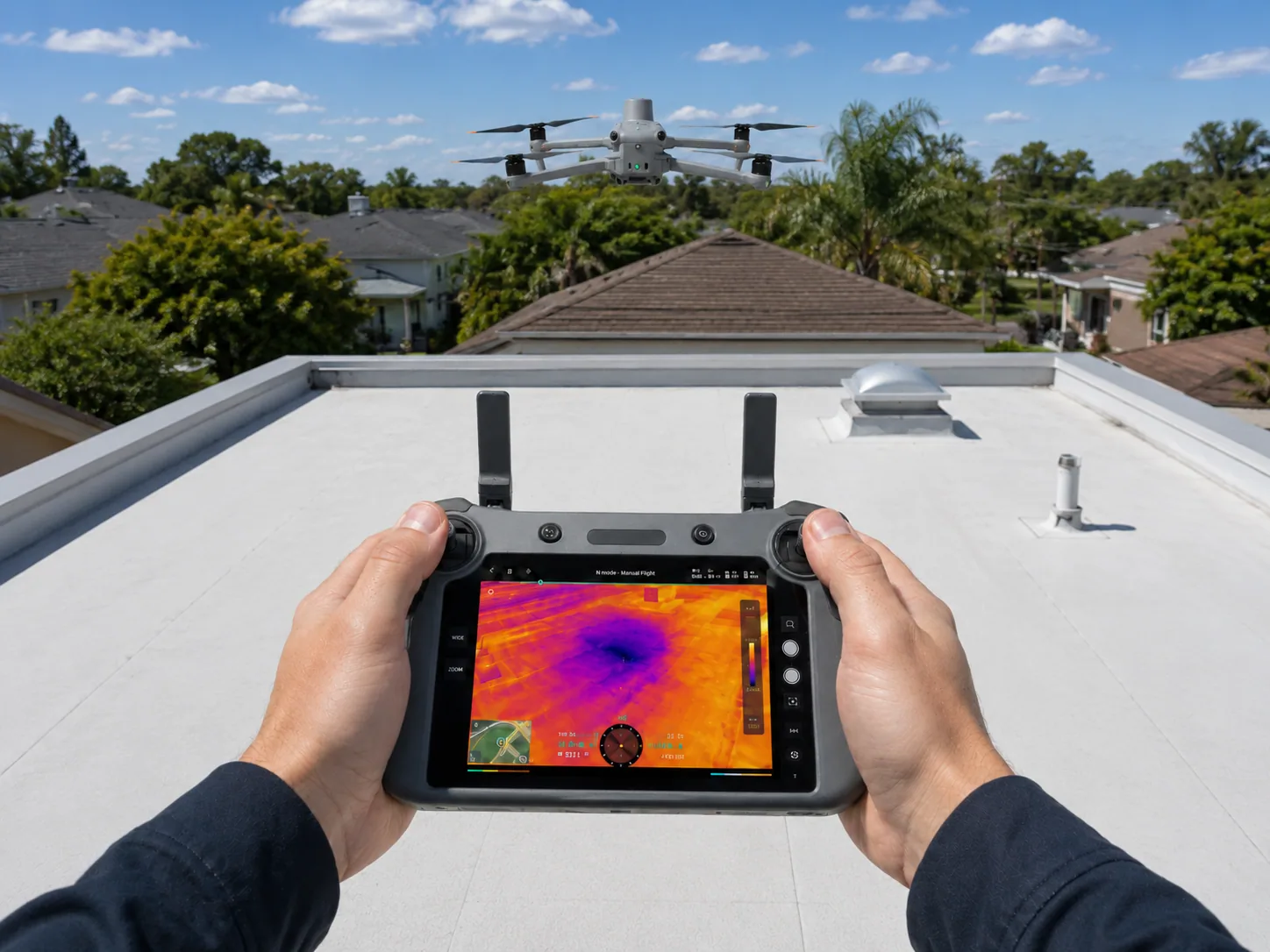
An infrared moisture survey can help choose test areas when roof construction supports the method. Confirm indications before setting a tear-off boundary. At an opening, photograph membrane, coating, insulation, cover board, and deck in sequence, then mark the exact dimensions and how the section will be closed. If water is standing at the same roof zone, measure its outline and outlet path separately so a slope correction is not mistaken for coating work.
The city design high is not the temperature of the roof surface at the time of work. Before applying adhesive, coating, or primer, check current air and substrate conditions against the selected product instructions. Note wind, dust, shade, moisture, and any condition that changes the open work period. Confirm the crew can protect the section if application must stop. A material used outside its permitted range can fail to bond or cure as intended.
The I-205 Corridor includes commercial uses near Grant Line Road and I-205. That broad location may help coordinate a service request, but it does not define delivery access, rooftop shade, or local surface temperature at one property. Set each work window with the building contact and the crew's closure plan. A cool-roof option review should compare reflectance or surface goals with the existing layers and owner criteria, not treat local summer design context as proof that an aged roof needs a particular product.
A localized repair may address an isolated split, loose termination, or exposed section when the surrounding material is stable. A coating can be considered if the substrate, adhesion, seams, drains, and flashing meet the system requirements. If multiple zones show brittle membrane, wet insulation, recurring seam release, or poor attachment, test the wider assembly before comparing replacement. State removal depth, surface preparation, reinforcement, new flashing, drainage adjustments, and temporary weather protection separately.
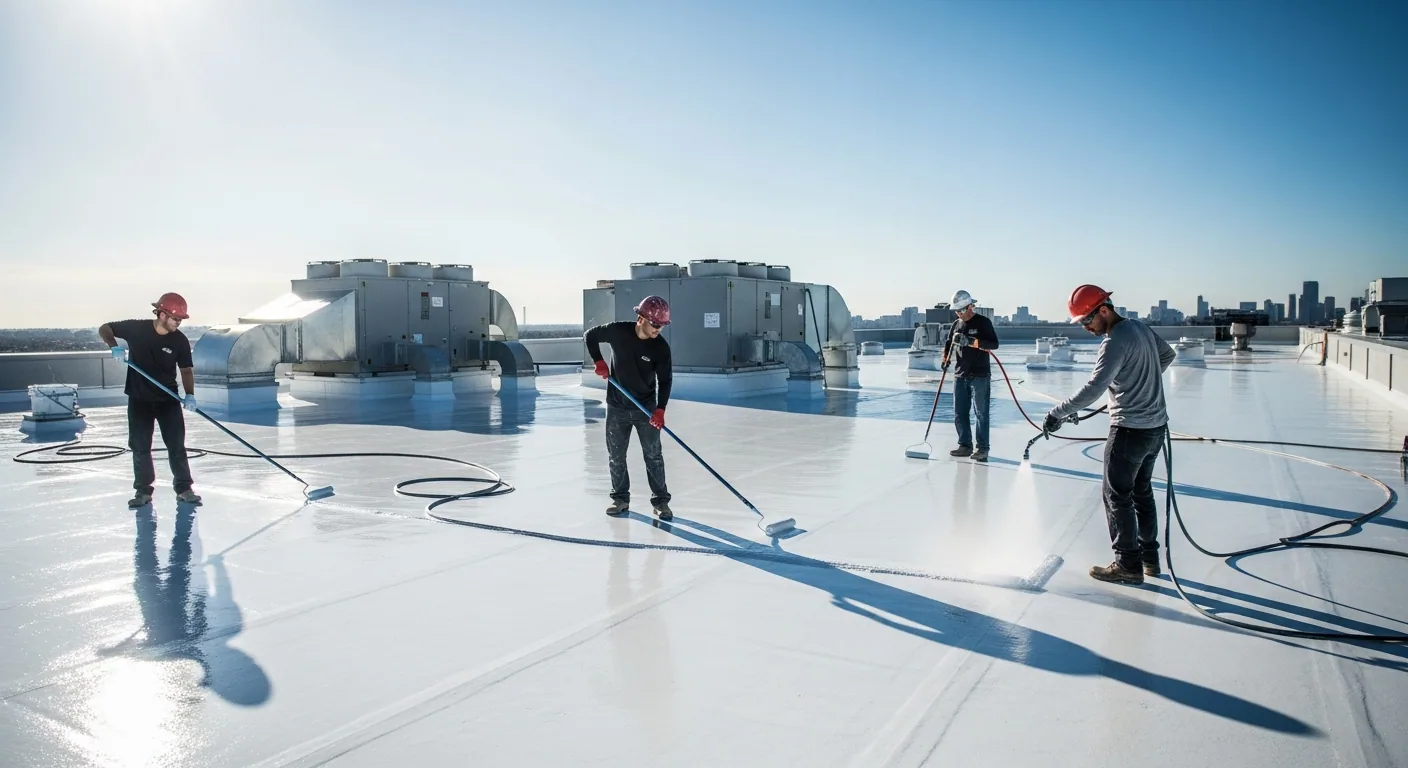
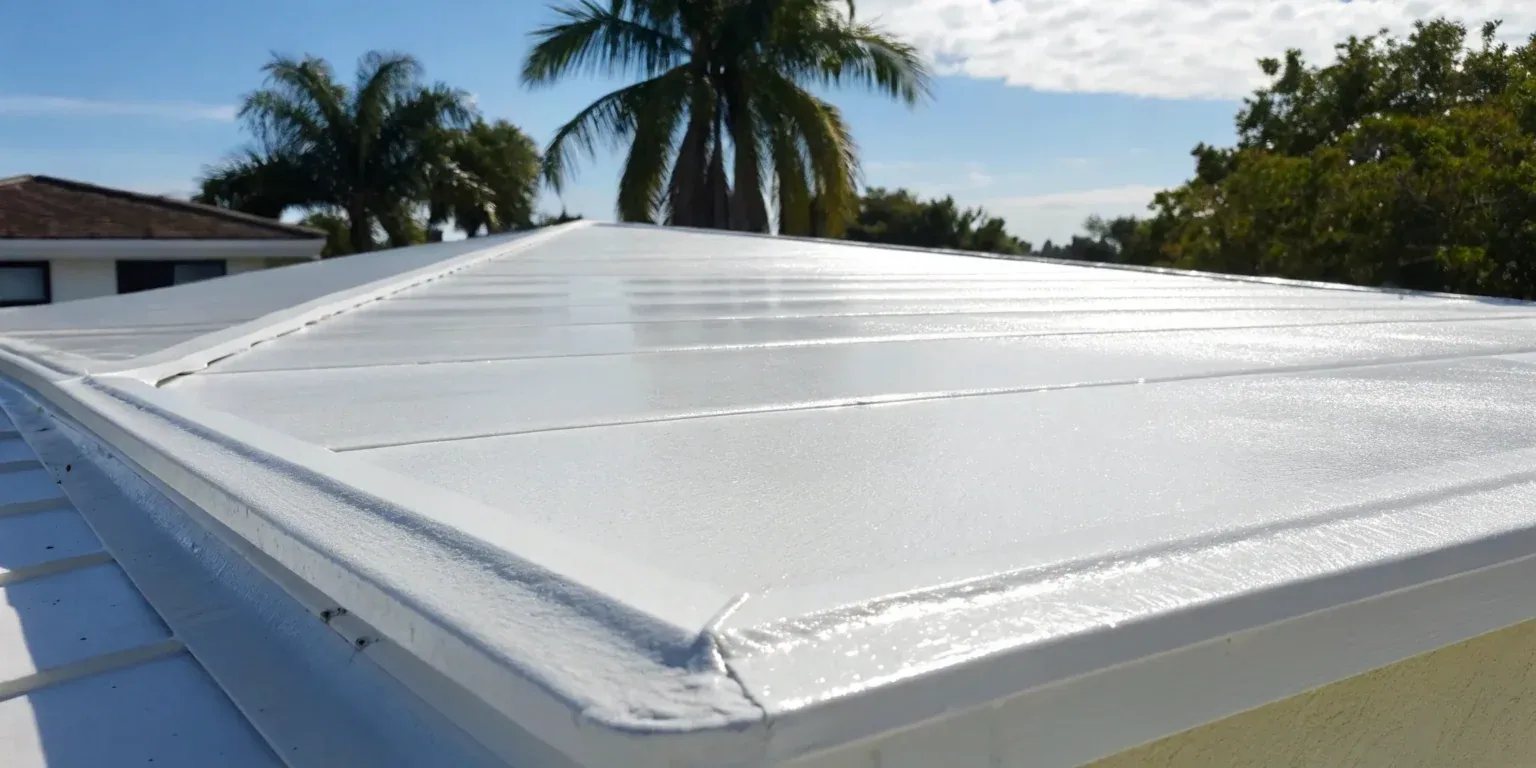
The Industrial Areas plan groups flex-tech activity with offices and both lighter and general industrial uses. Where a building sits within that broad designation, confirm access timing with its contact before setting the work sequence. A silicone coating may be an option where the substrate and existing roof support it. A replacement scope should explain which test results and failed layers warrant a broader project rather than extending a surface repair by assumption.
At completion, identify the product and roof zone, preparation, test locations, application conditions, repaired seams, and any area excluded from the work. Photograph representative surface details before and after, and label each by location and date. Keep adhesion findings, moisture checks, and concealed-layer observations separate so one result is not applied to an untested section. List any material or tie-in that requires a later review. Note the finish condition at drains, curbs, and edges, where a continuous coating field often ends or changes plane. If an area was not prepared or did not pass the stated test, identify it as excluded and set the next inspection or repair action. That leaves the owner with a defined boundary rather than an assumption that every surface received the same treatment.
For a future visit, compare the same zones and test points instead of relying on a general description such as aging roof. A maintenance inspection can check edges, drains, coating wear, and exposed seams against the completed record. If a new split or puncture appears, document it as a separate condition and establish its own repair boundary. The owner can then decide whether the roof needs a local correction, another test, or a larger assembly review.
Not by appearance alone. Check the surface layer, adhesion, seams, flashing, and moisture condition before selecting a restoration system.
No. It is a design criterion. Measure the actual substrate and ambient conditions when selecting a work window or checking product limits.
A coating does not replace a failed joint detail. Repair the seam or termination to a compatible assembly detail before evaluating a continuous coating field.
Set the boundary from a survey and confirmed test openings. Record each sample and do not extend its result across roof areas that were not checked.
Restoration retains the existing assembly when its condition supports the chosen system. Replacement removes more material and should follow evidence about the layers, attachment, and repair history.